How Reflective Learning Can Help You Overcome Academic Challenges:
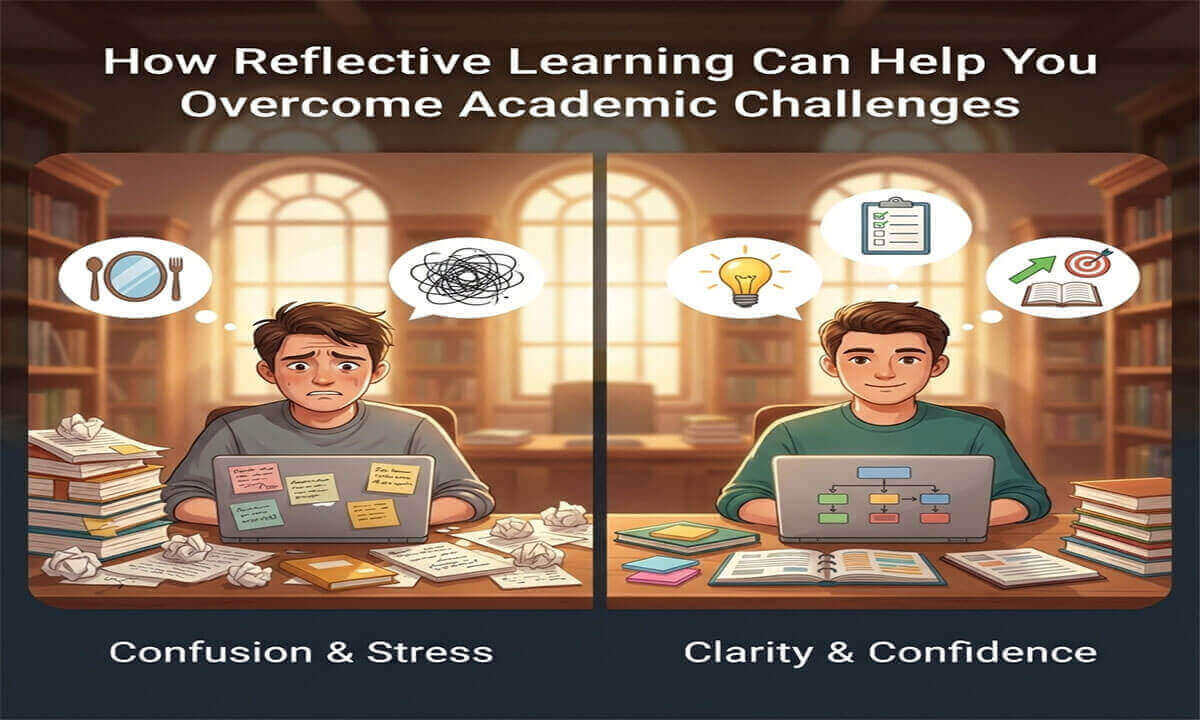
Ever find yourself stuck in an endless cycle of studying, yet not seeing any real improvement? You invest hours reviewing notes and rereading textbooks, but when exams arrive, the results are disappointing. This experience is common and frustrating. Often, the problem is not a lack of effort, but a lack of awareness about how you are learning. This is where reflective learning becomes powerful. Reflective learning encourages you to pause, think critically about your learning experiences, and adjust your strategies accordingly. Just as a traveler checks a map to ensure they are on the right path, learners need reflection to confirm that their study methods are truly effective. Research consistently shows that students who engage in reflection develop deeper understanding, stronger problem-solving skills, and greater academic confidence. This article explores what reflective learning is, why it matters, and how reflective learning can help you overcome academic challenges.
What Is Reflective Learning?
Reflective learning is the deliberate process of thinking about what you learned, how you learned it, and why certain strategies worked or failed. It goes beyond memorization and focuses on understanding your own learning process. According to Schön (1983), reflection allows learners to examine their experiences and turn them into meaningful learning opportunities.
Many students already practice reflection informally, such as wondering why a test went poorly or why one study method felt more effective than another. Reflective learning formalizes this process and turns it into a habit. Kolb (1984) explains that learning becomes more effective when learners actively reflect on experiences and use those reflections to guide future actions.
Reflective learning typically involves:
- Self-assessment, where learners evaluate their understanding and performance.
- Identifying strengths and weaknesses, helping them recognize effective and ineffective strategies.
- Applying changes, by adjusting study approaches based on reflection.
Why Is Reflective Learning Important?
Reflective learning is a cornerstone of effective education because it shifts learners from passive receivers of information to active participants in their own learning process. Rather than simply focusing on outcomes such as grades or test scores, reflective learning emphasizes understanding the journey of learning itself. Research in educational psychology consistently highlights reflection as a key factor in academic success and lifelong learning.
- Deepens Critical Thinking Skills: Reflective learning strengthens critical thinking by encouraging learners to examine how they process information. When students reflect, they question assumptions, analyze evidence, and evaluate their reasoning instead of accepting ideas at face value. This internal dialogue promotes higher-order thinking skills, such as analysis and evaluation, which are essential for academic writing, research, and problem-based learning. Moon (2004) emphasizes that structured reflection enables learners to move beyond surface learning toward deeper intellectual engagement.
- Enhances Self-Regulated Learning: One of the most significant benefits of reflective learning is its role in developing self-regulated learners. Reflection helps students monitor their understanding, set realistic goals, and adjust strategies when they are not working. Zimmerman (2002) explains that self-regulated learners actively plan, monitor, and evaluate their learning processes, which are all grounded in reflective practice. This autonomy allows students to take ownership of their academic progress rather than relying solely on external guidance.
- Improves Problem-Solving and Decision-Making: Reflective learning enables learners to learn from past experiences, especially mistakes. By analyzing what went wrong and why, students become better equipped to approach similar problems in the future. Schön (1983) describes reflection as a process that allows individuals to think “in action” and “on action,” helping them refine their approaches in complex or unfamiliar situations. This skill is particularly valuable in subjects that require the application of knowledge rather than memorization.
- Strengthens Long-Term Retention and Understanding: Reflection supports deeper cognitive processing, which leads to improved retention of information. When learners connect new knowledge to previous experiences or concepts, learning becomes more meaningful and easier to recall. Kolb’s (1984) experiential learning theory highlights reflection as a critical stage that transforms experience into genuine understanding. As a result, students are more capable of applying knowledge in new academic or real-world contexts.
- Builds Academic Confidence and Motivation: Reflective learning helps students recognize progress, even when improvement feels slow. By reviewing past challenges and noting growth, learners develop a sense of competence and confidence in their abilities. Zimmerman (2002) notes that students who regularly evaluate their learning experiences are more motivated because they see a clear link between effort, strategy, and success. This awareness reduces feelings of helplessness and increases persistence.
- Promotes a Growth-Oriented Mindset: Through reflection, students begin to view academic difficulties as opportunities to improve rather than as personal failures. Instead of labeling themselves as “bad” at a subject, reflective learners focus on adjusting their strategies. Moon (2004) suggests that reflection fosters openness to change and continuous improvement, which are key characteristics of a growth-oriented approach to learning.
- Prepares Learners for Lifelong Learning: Beyond formal education, reflective learning equips individuals with skills needed for lifelong learning. The ability to evaluate experiences, learn from outcomes, and adapt strategies is essential in professional and personal development. Schön (1983) argues that reflective practice is fundamental for professionals who must continually adapt to new challenges and evolving knowledge.
Thus, reflective learning is important because it transforms learning from a routine activity into a purposeful, adaptive process. By improving critical thinking, self-regulation, problem-solving, and confidence, reflection empowers learners to overcome academic challenges and continue growing well beyond the classroom.
How to Practice Reflective Learning:
Practicing reflective learning means intentionally creating space to think about how you learn, not just what you learn. Reflection turns everyday study activities into meaningful learning experiences by helping you evaluate strategies, recognize patterns, and make informed adjustments. Educational research emphasizes that reflection is most effective when it is regular, structured, and connected to action.
1. Keep a Structured Learning Journal: A learning journal is one of the most effective tools for reflective practice. Instead of simply recording what you studied, reflective journals focus on your thoughts, feelings, challenges, and insights. Writing encourages deeper thinking and helps externalize your learning process, making it easier to identify strengths and weaknesses. Moon (2004) explains that structured reflection through writing supports deeper understanding and personal meaning-making.
Effective reflective journal prompts include:
- What did I learn today, and how well do I understand it?
- Which strategies helped me learn effectively?
- What confused me, and why?
- What will I do differently next time?
Over time, reviewing these entries reveals patterns in your learning habits and highlights areas for improvement.
2. Reflect Before, During, and After Learning: Reflection is not only something that happens after studying. According to Schön (1983), effective learners engage in reflection before action, in action, and after action.
- Before learning, reflect on goals and prior knowledge. Ask yourself what you already know and what you need to focus on.
- During learning, monitor your understanding. Notice when concentration drops or confusion arises.
- After learning, evaluate outcomes and strategies. Consider whether your approach helped you meet your goals.
This ongoing cycle strengthens awareness and allows immediate adjustments, making learning more efficient.
3. Analyze Mistakes Thoughtfully: Mistakes are powerful learning opportunities when approached reflectively. Instead of ignoring errors or feeling discouraged, reflective learners analyze why mistakes occurred. Zimmerman (2002) notes that self-regulated learners use errors as feedback to refine their strategies.
When reviewing mistakes, ask:
- Was the error due to misunderstanding, lack of practice, or poor time management?
- Did I rush or rely on memorization instead of understanding?
- What specific change can prevent this mistake in the future?
This process transforms failure into guidance for improvement.
4. Ask Deep, Meaning-Oriented Questions: Reflective learning involves asking questions that promote understanding rather than surface-level recall. Kolb (1984) emphasizes that reflection helps learners connect experience with conceptual understanding.
Meaning-oriented questions include:
- Why is this concept important?
- How does it connect to what I already know?
- Where can I apply this knowledge in real life or other subjects?
Such questioning strengthens conceptual links and improves long-term retention.
5. Seek and Reflect on Feedback: External feedback provides perspectives that self-reflection alone may miss. Feedback from teachers, mentors, or peers helps identify gaps in understanding and areas for growth. However, reflective learning requires more than just receiving feedback—it involves thinking carefully about how to apply it. Schön (1983) highlights reflection as essential for integrating feedback into future action.
After receiving feedback, consider:
- What specific suggestions were given?
- Why were these areas identified as weak?
- How can I apply this feedback in my next assignment or study session?
This reflective step ensures feedback leads to real improvement.
6. Experiment with and Evaluate Study Strategies: Reflective learners actively test different learning strategies and evaluate their effectiveness. Rather than sticking to familiar habits, they ask whether those methods truly support understanding. Kolb (1984) describes learning as a cycle in which experience and reflection guide future action.
For example, you might compare outcomes from summarizing notes, creating concept maps, teaching others, or using practice questions. Reflection helps determine which methods work best for different subjects and tasks.
7. Set Goals and Monitor Progress: Goal-setting becomes more effective when combined with reflection. Zimmerman (2002) explains that reflective learners set specific goals, monitor their progress, and adjust strategies accordingly. Reflecting on goal achievement helps learners understand what contributed to success or difficulty.
Questions to guide this process include:
- Did I achieve my learning goal? Why or why not?
- Which strategies helped me stay focused and motivated?
- What should I change for my next study cycle?
This continuous loop of planning, monitoring, and evaluating strengthens independent learning skills.
8. Create a Regular Reflection Routine: Consistency is essential for reflective learning to be effective. Brief but regular reflection (such as five minutes after a study session) can have a significant impact over time. Moon (2004) emphasizes that reflection is most powerful when it becomes a habit rather than an occasional activity.
By embedding reflection into daily study routines, learners gradually develop greater awareness, adaptability, and control over their learning process.
Therefore, practicing reflective learning means turning experiences into insight and insight into action. Through journaling, questioning, feedback analysis, and strategy evaluation, reflection empowers learners to continuously refine their approaches and overcome academic challenges more effectively.
Overcoming Common Academic Challenges with Reflective Learning:
Academic challenges are a natural part of learning, but they often feel overwhelming when students are unsure why they are struggling or how to improve. Reflective learning provides a structured way to understand these difficulties by encouraging learners to examine their experiences, identify underlying causes, and adapt their strategies. Research highlights reflection as a key mechanism for transforming challenges into opportunities for growth.
A) Managing Poor Time Management and Procrastination: Time management is one of the most common academic struggles. Many students believe they lack discipline, but reflective learning reveals that the real issue is often unrealistic planning, distractions, or ineffective study habits. Reflection helps learners analyze how their time is actually spent rather than how they think it is spent. Zimmerman (2002) emphasizes that self-regulated learners use reflection to monitor behavior and make informed adjustments.
Through reflection, students can ask:
- When am I most productive, and when do I lose focus?
- Which tasks take longer than expected, and why?
- What distractions interfere with my study time?
By answering these questions, learners can redesign their schedules, break tasks into manageable steps, and choose study times that match their energy levels.
B) Overcoming Lack of Motivation and Burnout: Loss of motivation often occurs when effort does not seem to lead to progress. Reflective learning helps students reconnect effort with outcomes by identifying ineffective strategies and redefining goals. Moon (2004) notes that reflection promotes awareness of emotional and cognitive barriers to learning, including frustration and fatigue.
Reflective questions such as “What is making this task feel overwhelming?” or “What small success have I achieved recently?” help learners regain a sense of purpose. Reflection also encourages realistic goal-setting, which improves motivation by making progress visible and achievable (Zimmerman, 2002).
C) Improving Understanding of Difficult Concepts: Struggling with complex or abstract material is another frequent academic challenge. Reflective learning encourages students to explore why a concept feels difficult. Kolb (1984) explains that learning improves when students reflect on experiences and connect new ideas to existing knowledge.
Reflection may reveal that the learner is rushing, relying on memorization, or lacking foundational understanding. Strategies such as explaining the concept in simple terms, drawing diagrams, or relating ideas to real-life examples often emerge through reflective practice. These adjustments promote deeper comprehension and long-term retention.
D) Learning from Repeated Mistakes: Repeated mistakes can damage confidence if they are not examined thoughtfully. Reflective learning reframes errors as valuable feedback rather than failures. Schön (1983) describes reflection as a way to think critically about actions and outcomes in order to improve future performance.
By analyzing errors, learners can identify whether mistakes result from misunderstandings, poor preparation, or ineffective exam strategies. This insight allows them to modify their approach, reducing the likelihood of repeating the same errors and increasing confidence over time (Zimmerman, 2002).
E) Reducing Test Anxiety and Performance Pressure: Test anxiety often stems from uncertainty, fear of failure, or previous negative experiences. Reflective learning helps students identify the specific factors that trigger anxiety, such as time pressure, unfamiliar question formats, or gaps in preparation. According to Zimmerman (2002), reflective self-evaluation supports better preparation and strategic planning, which can reduce anxiety.
By reflecting on past exams, learners can develop targeted strategies, such as practicing under timed conditions or improving revision techniques. This reflective approach replaces fear with preparedness and control.
F) Strengthening Academic Confidence: Low academic confidence often results from focusing only on failures rather than progress. Reflective learning encourages students to acknowledge improvement and recognize the role of strategy and effort in success. Moon (2004) suggests that reflection helps learners build a more balanced and realistic self-perception.
By regularly reviewing achievements (no matter how small), learners begin to trust their ability to improve. This confidence increases resilience and persistence when facing future challenges.
G) Adapting to Different Learning Environments: Transitions to new learning environments, such as higher education or online learning, can be challenging. Reflective learning helps students evaluate which strategies are effective in new contexts. Kolb’s (1984) learning cycle emphasizes adapting actions based on reflective insights.
Through reflection, learners can identify which aspects of their previous study habits still work and which need adjustment. This adaptability is essential for academic success across different subjects and learning formats.
Subsequently, reflective learning equips students with the tools to understand and overcome academic challenges by promoting awareness, adaptability, and self-regulation. By examining experiences, learning from mistakes, and adjusting strategies, learners turn obstacles into opportunities for continuous improvement.
In conclusion, Reflective learning acts like an internal guide, helping learners understand not just what they are studying, but how and why they learn best. By encouraging self-awareness, critical thinking, and adaptability, reflection transforms academic challenges into opportunities for growth. Although reflective learning requires time and effort, research shows that its benefits (improved understanding, stronger problem-solving skills, and increased confidence) are well worth it. Instead of studying harder without results, stepping back to reflect can help you study smarter. When learning feels stuck, reflection may be the key to moving forward.
Frequently Asked Questions (FAQs):
What is reflective learning in simple terms?
Reflective learning means thinking about how you learn, not just what you learn. It involves looking back at your study experiences, understanding what worked and what did not, and making changes to improve future learning.
How is reflective learning different from regular studying?
Regular studying usually focuses on memorizing information or finishing tasks. Reflective learning focuses on evaluating your learning process. It helps you understand why certain study methods work better than others and how you can improve your approach.
Can reflective learning really improve academic performance?
Yes, reflective learning can significantly improve academic performance. When students reflect on their learning, they become more aware of their strengths and weaknesses, use better study strategies, and learn more effectively.
How often should I practice reflective learning?
Reflective learning works best when practiced regularly. Even a few minutes of reflection after each study session or exam can make a big difference. Consistency is more important than length.
Is reflective learning suitable for all subjects?
Yes, reflective learning can be used in all subjects. Whether you are studying math, science, literature, or professional courses, reflecting on your learning process helps you understand material more deeply.
What if I don’t know how to reflect properly?
You don’t need to be perfect at reflection to benefit from it. Start by asking simple questions such as what you found difficult, what helped you learn, and what you could do better next time. Reflection becomes easier with practice.
How does reflective learning help with mistakes and failure?
Reflective learning helps you see mistakes as learning opportunities rather than failures. By understanding why a mistake happened, you can change your approach and avoid repeating the same error in the future.
Can reflective learning reduce stress and anxiety?
Yes, reflective learning can reduce stress by helping you feel more prepared and in control. When you understand your learning challenges and know how to address them, studying becomes less overwhelming.
Do teachers play a role in reflective learning?
Teachers can support reflective learning by giving feedback and encouraging self-evaluation. However, reflective learning mainly depends on the learner’s willingness to think critically about their own learning.
Is reflective learning useful beyond academics?
Absolutely, reflective learning is a lifelong skill. It helps in personal growth, problem-solving, and professional development by encouraging continuous improvement and self-awareness.
References:
- Kolb, D. A. (1984). Experiential Learning: Experience as the Source of Learning and Development. Englewood Cliffs, NJ: Prentice Hall.
- Moon, J. A. (2004). A Handbook of Reflective and Experiential Learning: Theory and Practice. London: Routledge Falmer.
- Schon, D.A. (1983). The Reflective Practitioner: How Professionals Think in Action. Basic Books, New York.
- Zimmerman, B. J. (2002). Becoming a Self-Regulated Learner: An Overview. Theory into Practice, 41, 64-70. http://dx.doi.org/10.1207/s15430421tip4102_2

is an experienced educator and academic currently serving as a Lecturer at Nurul Amin Degree College. With a career dedicated to student development and institutional excellence, he brings a wealth of classroom expertise and pedagogical knowledge to his current role. Before joining the faculty, he served as an Assistant Teacher at Zinzira PM Pilot School and College.