Collaborative Learning with Open Educational Resources (OERs):
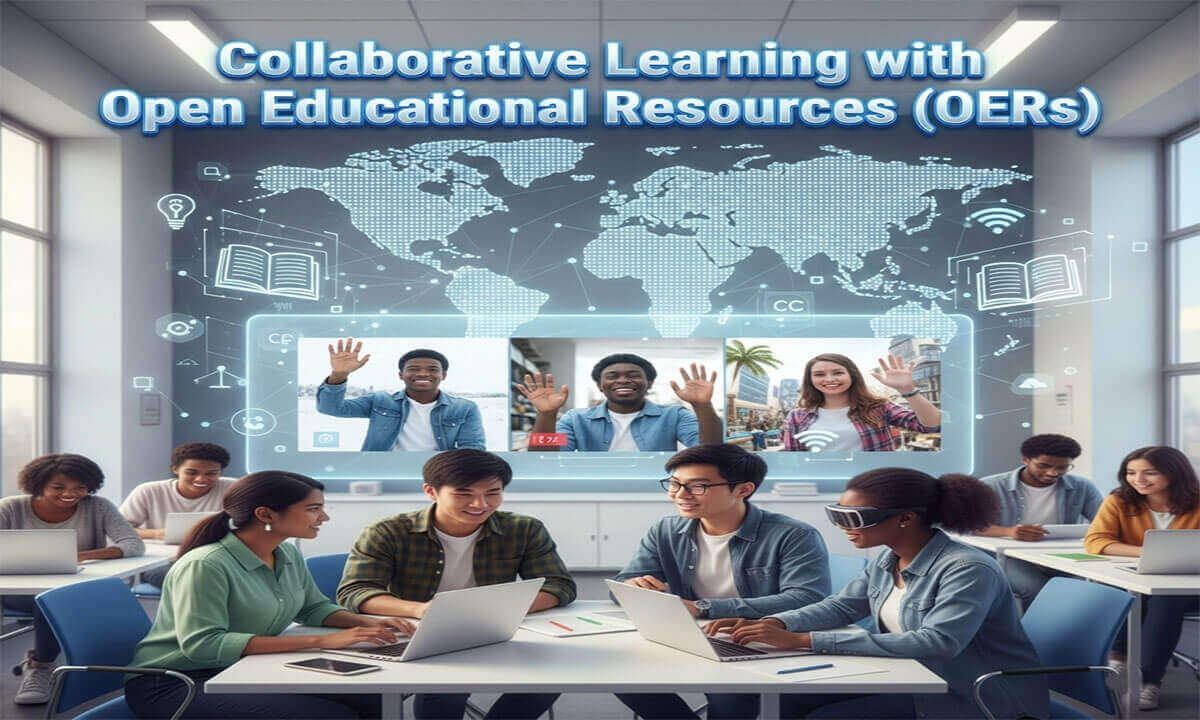
In today’s fast-paced digital world, education is evolving at an unprecedented speed. Learning is no longer limited to physical classrooms, expensive textbooks, or one-way lectures. With the expansion of the internet and digital technologies, learners now have access to vast amounts of knowledge from anywhere in the world. One of the most transformative developments in modern education is collaborative learning supported by Open Educational Resources (OERs). Collaborative learning emphasizes shared knowledge construction, while OERs remove financial and legal barriers to access educational materials. When these two approaches intersect, they create an inclusive, flexible, and highly engaging learning environment. This article explores Collaborative Learning with Open Educational Resources (OERs) (what OERs and collaborative learning are, how they work together, their benefits, real-world examples, challenges, and why they represent the future of global education).
What Are Open Educational Resources (OERs)?
Open Educational Resources (OERs) are teaching, learning, and research materials that are freely available and openly licensed, allowing anyone to access, use, adapt, and share them with few or no restrictions. The concept of OERs is grounded in the idea that knowledge should be a public good rather than a commodity restricted by cost or copyright barriers. According to UNESCO (2019), OERs include any educational materials that are either in the public domain or released under an open license that permits free use, modification, and redistribution.
OERs can take many forms, ranging from open textbooks, lecture notes, lesson plans, and syllabi to videos, simulations, assessments, software tools, and full online courses. Unlike traditional educational materials, which are often protected by restrictive copyrights, OERs are designed to be flexible and adaptable. Educators can tailor these resources to fit local contexts, cultural needs, language preferences, or different learning levels, making them especially valuable in diverse and inclusive educational settings (Weller, 2014).
A defining feature of OERs is their alignment with the 5R framework, which outlines the permissions granted through open licensing: the right to retain copies of the material, reuse it in a wide range of contexts, revise or adapt it, remix it with other materials, and redistribute the original or modified versions to others (Wiley, 2014). These permissions transform learners and educators from passive consumers into active contributors, encouraging innovation, collaboration, and continuous improvement of educational content.
Research has consistently shown that OERs can reduce the financial burden on students without compromising academic quality. Studies indicate that students using OER-based materials achieve learning outcomes comparable to, and sometimes better than, those using traditional textbooks, while also experiencing increased access and engagement (Hilton, 2016; Bliss et al., 2013). This cost-saving aspect is particularly significant for students in low-income or developing regions, where textbook expenses can be a major barrier to education.
Beyond affordability, OERs also support lifelong learning and educational equity. Because these resources remain openly accessible, learners can revisit them at any stage of their lives, whether for professional development, personal interest, or academic advancement (OECD, 2007). By removing institutional and economic gatekeeping, OERs promote a more inclusive and democratic education system in which knowledge can be freely shared and collaboratively developed across borders (UNESCO, 2019).
Thus, Open Educational Resources represent a fundamental shift in how educational content is created, distributed, and used. By embracing openness, adaptability, and collaboration, OERs play a crucial role in reshaping modern education and expanding learning opportunities for individuals and communities worldwide.
What Is Collaborative Learning?
Collaborative learning is an educational approach in which learners work together in small or large groups to achieve shared learning goals, rather than learning in isolation. Instead of passively receiving information from an instructor, students actively engage with one another through discussion, problem-solving, explanation, and reflection. This approach is rooted in the idea that knowledge is constructed socially and that learning is enhanced when individuals interact, exchange perspectives, and co-create understanding (Vygotsky, 1978).
At its core, collaborative learning emphasizes interaction, interdependence, and shared responsibility. Learners are encouraged to contribute their own ideas while also listening to and building upon the contributions of others. According to Johnson, Johnson, and Smith (2014), effective collaborative learning environments are characterized by positive interdependence, individual accountability, promotive interaction, and the development of interpersonal skills. These elements ensure that collaboration is purposeful and that all participants remain actively involved in the learning process.
Collaborative learning can take many forms, including group discussions, peer instruction, project-based learning, study circles, and online collaborative activities. With the growth of digital technologies, collaborative learning increasingly occurs in virtual environments where learners interact through discussion forums, shared documents, video conferencing, and open platforms. These online settings extend collaboration beyond classroom walls, enabling learners to work with peers from different institutions, cultures, and countries (OECD, 2007).
Research has shown that collaborative learning contributes significantly to deeper understanding, critical thinking, and problem-solving skills. When learners explain concepts to others, question assumptions, and negotiate meaning, they engage in higher-order cognitive processes that promote long-term retention and conceptual clarity (Laal & Ghodsi, 2012). Collaborative learning also helps students develop metacognitive skills by encouraging reflection on both their own thinking and the thinking of others.
In addition to cognitive benefits, collaborative learning supports the development of communication, teamwork, and social skills that are essential in academic, professional, and civic life. Through group interaction, learners practice articulating ideas clearly, resolving disagreements constructively, and working toward common goals; skills that are increasingly valued in modern workplaces and digital societies (Redecker, 2017).
Overall, collaborative learning represents a shift away from teacher-centered instruction toward a learner-centered, participatory model of education. By valuing dialogue, shared inquiry, and collective knowledge-building, collaborative learning creates more engaging and inclusive learning environments and lays a strong foundation for lifelong learning in an interconnected world.
The Power of Combining OERs and Collaborative Learning:
The integration of Open Educational Resources (OERs) with collaborative learning creates a powerful and transformative educational model that enhances access, engagement, and learning effectiveness. While OERs remove financial and legal barriers to knowledge, collaborative learning provides the social and cognitive framework through which that knowledge is actively constructed. Together, they shift education from a passive, content-driven experience to a participatory, learner-centered process that supports equity, innovation, and lifelong learning (UNESCO, 2019).
1. Expanding Access and Promoting Educational Equity: One of the most significant strengths of combining OERs with collaborative learning is the expansion of global access to quality education. Because OERs are freely available and openly licensed, learners from diverse socioeconomic and geographic backgrounds can access the same high-quality materials without cost constraints (Hilton, 2016). When these resources are used in collaborative settings, learners from different cultures and regions can work together, exchange perspectives, and co-create knowledge.
This collaborative use of OERs helps reduce long-standing educational inequalities by ensuring that learning opportunities are not limited to well-funded institutions. UNESCO (2019) emphasizes that open and collaborative educational practices play a crucial role in democratizing knowledge and supporting inclusive education systems worldwide.
2. Deepening Understanding Through Active Knowledge Construction: OERs often provide foundational content, such as open textbooks or instructional videos, but deeper learning occurs when learners engage with these materials collaboratively. Through discussion, debate, peer explanation, and shared problem-solving, students move beyond surface-level understanding to meaningful knowledge construction (Vygotsky, 1978).
Research shows that collaborative learning environments encourage higher-order thinking skills, including analysis, synthesis, and evaluation (Johnson et al., 2014). When learners collectively explore OER-based content, they challenge assumptions, clarify misconceptions, and refine their understanding, leading to stronger learning outcomes than solitary study alone (Laal & Ghodsi, 2012).
3. Encouraging Learner Agency and Knowledge Co-Creation: A defining feature of OERs is their adaptability, supported by the 5R permissions that allow users to revise, remix, and redistribute content (Wiley, 2014). When these freedoms are combined with collaborative learning, learners are empowered to become active contributors rather than passive consumers of knowledge.
For example, students may collaboratively adapt an open textbook to better reflect local contexts or emerging research. This process fosters a sense of ownership, responsibility, and agency in learning, reinforcing the idea that knowledge is dynamic and socially constructed (Weller, 2014).
4. Supporting Lifelong and Self-Directed Learning: The combination of OERs and collaborative learning also strongly supports lifelong learning. Because OERs remain openly accessible, learners can revisit materials and continue engaging with learning communities beyond formal education (OECD, 2007). Collaborative platforms built around OERs encourage ongoing dialogue, peer support, and shared inquiry, which help sustain motivation and curiosity over time.
This model aligns well with the demands of modern societies, where individuals must continuously update their knowledge and skills. Open, collaborative learning environments provide flexible pathways for personal, academic, and professional development (Redecker, 2017).
5. Developing Digital, Communication, and Social Skills: Collaborative learning using OERs frequently takes place in digital environments, requiring learners to communicate effectively through online discussions, shared documents, and virtual collaboration tools. These experiences help develop digital literacy, teamwork, and communication skills, which are essential in contemporary education and the workplace (Redecker, 2017).
By engaging in respectful dialogue, peer feedback, and collective problem-solving, learners also build social and intercultural competencies that prepare them for participation in a globally connected world.
Therefore, the combination of Open Educational Resources and collaborative learning creates a rich, inclusive, and dynamic learning ecosystem. By expanding access, deepening understanding, empowering learners, and supporting lifelong education, this integrated approach represents a significant step toward more equitable and participatory educational practices (UNESCO, 2019).
Real-World Examples of Collaborative Learning with OERs:
The practical impact of combining Open Educational Resources (OERs) with collaborative learning can be clearly seen in several real-world initiatives that actively engage learners in shared knowledge creation. These examples demonstrate how open access to learning materials, when paired with collaboration, can transform education into a participatory, inclusive, and meaningful experience.
1. Wiki Education: Wiki Education is one of the most prominent examples of collaborative learning built on OER principles. Through its programs, students contribute to Wikipedia as part of their coursework, using scholarly sources to create or improve articles that are freely accessible to the public. Wikipedia itself functions as an open educational resource, and student contributions directly expand global knowledge (UNESCO, 2019).
In this model, learning becomes deeply collaborative. Students work in teams, receive peer feedback, and interact with instructors and experienced Wikipedia editors. This process enhances research skills, critical thinking, and digital literacy, as students must evaluate sources, write for a public audience, and follow community guidelines. From a social constructivist perspective, this aligns with the idea that knowledge is built through interaction and shared meaning-making (Vygotsky, 1978). Rather than submitting assignments that are seen only by instructors, students participate in authentic knowledge production with real-world impact.
2. OpenStax: OpenStax, a nonprofit initiative, provides free, peer-reviewed, openly licensed textbooks used by millions of learners worldwide. These textbooks are not only cost-free but are designed to be adapted and reused in different educational contexts. When integrated into collaborative learning environments, OpenStax materials become the foundation for group discussions, problem-solving sessions, and peer instruction (Hilton, 2016).
Educators often encourage students to collaboratively annotate chapters, work through exercises together, or even suggest revisions to improve clarity and relevance. Studies have shown that students using OpenStax textbooks perform as well as or better than those using traditional commercial textbooks, while experiencing reduced financial stress (Bliss et al., 2013). This shared engagement with open textbooks exemplifies how OERs can support both academic success and collaborative learning practices.
3. Peer 2 Peer University (P2PU): Peer 2 Peer University (P2PU) is a community-driven learning platform that places collaboration at the center of the learning experience. It enables learners to form “study circles” around shared interests, using OERs such as open articles, videos, and courses as core learning materials. These study circles are facilitated by peers rather than traditional instructors, emphasizing shared responsibility and mutual support (OECD, 2007).
P2PU reflects the principles of learner agency and self-directed education. Participants collaboratively set goals, discuss resources, and reflect on their progress. The open nature of the resources allows learners to adapt content to their needs, reinforcing the 5R principles of OERs (Wiley, 2014). This model demonstrates how collaborative learning with OERs can thrive outside formal institutional structures while still producing meaningful learning outcomes.
4. Collaborative OER Adaptation in Higher Education: In many universities, instructors and students collaboratively adapt OERs to better suit local contexts, languages, or emerging research. For example, students may work in groups to revise open textbooks by adding case studies, local examples, or updated data. This practice not only deepens content understanding but also reinforces the idea that knowledge is dynamic and continuously evolving (Weller, 2014).
Such collaborative adaptation supports higher-order learning and promotes a sense of ownership among learners. It also aligns with the broader goal of educational equity by ensuring that learning materials reflect diverse perspectives and contexts (UNESCO, 2019).
Generally, these real-world examples illustrate how collaborative learning with OERs moves education beyond consumption toward participation, contribution, and shared knowledge creation. By engaging learners in authentic, collaborative tasks using open resources, these initiatives demonstrate the practical value and transformative potential of open, collaborative educational practices.
Challenges of Collaborative Learning with OERs:
While the integration of Open Educational Resources (OERs) with collaborative learning offers significant educational benefits, it also presents several challenges that can affect effectiveness and sustainability. Understanding these challenges is essential for educators, institutions, and policymakers seeking to implement open and collaborative learning environments successfully.
1. Digital Divide and Unequal Access: One of the most pressing challenges of collaborative learning with OERs is the digital divide. Although OERs are free to access, they still require reliable internet connectivity, appropriate digital devices, and basic technological skills. Learners in low-income, rural, or underserved regions often face limitations in accessing digital infrastructure, which can restrict their ability to participate fully in collaborative online learning environments (van Dijk, 2020).
This unequal access can lead to disparities in participation and learning outcomes, undermining the inclusive goals of OER-based education. The OECD (2007) emphasizes that without adequate technological support, open educational initiatives may unintentionally reinforce existing inequalities rather than reduce them.
2. Quality Assurance and Credibility of Resources: Another major concern relates to the quality and accuracy of OERs. Because OERs can be created, revised, and redistributed by a wide range of users, the quality of content can vary significantly. While many OERs undergo peer review, others may lack rigorous academic oversight, raising concerns about reliability and credibility (Weller, 2014).
In collaborative learning contexts, learners may encounter conflicting information or outdated materials, which can cause confusion if not carefully moderated. This challenge highlights the need for strong information literacy skills and critical evaluation practices among both educators and students (UNESCO, 2019).
3. Motivation, Engagement, and Self-Regulation: Collaborative learning with OERs often relies on learner autonomy and self-direction, which can be challenging for some students. Unlike traditional classroom settings with structured schedules and direct supervision, open collaborative environments require learners to manage their time, stay motivated, and actively contribute to group activities (OECD, 2007).
Research suggests that learners who lack strong self-regulation skills may disengage, participate unevenly, or rely excessively on more active group members. This imbalance can reduce the effectiveness of collaboration and create frustration among participants (Johnson et al., 2014).
4. Coordination and Group Dynamics: Effective collaboration depends on clear communication, shared goals, and mutual accountability. In OER-based collaborative learning, particularly in online or global contexts, coordinating group activities can be challenging due to differences in time zones, language proficiency, cultural norms, and communication styles (Vygotsky, 1978).
Without proper facilitation, group dynamics may suffer, leading to misunderstandings, uneven workload distribution, or conflict. These issues can hinder learning and reduce the perceived value of collaborative activities (Laal & Ghodsi, 2012).
5. Limited Institutional Support and Recognition: Despite growing interest in OERs, many educational institutions still lack formal policies, training, or incentives to support their use in collaborative learning. Educators may face time constraints, limited technical support, or insufficient recognition for creating or adapting OERs (UNESCO, 2019).
This lack of institutional backing can discourage sustained engagement with open and collaborative practices, limiting their long-term impact. For collaborative learning with OERs to thrive, institutions must invest in infrastructure, professional development, and supportive policies.
Subsequently, while collaborative learning with OERs holds great promise for expanding access and improving educational quality, it also faces challenges related to access, quality assurance, motivation, collaboration, and institutional support. Addressing these challenges through thoughtful design, facilitation, and policy development is essential to fully realize the transformative potential of open and collaborative education.
The Future of Collaborative Learning with OERs:
The future of collaborative learning with Open Educational Resources (OERs) appears highly promising as technological advancements, educational innovation, and global policy support continue to converge. As education systems worldwide seek more inclusive, flexible, and sustainable models of learning, the integration of OERs with collaborative practices is increasingly viewed as a strategic solution for addressing educational inequities and preparing learners for a rapidly changing world.
1. Expansion of Open Education Policies and Global Collaboration: International organizations and governments are playing a growing role in shaping the future of OER-based collaborative learning. UNESCO’s Recommendation on Open Educational Resources has encouraged countries to adopt national policies that support open licensing, capacity building, and international cooperation. As more institutions formally embrace open education, collaborative learning initiatives are expected to expand across borders, enabling learners and educators to co-create knowledge on a truly global scale.
This policy-driven support will further legitimize collaborative learning with OERs, integrating it into mainstream educational systems rather than positioning it as an alternative or supplementary approach.
2. Technological Innovation and Learning Platforms: Advances in digital technology will continue to enhance collaborative learning experiences using OERs. Learning management systems, open platforms, and collaborative tools increasingly support real-time interaction, shared content creation, and peer feedback. These technologies make it easier for learners to work together asynchronously or synchronously, regardless of location.
Emerging technologies such as artificial intelligence and learning analytics may further personalize collaborative learning experiences by helping learners identify suitable OERs, form effective learning groups, and receive adaptive feedback. When thoughtfully integrated, these tools can strengthen learner engagement while preserving the openness and flexibility central to OER-based education.
3. Greater Emphasis on Learner-Centered and Participatory Education: The future of education is moving decisively toward learner-centered and participatory models, where students are active contributors to knowledge rather than passive recipients. Collaborative learning with OERs aligns closely with this shift by empowering learners to adapt, remix, and co-create educational content.
From a theoretical perspective, this trend reflects social constructivist principles that emphasize learning through interaction and shared meaning-making. As institutions recognize the value of these approaches, collaborative learning using OERs is likely to become more deeply embedded in curriculum design and assessment practices.
4. Supporting Lifelong Learning and Workforce Development: In an era marked by rapid technological and economic change, lifelong learning has become essential. OER-based collaborative learning environments provide flexible pathways for continuous skill development and professional growth. Because OERs remain openly accessible, learners can return to educational resources throughout their lives and engage with communities of practice that support ongoing learning.
This model is particularly relevant for workforce development, where collaboration, adaptability, and continuous learning are increasingly valued. Open, collaborative learning ecosystems can help individuals reskill and upskill while remaining connected to diverse learning communities.
5. Toward a More Equitable and Sustainable Education System: Ultimately, the future of collaborative learning with OERs points toward a more equitable, sustainable, and inclusive education system. By reducing costs, promoting shared knowledge creation, and encouraging global collaboration, this approach addresses many of the structural challenges facing traditional education.
While issues such as digital access and quality assurance remain, ongoing research, policy development, and institutional investment are likely to mitigate these challenges over time. As open education continues to evolve, collaborative learning with OERs has the potential to redefine education as a shared, global endeavor rather than a limited institutional service.
Accordingly, the future of collaborative learning with OERs is closely tied to broader transformations in education, technology, and society. By embracing openness, collaboration, and learner agency, this model offers a compelling vision for education that is responsive to the needs of both individuals and communities in an interconnected world.
In conclusion, Collaborative learning with Open Educational Resources is more than a technological innovation; it is a fundamental transformation of how education is accessed, shared, and experienced. By removing financial barriers, encouraging active participation, and supporting lifelong learning, this approach empowers learners across the globe. While challenges such as digital access and quality assurance remain, the benefits far outweigh the limitations. As education continues to evolve, collaborative learning supported by OERs offers a powerful pathway toward a more equitable, connected, and knowledgeable world. Whether you are a student, educator, or lifelong learner, engaging with OERs and collaborative communities opens the door to learning without limits.
Frequently Asked Questions (FAQs):
What are Open Educational Resources (OERs)?
Open Educational Resources (OERs) are teaching, learning, and research materials that are freely available and openly licensed. This means anyone can access, use, adapt, and share them without cost. Examples include open textbooks, videos, lecture notes, quizzes, and full online courses.
How is collaborative learning different from traditional learning?
Traditional learning often focuses on individual study and teacher-centered instruction. Collaborative learning, on the other hand, emphasizes group work, discussion, and shared problem-solving, allowing learners to actively construct knowledge together rather than passively receiving information.
Why are OERs important for collaborative learning?
OERs provide a common, free foundation that all learners can access equally. Because they can be modified and shared, learners can work together to adapt materials, discuss content, and even co-create new resources, making collaboration more meaningful and inclusive.
Can collaborative learning with OERs work in online environments?
Yes, collaborative learning with OERs works particularly well online. Discussion forums, shared documents, virtual classrooms, and open platforms allow learners from different locations to collaborate, exchange ideas, and learn together using the same open resources.
Are OERs academically reliable?
Many OERs are peer-reviewed and created by experts, especially those produced by reputable institutions and organizations. However, learners and educators should always evaluate the quality, accuracy, and relevance of OERs before using them, just as they would with traditional materials.
What skills do students gain from collaborative learning with OERs?
Students develop critical thinking, problem-solving, communication, teamwork, and digital literacy skills. They also gain experience in self-directed learning and knowledge sharing, which are essential for academic success and modern workplaces.
What challenges might learners face when using OERs collaboratively?
Common challenges include limited internet access, uneven participation in group work, maintaining motivation, and ensuring the quality of resources. With proper guidance, facilitation, and institutional support, many of these challenges can be reduced.
Is collaborative learning with OERs suitable for all education levels?
Yes, this approach can be adapted for primary, secondary, higher education, and adult learning. The key is selecting appropriate resources and designing collaborative activities that match learners’ ages, skills, and learning goals.
How can teachers effectively use OERs for collaborative learning?
Teachers can encourage group discussions, peer teaching, project-based learning, and collaborative content adaptation using OERs. Providing clear instructions, roles, and assessment criteria helps ensure productive collaboration.
What is the long-term value of collaborative learning with OERs?
In the long term, this approach supports lifelong learning, educational equity, and global knowledge sharing. It prepares learners to work collaboratively, adapt to change, and continue learning throughout their lives.
References:
- Bliss, T. J., Robinson, T. J., Hilton, J., & Wiley, D. A. (2013). An OER COUP: College teacher and student perceptions of open educational resources. Journal of Interactive Media in Education, 2013(1), 1–25. https://doi.org/10.5334/2013-04
- Hilton, J. (2016). Open educational resources and college textbook choices: A review of research on efficacy and perceptions. Educational Technology Research and Development, 64(4), 573–590. https://doi.org/10.1007/s11423-016-9434-9
- Johnson, D. W., Johnson, R. T., & Smith, K. A. (2014). Cooperative learning: Improving university instruction by basing practice on validated theory. Journal on Excellence in College Teaching, 25(3&4), 85–118.
- Laal, M., & Ghodsi, S. M. (2012). Benefits of collaborative learning. Procedia – Social and Behavioral Sciences, 31, 486–490. https://doi.org/10.1016/j.sbspro.2011.12.091
- (2007). Giving knowledge for free: The emergence of open educational resources. OECD Publishing. Retrieved From https://www.oecd.org/content/dam/oecd/en/publications/reports/2007/05/giving-knowledge-for-free_g1gh7eee/9789264032125-en.pdf
- Redecker, C. (2017). European Framework for the Digital Competence of Educators: DigCompEdu (Y. Punie, Ed.). Publications Office of the European Union. https://doi.org/10.2760/159770
- Sancinito, J. (2025, December 18). Wikipedia on the tenure track. Wiki Education. https://wikiedu.org/blog/2025/12/18/wikipedia-on-the-tenure-track/
- (2019). Recommendation on Open Educational Resources (OER). UNESCO. Retrieved From https://www.unesco.org/en/legal-affairs/recommendation-open-educational-resources-oer
- Van Dijk, J. (2020). The Digital Divide. Polity Press.
- Vygotsky, L. S. (1978). Mind in society: The development of higher psychological processes. Harvard University Press.
- Weller, M. (2014). Battle for Open: How openness won and why it doesn’t feel like victory. London: Ubiquity Press. https://doi.org/10.5334/bam
- Wiley, D. (2014). The access compromise and the 5th R. Open Content. Retrieved From https://opencontent.org/blog/archives/3221

Library Lecturer at Nurul Amin Degree College