The Role of Extracurricular Activities in Preventing Bullying:
Bullying is a serious problem that many students face at school. It can make students feel sad, scared, and left out. Bullying not only affects learning but also harms students’ confidence and happiness. Research has consistently shown that students who experience bullying are more likely to suffer from anxiety, depression, low self-esteem, and school avoidance (Olweus, 2013). One helpful way to reduce bullying is through extracurricular activities. These include sports teams, clubs, music, drama, and volunteer groups. When students take part in these activities, they make friends, learn teamwork, and feel more confident. This article explains the role of extracurricular activities in preventing bullying (how extracurricular activities help prevent bullying and why they are important for creating a safe and friendly school environment).
How Extracurricular Activities Help Prevent Bullying:
Extracurricular activities play a significant role in shaping students’ social behavior and emotional development, both of which are closely linked to bullying prevention. Unlike traditional classroom settings, these activities provide informal yet structured environments where students interact more freely, build relationships, and develop essential life skills. Research shows that consistent participation in organized after-school programs is associated with lower levels of aggression, victimization, and antisocial behavior (Durlak et al., 2010).
1. Building Strong Social and Emotional Skills: One of the most important ways extracurricular activities help prevent bullying is by strengthening students’ social and emotional skills. Bullying often occurs when students struggle with empathy, emotional regulation, or conflict resolution. Clubs, sports, and group-based activities naturally require communication, cooperation, and emotional awareness.
Through regular interaction with peers, students learn how to express themselves respectfully, listen to others’ perspectives, and manage disagreements without resorting to aggression. According to Durlak et al. (2010), programs that intentionally or unintentionally promote social-emotional learning significantly reduce problem behaviors while improving peer relationships. These improved skills make students less likely to bully others and better equipped to respond assertively if they are targeted.
2. Encouraging Teamwork and Cooperation: Bullying is often rooted in power imbalances, where one student seeks control or dominance over another. Extracurricular activities (especially team-oriented ones) help reduce these imbalances by emphasizing shared responsibility and collective success. In sports teams, debate clubs, or music ensembles, each member contributes to a common goal, making cooperation essential.
This environment discourages hierarchical thinking and promotes mutual respect. When students depend on one another, they are more likely to appreciate differences rather than exploit them. Research supports this idea, showing that cooperative group settings reduce aggressive behaviors and foster positive peer norms (Smith et al., 2004).
3. Strengthening Self-Esteem and Emotional Resilience: Self-esteem plays a critical role in bullying dynamics. Students with low confidence are more vulnerable to victimization, while some students bully others to compensate for their own insecurities. Extracurricular activities provide multiple pathways for success that are not limited to academic achievement.
When students excel in areas such as sports, arts, leadership, or technology, they gain a sense of competence and identity. Mahoney et al. (2003) found that students involved in extracurricular activities reported higher self-esteem and stronger emotional adjustment. This increased confidence helps students stand up for themselves, seek help when needed, and avoid using bullying as a means of self-validation.
4. Creating Inclusive Environments: Feelings of isolation and exclusion are strong predictors of bullying involvement. Students who feel disconnected from their school community are more likely to be bullied or engage in bullying behaviors. Extracurricular activities address this issue by fostering a sense of belonging.
Interest-based clubs and activities bring together students who share passions, regardless of their social background or popularity. This shared identity helps students feel accepted and valued. Eccles and Barber (1999) emphasize that participation in extracurricular activities strengthens students’ connection to school, which serves as a protective factor against bullying and peer victimization.
5. Keeping Students Engaged and Occupied: Unstructured time, particularly after school, can increase opportunities for negative peer interactions. Extracurricular activities provide structured, supervised spaces where positive behavior is encouraged and monitored. Mahoney and Stattin (2000) found that adolescents involved in organized activities were less likely to engage in antisocial behaviors compared to those with excessive unstructured leisure time.
By keeping students engaged in meaningful tasks, schools reduce the likelihood of boredom-driven conflicts and harmful social dynamics. These environments promote accountability, respect, and positive peer norms, all of which contribute to lower bullying rates.
6. Exposure to Positive Role Models and Mentors: Extracurricular settings often involve coaches, advisors, and older students who act as role models. These mentors reinforce expectations of respectful behavior and intervene early when conflicts arise. Positive adult-student relationships are strongly linked to improved school climate and reduced bullying (Holt et al., 2015).
Observing respectful leadership helps students internalize values such as fairness, empathy, and responsibility. Over time, these values shape how students treat others, both within and beyond extracurricular settings.
7. Offering Safe Spaces for Vulnerable Students: For students who feel marginalized, anxious, or unsafe in traditional classrooms, extracurricular activities can serve as safe havens. These spaces allow students to form supportive peer networks and access trusted adults. A strong support system reduces feelings of isolation, which are closely linked to bullying victimization (Espelage & Swearer, 2011).
When students know they have a place where they belong and people who care about them, they are more likely to report bullying, seek help, and develop healthier coping strategies.
Types of Extracurricular Activities That Are Especially Effective:
Although most extracurricular activities contribute positively to students’ social and emotional development, certain types are particularly effective in preventing bullying. These activities share common characteristics: they encourage cooperation, foster inclusion, promote self-confidence, and provide consistent adult guidance. Research suggests that structured, well-supervised activities are especially successful in reducing aggression and improving peer relationships (Durlak et al., 2010; Mahoney & Stattin, 2000).
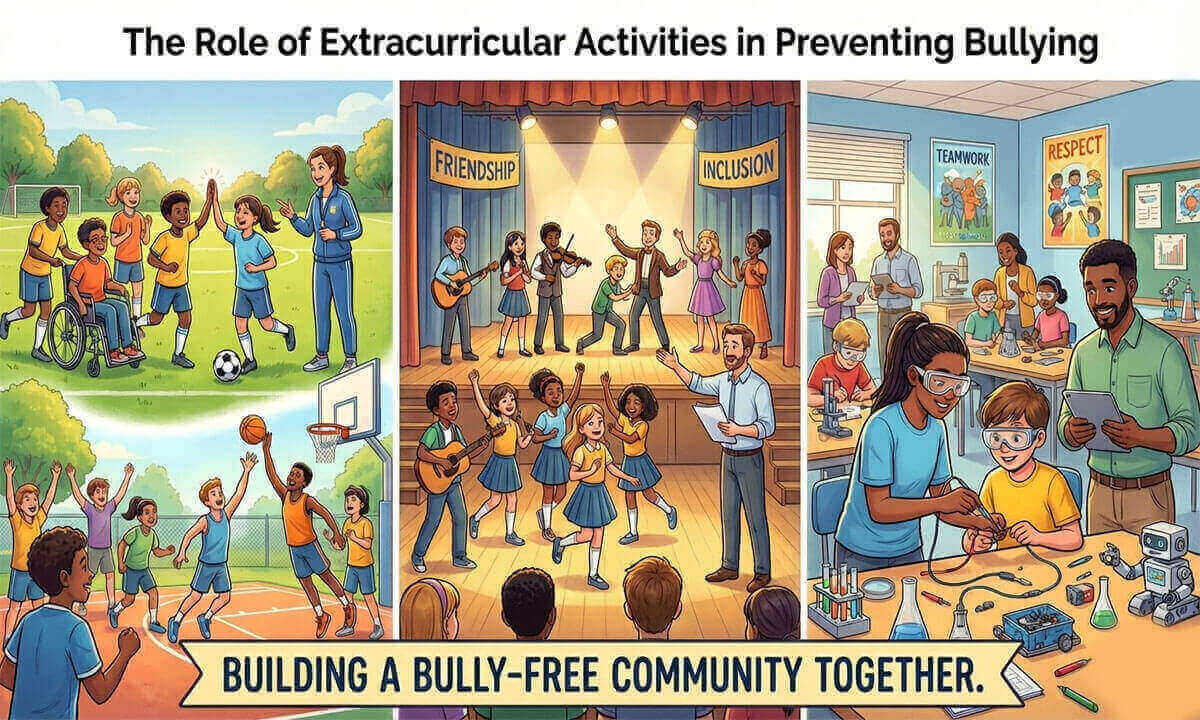
1. Team Sports (e.g., Soccer, Basketball, Volleyball): Team sports are among the most widely recognized extracurricular activities for promoting positive social behavior. These activities emphasize cooperation, discipline, and shared responsibility, which directly counter the power imbalances often present in bullying situations. Players must rely on one another to succeed, encouraging mutual respect and appreciation of diverse abilities.
Participation in team sports has been linked to stronger peer relationships and reduced social isolation (Eccles & Barber, 1999). Coaches often reinforce values such as fair play, empathy, and accountability, helping students learn how to manage competition in healthy ways. When sports programs focus on teamwork rather than dominance, they create environments where bullying behaviors are less likely to emerge.
2. Performing Arts Programs (Drama, Music, Dance): Performing arts activities provide students with powerful opportunities for self-expression and emotional exploration. These programs are especially beneficial for students who may feel marginalized or uncomfortable in traditional academic or athletic settings. Through rehearsals and performances, students develop confidence, communication skills, and emotional awareness.
Research indicates that participation in arts-based extracurricular activities strengthens self-esteem and fosters a strong sense of belonging (Mahoney et al., 2003). Because success in the performing arts depends on collaboration and mutual support, students learn to respect individual differences and talents. This culture of acceptance helps reduce exclusion, one of the key drivers of bullying (Espelage & Swearer, 2011).
3. Academic and Interest-Based Clubs (Debate, Robotics, Science Clubs): Academic and interest-based clubs offer inclusive spaces where intellectual curiosity and shared passions take precedence over social status. These clubs bring together students who may not otherwise interact, promoting cross-group friendships and collaboration.
Activities such as debate teams or robotics clubs require problem-solving, communication, and collective decision-making. According to Eccles and Barber (1999), students involved in academic clubs report stronger school engagement and lower levels of social alienation. This sense of connection reduces the likelihood of both bullying behavior and victimization by fostering positive peer norms and respect for diverse strengths.
4. Volunteer and Leadership Programs: Volunteer and leadership-oriented extracurricular activities play a crucial role in cultivating empathy, social responsibility, and moral development. By engaging in community service, peer mentoring, or student leadership roles, students learn to consider others’ needs and perspectives.
Research shows that programs emphasizing prosocial values are effective in reducing aggressive and antisocial behaviors (Durlak et al., 2010). Leadership activities also teach accountability and ethical decision-making, discouraging behaviors that harm others. Students who develop a strong sense of purpose and social responsibility are less likely to engage in bullying and more likely to intervene when they witness it.
5. Martial Arts and Self-Defense Programs: When taught within an ethical and educational framework, martial arts and self-defense programs can be highly effective in bullying prevention. These activities emphasize self-discipline, emotional control, respect for others, and non-violent conflict resolution rather than aggression.
Participation in structured physical activities has been associated with improved self-regulation and confidence (Mahoney et al., 2003). Increased confidence helps students set boundaries and respond assertively to bullying without resorting to violence. Moreover, the emphasis on respect and self-control discourages misuse of physical strength, aligning with broader anti-bullying goals (Smith et al., 2013).
6. Clubs Focused on Social and Emotional Learning: Clubs or programs specifically designed to enhance social and emotional learning (such as peer support groups, diversity clubs, or mindfulness programs) directly address the underlying causes of bullying. These activities teach empathy, emotional awareness, and constructive communication in supportive group settings.
Espelage and Swearer (2011) highlight the importance of whole-school and peer-focused approaches in bullying prevention. Extracurricular programs that explicitly promote emotional intelligence and inclusion reinforce positive behaviors learned in the classroom and extend them into students’ social lives.
How Schools and Parents Can Encourage Extracurricular Participation:
Extracurricular activities can only help prevent bullying if students actually take part in them. Schools and parents both play an essential role in encouraging children to join activities and feel comfortable staying involved.
What Schools Can Do: Schools can create a positive and safe environment by offering many different extracurricular options. Not every student enjoys sports, so schools should also provide clubs for arts, music, science, technology, and community service.
Schools can help by:
- Offering a wide range of activities for different interests
- Making sure all students feel welcome, regardless of skill level
- Training teachers and coaches to promote kindness and respect
- Clearly explaining rules about respectful behavior during activities
When schools support extracurricular programs, students feel safer and more encouraged to participate.
What Parents Can Do: Parents play a key role in guiding children toward positive activities. When parents show interest and support, children feel more confident trying new things.
Parents can help by:
- Encouraging children to explore different activities
- Listening to their child’s interests instead of forcing choices
- Attending games, shows, or club events
- Talking with teachers or coaches about their child’s experience
Parental support helps students feel valued and motivated to stay involved.
Working Together to Prevent Bullying: When schools and parents work together, extracurricular activities become even more effective. Clear communication helps identify problems early and ensures that activities remain safe and positive.
Students who feel supported both at home and at school are more likely to:
- Respect others
- Speak up when bullying happens
- Build healthy friendships
In Simple Words:
Bullying prevention works best when:
- Schools offer fun and safe activities
- Parents encourage and support participation
- Adults work together to guide students
When students are supported, involved, and engaged, they are less likely to bully others and more likely to stand up for kindness.
In conclusion, extracurricular activities play an important role in preventing bullying in schools. They help students build confidence, learn how to work with others, and feel that they belong. When students are busy with positive activities, they are less likely to bully others or become victims of bullying. By encouraging students to join clubs, teams, and other after-school programs, schools and parents can help create a kinder and safer environment. When students feel supported, respected, and included, bullying has less chance to grow. A school where students feel happy and connected is a school where everyone can learn and succeed.
Frequently Asked Questions (FAQs):
Can extracurricular activities really help prevent bullying?
Yes, extracurricular activities help students build friendships, develop social skills, and feel more connected to their school community. When students feel supported and included, they are less likely to bully others or become targets of bullying.
Are sports more effective than other extracurricular activities in reducing bullying?
Sports can be helpful, but they are not the only effective option. Activities such as drama, music, debate, robotics, and volunteer programs can be just as impactful. What matters most is that the activity promotes teamwork, respect, and inclusion rather than unhealthy competition.
Do extracurricular activities help both bullies and victims?
Yes, Students who bully often benefit from learning empathy, teamwork, and self-control, while students who are bullied gain confidence, friendships, and emotional support. These activities help all students develop healthier ways to interact with others.
What if a child is shy or socially anxious?
Extracurricular activities can be especially helpful for shy or socially anxious students. Clubs based on shared interests allow students to connect in smaller, more comfortable settings, helping them build confidence and friendships at their own pace.
At what age should students start participating in extracurricular activities?
Students can benefit from extracurricular activities at almost any age, as long as the activities are age-appropriate. Early involvement helps children develop social skills and positive peer relationships before negative behaviors like bullying become common.
Can extracurricular activities help prevent cyberbullying too?
While extracurricular activities do not directly control online behavior, they help reduce the root causes of cyberbullying. Strong friendships, higher self-confidence, and supportive adult relationships make students less likely to engage in online harassment and more likely to seek help if it happens.
What should schools do if bullying happens during an extracurricular activity?
Bullying should be addressed immediately. Coaches and activity leaders should step in, set clear expectations, and reinforce respectful behavior. Creating a safe and supportive environment is just as important in after-school programs as it is in classrooms.
Are extracurricular activities enough on their own to stop bullying?
Extracurricular activities work best as part of a greater effort. When combined with school policies, classroom learning, and parental support, they become a powerful tool in creating a positive, bullying-free school culture.
How can parents know if an extracurricular program is safe and supportive?
Parents can talk regularly with their children about their experiences, communicate with teachers or coaches, and observe activities when possible. Programs that focus on respect, inclusion, and encouragement tend to provide the safest environments.
What is the prime assistance of extracurricular activities in preventing bullying?
The prime assistance is a sense of belonging. When students feel valued and accepted, they are more confident, kinder to others, and less likely to be involved in bullying.
References:
- Durlak, J. A., Weissberg, R. P., & Pachan, M. (2010). A meta-analysis of after-school programs that seek to promote personal and social skills in children and adolescents. American Journal of Community Psychology, 45(3–4), 294–309. https://doi.org/10.1007/s10464-010-9300-6
- Eccles, J. S., & Barber, B. L. (1999). Student council, volunteering, basketball, or marching band: What kind of extracurricular involvement matters? Journal of Adolescent Research, 14(1), 10–43. https://doi.org/10.1177/0743558499141003
- Espelage, D. L., & Swearer, S. M. (2011). A social-ecological model for bullying prevention and intervention. Handbook of Bullying in Schools. Routledge.
- Holt, M. K., Vivolo-Kantor, A. M., Polanin, J. R., Holland, K. M., DeGue, S., Matjasko, J. L., Wolfe, M., & Reid, G. (2015). Bullying and suicidal ideation and behaviors: A meta-analysis. Pediatrics, 135(2), e496–e509. https://doi.org/10.1542/peds.2014-1864
- Mahoney, J. L., Cairns, B. D., & Farmer, T. W. (2003). Promoting Interpersonal Competence and Educational Success through Extracurricular Activity Participation. Journal of Educational Psychology, 95, 409-418. https://doi.apa.org/doi/10.1037/0022-0663.95.2.409
- Mahoney, J. L., & Stattin, H. (2000). Leisure activities and adolescent antisocial behavior: the role of structure and social context. Journal of Adolescence, 23(2), 113–127. https://doi.org/10.1006/jado.2000.0302
- Olweus, D. (2013). School bullying: Development and some important challenges. Annual Review of Clinical Psychology, 9, 751–780. https://doi.org/10.1146/annurev-clinpsy-050212-185516
- Smith, P. K., Pepler, D., & Rigby, K. (Eds.). (2004). Bullying in Schools: How Successful Can Interventions Be? Cambridge: Cambridge University Press.

Library Lecturer at Nurul Amin Degree College