How You Can Improve Your Skills as a Coach:
Coaching has evolved into a powerful, professional practice grounded in partnership, presence, and purposeful dialogue. Unlike mentoring or counseling, coaching does not center on giving advice or solving problems for the client. Instead, it creates a structured yet flexible space where individuals can think more clearly, access their own insights, and take meaningful action. At its heart, great coaching is built on self-awareness, trust, and a nondirective approach that honors the client as capable and resourceful. Today’s most effective coaches combine deep listening, thoughtful questioning, and ethical awareness with evidence-based techniques that support growth and accountability. While digital tools and artificial intelligence can enhance organization, reflection, and data tracking, they cannot replace empathy, human connection, and the subtle presence that builds trust. As the coaching profession continues to grow, understanding core competencies and developing a strong professional toolkit are essential steps toward excellence. This article explores how you can improve your skills as a coach that can elevate coaching practice in a rapidly changing world.

What Are the Best Coaching Skills to Have?
Developing excellence as a coach requires more than mastering techniques; it demands ongoing inner development, ethical awareness, and disciplined practice. Research consistently shows that effective coaching is grounded in self-awareness, relational competence, and evidence-based structure (Passmore, 2021).
- Self-Awareness (The Foundation of Professional Coaching): It may seem surprising, but one of the most important coaching skills is not something you “do” for the client, it is something you cultivate within yourself. Self-awareness enables coaches to recognize their personal biases, assumptions, emotional triggers, and habitual thinking patterns that may unconsciously shape the coaching relationship (Passmore, 2021). Without this awareness, coaches risk steering conversations toward their own perspectives rather than remaining aligned with the client’s agenda.
Self-awareness creates psychological space. When coaches understand their own internal reactions, they are better able to suspend judgment, manage countertransference, and remain genuinely curious. This inner clarity allows for humility, an essential quality in nondirective coaching. Instead of positioning themselves as experts with answers, self-aware coaches trust the client’s capacity for insight and growth.
Furthermore, self-awareness underpins ethical practice. Coaches who are attuned to their internal processes are more likely to recognize when boundaries are blurred, when personal values are influencing the session, or when referral to another professional is appropriate (Passmore, 2021). In this way, self-awareness forms the ethical and relational bedrock of effective coaching.
- Active Listening: Active listening is far more than simply hearing words. In coaching, it involves full presence, listening to tone, pace, hesitations, body language, and emotional shifts. It requires the coach to move beyond surface content and attend to meaning beneath the narrative (Peláez Zuberbuhler et al., 2020; Passmore, 2021).
Skilled coaches listen for patterns, contradictions, limiting beliefs, and emerging strengths. They notice what is said and what remains unsaid. Silence, often uncomfortable in everyday conversation, becomes a powerful tool in coaching. Long pauses allow clients to reflect more deeply, access new insights, and formulate thoughts that might otherwise remain unexplored (Peláez Zuberbuhler et al., 2020).
Importantly, active listening communicates respect. When clients feel truly heard, without interruption, premature advice, or evaluation, they are more willing to explore vulnerable topics. This depth of listening creates the conditions for transformative insight.
- Powerful Questioning: Active listening naturally leads to powerful questioning for the essence of coaching practice. Coaching questions are open-ended, exploratory, and designed to stimulate reflection rather than deliver solutions. They encourage clients to consider new perspectives, uncover blind spots, and generate their own meaning (Passmore & Sinclair, 2020).
Effective coaching questions typically avoid “why” at the outset, as such phrasing can feel accusatory or judgmental (Shedler, 2010; Passmore & Sinclair, 2020). Instead, questions beginning with “what” or “how” invite curiosity and forward movement. For example, “What might be another way to look at this situation?” or “How does this belief serve you?” opens space for self-discovery.
Powerful questions are always anchored in the client’s agenda. When coaches impose their own assumptions, the inquiry becomes directive rather than developmental. The goal is to evoke awareness and deepen self-understanding, not to guide clients toward a predetermined answer (Passmore & Sinclair, 2020).
- Building Psychological Safety: Psychological safety is essential for meaningful coaching. Without trust, clients are unlikely to explore difficult emotions, limiting beliefs, or deeply held fears. Establishing safety begins with the contracting process, which clarifies confidentiality, boundaries, and mutual expectations (International Coaching Federation, 2021; Western, 2017).
A well-defined contract signals professionalism and ethical integrity. It reassures clients that their disclosures are protected and that the coaching relationship has structure. Beyond formal agreements, psychological safety also depends on the coach’s consistent nonjudgmental presence. Clients must feel respected, not evaluated (Behrendt & Greif, 2018).
Research highlights the importance of maintaining a coherent session structure (the “red thread”) that provides clarity and direction (Behrendt & Greif, 2018). When sessions are organized and purpose-driven, clients experience a sense of containment and progress. Additionally, a cooperative, nondirective partnership fosters openness and engagement, characteristics that distinguish highly effective coaches (Behrendt & Greif, 2018).
- Goal Setting: Although coaching is client-centered and exploratory, it is also goal-oriented. Coaches play a vital role in helping clients clarify meaningful objectives that are specific, realistic, and aligned with personal values (Riddell, 2021). Vague intentions often stall progress; precise goals create direction.
Evidence-based models such as the GROW model (Whitmore, 2009) provide a structured pathway from identifying goals to exploring current reality, generating options, and committing to action. This process encourages clients to anticipate obstacles and develop strategies to overcome them.
Importantly, goal setting enhances self-efficacy. When clients break down ambitions into achievable steps, they build confidence in their ability to enact change (Riddell, 2021). Progress tracking and reflection reinforce motivation, strengthening the client’s sense of agency and ownership of outcomes.
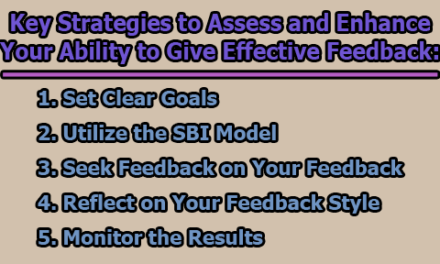
- Effective Feedback: Feedback in coaching differs from criticism or evaluation. It involves offering observations with clarity, compassion, and alignment to the client’s goals (International Coaching Federation, 2021). Effective feedback is specific and grounded in observable behaviors rather than personal traits.
For example, instead of saying, “You lack confidence,” a coach might say, “I noticed that during our discussion about presenting to your team, your voice lowered and you avoided eye contact. What was happening for you in that moment?” This approach maintains respect while encouraging reflection.
Balanced feedback also acknowledges strengths. Highlighting progress reinforces growth and sustains motivation. When delivered skillfully, feedback becomes a mirror that enhances awareness rather than a verdict that diminishes self-esteem.
- Empathy and Emotional Awareness: Empathy and emotional awareness are central to coaching effectiveness because they allow the coach to genuinely understand the client’s inner world (Palmer & Whybrow, 2018; Nicolau et al., 2023). Empathy communicates acceptance and validation, creating an environment where clients feel safe to express vulnerability.
However, empathy is not merely emotional resonance, it requires emotional awareness. Coaches must first recognize their own emotional states before accurately perceiving those of others (Riddell, 2021). Without self-regulation and awareness, emotional responses may become reactive rather than supportive.
When emotional awareness is absent, empathy can feel mechanical or superficial. Genuine empathy involves attunement to subtle cues like tone shifts, micro-expressions, and energy changes (Palmer & Whybrow, 2018). This attunement enables coaches to respond with sensitivity and depth.
Empathy also supports clients in processing both challenges and successes. By validating emotions without judgment, coaches help clients integrate experiences, build resilience, and access intrinsic motivation (Nicolau et al., 2023).
So, the best coaching skills are not isolated techniques but interconnected competencies rooted in self-awareness, relational intelligence, and evidence-based structure. From active listening and powerful questioning to psychological safety, goal setting, feedback, and empathy, each skill contributes to a coaching partnership that empowers clients to think independently and act intentionally.
At its core, effective coaching is a disciplined practice of presence. It requires continuous self-reflection, ethical clarity, and a deep commitment to honoring the client’s autonomy. When these competencies are integrated, coaching becomes not merely a conversation but a transformative developmental process.
Why Do These Particular Coaching Skills Matter?
The effectiveness of coaching does not rest on techniques alone, but on the quality of the relational and psychological environment the coach creates. Skills such as self-awareness, empathy, active listening, and sensitivity to each client’s context form the foundation of impactful coaching practice (Riddell, 2021). These competencies are not optional enhancements; they are the mechanisms through which trust, insight, and sustainable change emerge.
- They Create the Conditions for Trust and Openness: Trust is the cornerstone of any successful coaching engagement. Without it, clients are unlikely to share vulnerabilities, confront limiting beliefs, or explore emotionally charged experiences. Core relational skills (particularly empathy and active listening) signal to clients that they are heard, respected, and valued.
Research indicates that such relational qualities significantly influence the strength of the coaching alliance, which in turn predicts engagement and positive outcomes (Carr et al., 2012). When clients feel psychologically safe, they are more willing to take intellectual and emotional risks. They begin to move beyond surface-level problem-solving and into deeper reflection.
Self-awareness also plays a critical role in trust-building. Coaches who are aware of their biases and assumptions are less likely to impose interpretations or judgments. This creates space for genuine curiosity and collaboration (Riddell, 2021). Over time, this consistent, respectful presence strengthens the relational bond and deepens the coaching process.
- They Enhance Emotional Attunement and Accuracy: Emotional awareness allows coaches to perceive not only what clients say, but what they feel. Attunement to emotional signals (subtle shifts in tone, posture, or energy) helps coaches identify underlying concerns that may not yet be fully articulated (Palmer & Whybrow, 2018).
For example, a client may describe a workplace conflict in neutral terms, yet display signs of frustration or anxiety. An emotionally attuned coach can gently explore these cues, helping the client bring implicit emotions into conscious awareness. This deeper understanding often reveals the true leverage points for change.
Moreover, emotional awareness improves the accuracy of support. Rather than offering generic guidance, coaches can tailor their questions and reflections to the client’s lived experience and psychological state (Palmer & Whybrow, 2018). This personalization increases the relevance and impact of the coaching intervention.
- They Facilitate Transformational Learning: Transformational coaching involves more than goal attainment; it supports shifts in perspective, identity, and habitual patterns of thinking. When clients examine assumptions, challenge limiting narratives, and experiment with new behaviors, meaningful change becomes possible.
Core coaching skills (particularly powerful questioning and reflective listening) create the cognitive and emotional space for this transformation. By helping clients see situations from new angles, coaches enable perspective shifts that can alter decision-making and behavior patterns (Riddell, 2021).
Importantly, when coaches embody emotional intelligence (demonstrating empathy, self-regulation, and respectful dialogue); they model the very capacities clients may wish to cultivate. This modeling effect reinforces learning, offering clients a practical example of emotionally intelligent communication and reflection in action.
- They Uphold Ethical and Professional Standards: Professional coaching is grounded in ethical responsibility and client autonomy. Aligning practice with recognized professional standards ensures that coaching remains respectful, confidential, and client-centered (Passmore, 2016).
Skills such as self-awareness and empathy safeguard ethical practice by reducing the risk of manipulation, undue influence, or boundary violations. Coaches who remain aware of their own motivations are better equipped to maintain appropriate limits and avoid overstepping into advisory or therapeutic roles.
Furthermore, a strong commitment to listening and collaboration reinforces client autonomy. Instead of directing solutions, coaches empower clients to generate their own insights and decisions. This respect for self-determination is central to ethical coaching practice and enhances long-term developmental outcomes (Passmore, 2016).
- They Sustain Long-Term Impact: Coaching skills matter not only for immediate session outcomes but also for sustained growth beyond the coaching relationship. When clients feel deeply understood and respected, they internalize a sense of capability and agency.
Through repeated experiences of reflective dialogue and supportive challenge, clients learn to question their own assumptions, regulate emotions, and set meaningful goals independently. In this way, the coach’s relational skills become internalized as self-coaching capacities.
As Carr et al. (2012) suggest, the strength of the coaching alliance significantly contributes to long-term effectiveness. Thus, cultivating these core competencies is not merely about professionalism, it is about maximizing transformative impact.
Thus, these particular coaching skills matter because they shape the relational, emotional, and ethical foundation of the coaching process. Self-awareness, empathy, active listening, and contextual sensitivity foster trust and psychological safety. Emotional attunement ensures guidance is accurate and meaningful. Embodied emotional intelligence models growth for clients.
Aligned with professional standards (Passmore, 2016), these competencies safeguard autonomy and respect while enabling transformational change. Ultimately, coaching succeeds not because of techniques alone, but because of the depth, integrity, and presence the coach brings to the partnership.
5 Essential Coaching Skills to Attain Success:
While foundational coaching competencies such as listening, empathy, and goal setting are indispensable, certain advanced skills distinguish competent practitioners from truly exceptional coaches. These abilities deepen transformation, strengthen autonomy, and expand the coach’s impact across individual and organizational contexts. The following five skill sets represent essential capabilities for coaches seeking long-term success and professional excellence.
- Challenging Limiting Mindsets: One of the defining qualities of a highly successful coach is the ability to gently but effectively challenge limiting beliefs. Clients often arrive with internal narratives that constrain their growth; beliefs about their capabilities, identity, or external circumstances. These assumptions may operate unconsciously, shaping behavior and reinforcing stagnation.
An effective coach helps clients identify and question these mental models. By shining light on self-limiting beliefs, coaches support clients in unlearning patterns that no longer serve them and replacing them with more adaptive perspectives (Norman, 2022). This is not about confrontation or criticism; it is about inviting reflection and encouraging cognitive flexibility.
Central to this process is the belief that clients are inherently resourceful. As Whitworth et al. (1998) emphasize, the client is “whole, resourceful, and creative.” Coaches do not provide answers; rather, they create the conditions for insight. Norman (2022) reinforces this idea, suggesting that clients possess their own best answers within.
The role of the coach, therefore, is to hold space for thinking, to ask probing questions, reflect inconsistencies, and support deeper awareness (International Coaching Federation, 2021). By doing so, coaches empower clients to dismantle internal barriers and step into expanded possibilities. This shift in mindset often marks the beginning of genuine transformation.
- Facilitation of Self-Directed Learning: Closely related to challenging limiting beliefs is the capacity to facilitate self-directed learning. At the heart of effective coaching lies a commitment to autonomy. Rather than positioning themselves as experts with solutions, skilled coaches design conversations that help clients surface their own insights and strategies.
This approach strengthens ownership. When clients generate their own solutions, they are more committed to implementing them. According to Passmore (2016), these characteristics (autonomy and personal insight) enhance motivation and sustain change over time.
Professional standards in coaching affirm that clients are naturally creative, resourceful, and capable of growth (International Coaching Federation, 2020). Hardingham (2006) further notes that coaching fosters independence by enabling individuals to think systemically and critically about their own challenges.
By intentionally refraining from giving advice, coaches cultivate confidence in clients’ decision-making abilities. This builds self-efficacy and reinforces a growth-oriented mindset that extends beyond the coaching engagement (Passmore, 2016).
This skill is particularly valuable for managers adopting a coaching approach. Research suggests that when leaders use coaching skills, they build trust more quickly and foster greater autonomy and engagement among employees (Peláez Zuberbuhler et al., 2020). In organizational contexts, this leads to improved performance, stronger collaboration, and higher intrinsic motivation (Passmore, 2016).
Ultimately, facilitating self-directed learning transforms coaching from a problem-solving intervention into a developmental partnership.
- Motivational Interviewing: Motivational Interviewing (MI) represents a structured yet compassionate methodology particularly effective in health, wellness, and behavioral change contexts (Miller & Rollnick, 2013). Clients navigating lifestyle changes or habit transformation often experience ambivalence. MI addresses this directly by creating a collaborative and nonjudgmental dialogue that explores internal motivations.
Unlike directive persuasion, MI relies on deep listening, reflective statements, and open-ended questions to help clients articulate their own reasons for change (Miller & Rollnick, 2013). The emphasis is on partnership and acceptance—meeting clients where they are rather than pushing them toward externally imposed goals.
A central principle of MI is that both coach and client bring expertise to the relationship. The coach contributes process knowledge and facilitation skills, while the client contributes lived experience, values, and intrinsic motivations (Miller & Rollnick, 2013). This equal partnership strengthens commitment and reduces resistance.
MI also encourages coaches to “roll with resistance” rather than confront it. By expressing empathy and acknowledging ambivalence, coaches help clients align behaviors with personal values. This respectful, autonomy-supportive approach ensures that change is internally driven and therefore more sustainable.
For coaches working in life skills, wellness, or behavioral domains, incorporating MI enhances both compassion and effectiveness. It positions the client as the true agent of change.
- Systems Thinking: In complex environments, individual challenges rarely exist in isolation. Systems thinking equips coaches and clients to look beyond surface-level problems and consider the broader networks of relationships, structures, and feedback loops influencing outcomes.
Passmore (2016) emphasizes the importance of systems thinking in executive and organizational coaching. By examining how personal behaviors interact with team dynamics, organizational culture, and external pressures, coaches help clients identify root causes rather than symptoms.
Hardingham (2006) highlights the value of asking clients to map stakeholder perspectives, anticipate ripple effects, and recognize patterns across contexts. This expanded awareness often reveals hidden leverage points—areas where small shifts can generate significant impact.
In today’s rapidly changing and interconnected world, adaptability is critical. Systems thinking fosters innovative and sustainable solutions by encouraging clients to view themselves as part of dynamic systems rather than isolated actors. It strengthens strategic awareness and promotes collaborative leadership.
- Executive Coaching Skills: Although labels such as life coach or executive coach often serve marketing purposes, the core coaching process remains fundamentally the same: partnering with clients in a thought-provoking and creative process that maximizes potential (International Coaching Federation, 2020).
However, executive coaching introduces additional layers of complexity. Coaches operating in organizational contexts must understand power dynamics, corporate structures, and change management processes (Passmore, 2016). Unlike personal coaching, executive coaching often involves multiple stakeholders, including boards, peers, and direct reports.
Balancing stakeholder expectations while maintaining confidentiality and client-centered focus requires advanced ethical judgment. Hardingham (2006) notes that executive coaching frequently addresses strategic leadership, organizational performance, and systemic challenges. Coaches must therefore be conversant in business concepts and industry language.
The high-stakes nature of executive coaching elevates accountability. Goals are often linked not only to personal development but also to measurable organizational outcomes (Passmore, 2016; Hardingham, 2006). Ethical integrity, boundary clarity, and confidentiality become especially critical due to visibility and potential conflicts of interest.
Exceptional executive coaches combine relational depth with strategic insight, enabling leaders to navigate complexity with clarity and resilience.
Consequently, attaining success as a coach requires more than mastering foundational skills; it demands the integration of advanced capabilities that deepen impact and broaden scope. Challenging limiting mindsets, facilitating self-directed learning, applying motivational interviewing, embracing systems thinking, and navigating executive complexity all contribute to transformative outcomes.
Together, these skills reflect a commitment to autonomy, ethical practice, and contextual awareness. When coaches cultivate these competencies, they move beyond good practice into exceptional professionalism—supporting clients not only in achieving goals, but in evolving their thinking, leadership, and long-term growth.
How You Can Improve Your Skills as a Coach:
Improving as a coach is not a one-time achievement but an ongoing professional and personal journey. Excellence in coaching requires a deep commitment to ethical integrity, reflective practice, supervision, and continuous development. These elements are not optional enhancements; they are the foundation of sustainable and transformative coaching work.
- Uphold Ethical Practice as a Daily Standard: Ethical practice is the backbone of credible coaching. Adhering to established professional standards ensures that coaching remains client-centered, respectful, and developmentally focused (International Coaching Federation, 2021). This includes honoring confidentiality, maintaining clear boundaries, clarifying expectations through contracting, and avoiding conflicts of interest.
Ethical responsibility also requires transparency. Clients must clearly understand the scope of coaching, the limits of confidentiality, and the distinction between coaching and therapy or consulting. By maintaining these standards, coaches protect the integrity of the profession and create psychological safety for clients.
Passmore (2016) emphasizes that professional integrity is not merely about compliance with guidelines; it is about cultivating ethical awareness. Coaches must continuously assess whether their interventions serve the client’s agenda or unconsciously reflect their own biases or ambitions. Ethical practice, therefore, begins with self-awareness and is sustained through disciplined professionalism.
- Engage in Honest Self-Reflection: Self-reflection is one of the most powerful tools for professional growth. Effective coaches regularly examine their sessions, asking reflective questions such as:
- What impact did my questions have?
- Did I truly remain client-centered?
- Where might my assumptions have influenced the dialogue?
Such reflective inquiry strengthens self-awareness and enhances relational competence. By evaluating what worked well and what could be improved, coaches refine their presence, questioning style, and responsiveness.
Passmore (2016) highlights reflective practice as essential for maintaining high-quality coaching. Without reflection, habits solidify and blind spots persist. Through structured reflection (whether via journaling, peer discussion, or post-session review) coaches cultivate humility and adaptability.
Importantly, reflection also includes examining emotional responses. Coaches who are aware of their internal reactions are better equipped to manage them constructively, preserving neutrality and empathy in future sessions (International Coaching Federation, 2021).
- Seek Ongoing Supervision: Supervision provides a structured space for growth, accountability, and support. Engaging in coaching supervision allows practitioners to explore challenges, ethical dilemmas, and relational dynamics with an experienced professional. This external perspective reduces the risk of blind spots and enhances ethical decision-making (Passmore, 2016).
Supervision also supports emotional resilience. Coaching can involve complex, high-stakes conversations, particularly in executive or organizational contexts. Having a confidential space to process experiences helps coaches maintain clarity and balance.
Moreover, supervision reinforces professional standards by encouraging adherence to ethical codes and reflective discipline (International Coaching Federation, 2021). It fosters a culture of continuous improvement and demonstrates a commitment to responsible practice.
- Commit to Lifelong Learning: The field of coaching continues to evolve, integrating insights from psychology, neuroscience, leadership studies, and behavioral science. Staying current with emerging research and methodologies is essential for maintaining relevance and effectiveness (Passmore, 2016).
Continuous learning may include advanced certifications, workshops, peer learning groups, and engagement with scholarly literature. Expanding one’s toolkit (whether through evidence-based models, systems thinking approaches, or motivational interviewing techniques) enhances versatility and responsiveness to diverse client needs.
Equally important is learning from clients themselves. Each coaching engagement offers insight into human complexity, leadership dynamics, and personal growth. Remaining curious and open-minded ensures that development flows in both directions.
- Integrate Professional Integrity with Personal Growth: Ultimately, improving as a coach requires integrating professional competence with personal development. Ethical standards provide structure, while self-awareness and reflective practice cultivate depth. Supervision offers accountability, and continuous education expands capability.
When coaches invest in their own growth, they model the very principles they encourage in clients: curiosity, humility, resilience, and lifelong learning. This alignment strengthens authenticity and trust.
As both the International Coaching Federation (2021) and Passmore (2016) emphasize, professional integrity and ongoing development are not peripheral to coaching; they are central to its transformative potential. By committing to these practices, coaches ensure that their work remains ethical, effective, and deeply human.
In essence, improving your skills as a coach requires more than refining techniques. It demands ethical vigilance, reflective honesty, structured supervision, and a lifelong commitment to learning. This dual focus on professional standards and personal evolution safeguards the coaching relationship and enhances its impact.
When coaches grow intentionally, they create the conditions for clients to do the same. In this way, the coach’s dedication to integrity and development becomes the very foundation of transformational change.
Common Challenges Coaches Face & How to Overcome Them:
Even experienced coaches encounter challenges that can subtly undermine the coaching process. Many of these pitfalls stem not from lack of skill, but from good intentions, particularly the desire to help. However, coaching is most powerful when it preserves client autonomy, maintains forward momentum, and honors the client’s innate resourcefulness. Understanding common obstacles and learning how to navigate them effectively strengthens both professional integrity and transformational impact.
- The Urge to Give Advice or Direct the Client: One of the most frequent challenges in coaching is the impulse to provide solutions. When clients describe complex problems or express uncertainty, it can feel natural (especially for coaches with professional expertise) to offer advice. Yet doing so can unintentionally shift the dynamic from partnership to authority.
Coaching, by definition, is not about prescribing answers. It is about facilitating insight and supporting clients in generating their own solutions (International Coaching Federation, 2020). When coaches step in with advice, they risk diminishing the client’s ownership of outcomes. Over time, this can foster dependency rather than empowerment.
Passmore (2016) emphasizes that effective coaching requires resisting the “expert trap.” Even when the coach has relevant experience, imposing solutions may narrow the client’s thinking instead of expanding it. Sustainable change occurs when insights are self-generated.
How to overcome it:
- Pause before responding with advice.
- Ask yourself: Is this serving the client’s agenda or my desire to be helpful?
- Replace advice with exploratory questions such as, “What options do you see?” or “What feels most aligned with your values?”
Trusting the client’s resourcefulness reinforces autonomy and strengthens self-efficacy.
- Overusing “Why” Questions: Another common challenge involves the phrasing of questions, particularly those beginning with “why.” Although well-intentioned, “why” questions can sometimes feel accusatory or judgmental. They may prompt defensiveness rather than reflection.
Moreover, repeated “why” inquiries can lead the conversation into analysis rather than action. Coaching is primarily future-focused and goal-oriented. While understanding reasoning has value, excessive exploration of causation may slow progress (Norman, 2022).
Whitworth et al. (1998) remind us that coaching assumes clients are capable and creative. The goal is not to dissect every rationale but to help clients move forward. Norman (2022) further suggests that focusing too heavily on explanations can dilute momentum and weaken transformational energy.
How to overcome it:
- Replace “Why did you do that?” with “What influenced that decision?” or “How does that choice align with your goals?”
- Shift from justification to exploration.
- Emphasize insight that leads to action rather than analysis for its own sake.
- Delving Too Deeply Into the Client’s Past: Understanding context is important, but coaching differs fundamentally from therapy. Coaching prioritizes the present and future; clarifying goals, identifying obstacles, and designing forward movement. While past experiences may shape current beliefs, excessive exploration of history can redirect sessions away from actionable progress (Norman, 2022; Whitworth et al., 1998).
Exploring the past by default may inadvertently create dependency, especially if clients begin to rely on the coach to interpret historical meaning. Coaching does not require comprehensive understanding of a client’s background to be effective. Instead, it requires clarity about what is relevant to achieving the client’s current objectives.
This does not mean avoiding the past entirely. If clients choose to examine previous experiences because doing so serves their present goals, the coach can hold space for that exploration. The key distinction is client-driven relevance rather than coach-driven curiosity.
How to overcome it:
- Ask: How does this connect to what you want moving forward?
- Keep sessions anchored to the client’s desired outcomes.
- Trust that meaningful progress does not require exhaustive backstory.
- Losing Present-Moment Focus: Effective coaching depends on presence. When coaches become preoccupied with solving problems, analyzing history, or steering the session, they may lose connection with what is unfolding in the moment. Staying present allows coaches to notice emotional shifts, emerging insights, and opportunities for deeper reflection.
Passmore (2016) and the International Coaching Federation (2020) both highlight the importance of maintaining a client-centered, forward-looking orientation. By focusing on what is meaningful now, coaches ensure conversations remain purposeful and aligned with goals.
How to overcome it:
- Practice mindful listening.
- Allow silence without rushing to fill it.
- Continually return to the client’s stated objective for the session.
Presence reinforces trust and maintains momentum.
- Underestimating the Client’s Resourcefulness: Perhaps the most subtle challenge is doubting the client’s capacity. Coaches may unconsciously assume that clients need guidance or correction. Yet transformational coaching rests on a fundamental belief: clients are capable of growth and possess the resources needed to succeed (Whitworth et al., 1998).
Norman (2022) reinforces that clients often already hold the answers within them. The coach’s role is to create a thinking environment where those answers can surface. When coaches trust this principle, they foster independence rather than reliance.
How to overcome it:
- Hold the mindset that the client is creative and whole.
- Ask empowering questions.
- Reflect strengths and progress consistently.
Subsequently, common coaching challenges (offering advice, overanalyzing the past, relying on “why” questions, or drifting from present focus) often arise from a genuine desire to help. However, overcoming these pitfalls requires discipline, self-awareness, and adherence to coaching principles.
By staying present, asking powerful forward-looking questions, and trusting in the client’s inherent resourcefulness, coaches uphold the essence of transformational practice (Norman, 2022). When these best practices guide the process, coaching becomes a space of empowerment where clients think independently, act intentionally, and grow sustainably.
Digital Coaching Skills & a Look at the Future:
The rapid rise of artificial intelligence (AI) has sparked understandable concern within the coaching profession. Some fear that technology may eventually replace human coaches altogether. Yet emerging research suggests a more nuanced reality: rather than replacing coaches, AI is increasingly being used to complement and extend human coaching capabilities (Bernhardt & Rose, 2024; Passmore & Evans-Krimme, 2021).
As organizations integrate AI-powered systems into learning and development strategies, the role of the coach is evolving—not disappearing. The future of coaching lies in thoughtful integration, ethical awareness, and strengthening the uniquely human capacities that technology cannot replicate.
- The Expansion of Digital Coaching: Digital coaching tools are already deeply embedded in professional practice. Video conferencing platforms, coaching apps, online assessment tools, and chat-based support systems have widened access to coaching across geographical and socioeconomic boundaries. What was once reserved primarily for senior executives is now increasingly accessible to a broader audience (Peláez Zuberbuhler et al., 2023).
Digital delivery offers flexibility and convenience. Clients can attend sessions from different time zones, receive micro-interventions between sessions, and track goals through mobile platforms. This accessibility has democratized coaching, making it more cost-effective and scalable (Peláez Zuberbuhler et al., 2023).
Moreover, virtual coaching environments have encouraged innovation. Coaches now integrate digital journaling platforms, progress dashboards, asynchronous voice notes, and structured reflection tools into their engagements. These technologies enhance continuity and reinforce accountability between sessions.
- AI in Coaching (Strengths and Limitations): AI-driven coaching platforms are designed to provide real-time feedback, personalized prompts, and structured development pathways. For example, AI systems can track performance data, identify patterns in behavior, and deliver nudges to reinforce habits. In this way, AI democratizes access to structured developmental support (Bernhardt & Rose, 2024).
Studies suggest that for clearly defined, structured tasks such as goal tracking, habit formation, or standardized skill development. AI can rival human coaches in efficiency and consistency (Passmore et al., 2025; Barger, 2025). AI systems excel at analyzing data, identifying trends, and providing rapid, scalable feedback.
However, significant limitations remain. While AI may simulate empathy through programmed responses, it does not genuinely experience emotional attunement. Research indicates that AI consistently falls short in areas requiring deep emotional intelligence, nuanced ethical judgment, creativity, and complex problem-solving (Passmore et al., 2025; Barger, 2025).
Transformational coaching often involves navigating ambiguity, subtle relational dynamics, and evolving identities—areas where human presence and intuition are irreplaceable. Coaches bring lived experience, contextual sensitivity, and ethical discernment that machines cannot authentically replicate.
Therefore, rather than viewing AI as a competitor, it is more accurate to see it as a complementary tool, an augmentation rather than a substitute (Bernhardt & Rose, 2024).
- The New Skillset for Modern Coaches: As the coaching landscape evolves, so must the coach. Digital literacy has become a foundational professional competency. Coaches must feel confident navigating virtual platforms, managing online confidentiality, and communicating effectively through digital mediums (Gallagher et al., 2024; Passmore & Evans-Krimme, 2021).
Effective online coaching requires adaptations in presence and listening. Nonverbal cues may be subtler through screens, requiring heightened attentiveness. Coaches must learn to cultivate psychological safety and engagement in virtual environments, ensuring that technology enhances rather than hinders relational depth.
In addition, coaches can thoughtfully integrate AI tools as “coaching companions.” For instance, AI might support session preparation, generate reflection prompts, or analyze behavioral patterns between sessions (Bernhardt & Rose, 2024). When used ethically and transparently, these tools can enhance efficiency and expand developmental insight.
However, responsible integration requires careful consideration of data privacy, informed consent, and ethical boundaries. Coaches must remain vigilant stewards of confidentiality and client trust, even as they experiment with innovative technologies.
- The Enduring Value of Human-Centered Skills: Despite technological advancement, the heart of coaching remains profoundly human. Skills such as empathy, trust-building, emotional awareness, and ethical discernment cannot be authentically replicated by machines (Palmer & Whybrow, 2018).
Empathy involves more than recognizing emotional patterns, it requires genuine attunement and relational presence. Trust develops through authenticity, consistency, and shared human experience. Ethical awareness demands contextual judgment that considers nuance and complexity beyond algorithmic rules.
In a world increasingly shaped by automation, these human-centered competencies become even more valuable. They are what differentiate professional coaches from digital tools. The future of coaching will likely emphasize this distinction: AI may support structured development, but transformational growth depends on human connection.
Therefore, the rise of AI does not signal the end of coaching—it signals its evolution. Digital tools and AI platforms are expanding access, enhancing scalability, and supporting structured growth (Bernhardt & Rose, 2024; Peláez Zuberbuhler et al., 2023). Yet research consistently shows that AI cannot replicate the emotional intelligence, creativity, and ethical judgment central to transformative coaching (Passmore et al., 2025; Barger, 2025).
For modern coaches, the path forward involves embracing digital literacy while deepening human-centered skills. By integrating technology thoughtfully and upholding empathy, trust, and ethical awareness, coaches can remain both relevant and indispensable in an increasingly digital world (Palmer & Whybrow, 2018; Gallagher et al., 2024).
Ultimately, the future of coaching is not human versus machine, it is human enhanced by technology, guided by integrity, and grounded in meaningful connection.
In conclusion, rapidly changing world, coaching continues to adapt in form, yet its essence remains deeply human. Technology may enhance access and efficiency, but it is the coach’s presence, integrity, and relational skills that create true transformation. Deep listening, thoughtful questioning, empathy, and ethical awareness are not trends, they are timeless foundations that empower clients to think independently and act with intention. As the profession evolves, our role is not only to embrace innovation but also to safeguard the principles that define great coaching. By committing to continuous learning, reflective practice, and genuine partnership, we ensure that coaching remains a powerful force for growth. In doing so, we help clients move forward with clarity, confidence, and a renewed sense of purpose; hallmarks of meaningful and lasting change.
Frequently Asked Questions (FAQs):
What is the difference between coaching, mentoring, and counseling?
Coaching is a client-centered, future-focused process designed to help individuals clarify goals, generate insights, and take action. Mentoring often involves guidance from someone with more experience in a specific field, while counseling typically addresses emotional healing or psychological concerns rooted in the past. Coaching assumes the client is resourceful and capable of finding their own solutions.
Do coaches need to give advice to be effective?
No, in fact, effective coaching is built on facilitating insight rather than giving advice. While there may be moments when sharing information is appropriate, coaching primarily focuses on asking powerful questions, listening deeply, and supporting clients in generating their own solutions.
Can AI replace human coaches?
AI can support structured tasks such as goal tracking, habit reminders, and performance analytics. However, it cannot replicate genuine empathy, emotional attunement, ethical judgment, or the depth of human connection. Technology may enhance coaching, but it does not replace the uniquely human elements that drive transformational change.
What makes a great coach stand out from a good coach?
Great coaches consistently demonstrate self-awareness, emotional intelligence, ethical integrity, and the ability to challenge limiting beliefs. They create psychological safety, facilitate self-directed learning, and adapt their approach to each client’s context while remaining fully present.
How can coaches continue improving their skills?
Ongoing self-reflection, supervision, continuous professional development, and adherence to ethical standards are essential. Engaging in advanced training, seeking feedback, and staying current with research and digital tools also help coaches refine their practice.
Is coaching only for executives or senior leaders?
No, while executive coaching is common in organizations, coaching is beneficial for individuals at all stages of life and career. It supports personal growth, leadership development, wellness, behavior change, and performance improvement.
Why is psychological safety important in coaching?
Psychological safety allows clients to explore challenges, doubts, and aspirations openly without fear of judgment. When trust and confidentiality are established, clients are more willing to reflect deeply and take meaningful action.
What is the most important mindset for a coach to have?
A belief in the client’s resourcefulness is fundamental. Effective coaches trust that clients are capable of insight, growth, and change. This mindset shapes every question asked, every silence held, and every partnership formed.
References:
- Barger, A. S. (2025). Artificial intelligence vs. human coaches: Examining the development of working alliance in a single session. Frontiers in Psychology, 15, Article 1364054. https://doi.org/10.3389/fpsyg.2024.1364054
- Behrendt, P., & Greif, S. (2018). Erfolgsfaktorenmodell und prozessführung im coaching. In R. Wegener (Ed.), Bedeutsame momente im coaching (pp. 57–60). Springer.
- Bernhardt, M., & Rose, T. (2024). AI in coaching: A tool for the many, but not a replacement for the few. Training Journal. Retrieved from https://www.trainingjournal.com/2024/content-type/features/ai-in-coaching-a-tool-for-the-many-but-not-a-replacement-for-the-few/
- Carr, C., Seto, C., & Davenport, J. (2012). Building trust in the coaching relationship: Best practices from experienced executive coaches. In G. Hernez-Broome & L. A. Boyce (Eds.), Advancing executive coaching: Setting the course for successful leadership coaching (pp. 121–141). Jossey-Bass.
- Gallagher, T. L., Susin, C., & Grierson, A. (2024). Impactful digital technology coaches: Identifying their characteristics and competencies. Journal of Educational Research & Practice, 14, 151–171. https://doi.org/10.5590/JERAP.2024.14.1.10
- Hardingham, A. (2006). The British eclectic model of coaching: Towards professionalism without dogma. International Journal of Mentoring and Coaching, IV(1).
- International Coaching Federation. (2020). ICF definition of coaching.
- International Coaching Federation. (2021). ICF core competencies. https://coachingfederation.org/credentials-and-standards/core-competencies
- Miller, W. R., & Rollnick, S. (2013). Motivational interviewing: Helping people change (3rd ed.). Guilford Press.
- Nicolau, A., Candel, O. S., Constantin, T., & Kleingeld, A. (2023). The effects of executive coaching on behaviors, attitudes, and personal characteristics: A meta-analysis of randomized control trial studies. Frontiers in Psychology, 14, Article 1089797. https://doi.org/10.3389/fpsyg.2023.1089797
- Norman, C. (2022). The transformative coach: Free your thinking and unlock your coaching mastery. Routledge.
- Palmer, S., & Whybrow, A. (Eds.). (2018). Handbook of coaching psychology: A guide for practitioners (2nd ed.). Routledge.
- Passmore, J. (Ed.). (2021). The coach’s handbook: The complete practitioner guide for professional coaching. Routledge.
- Passmore, J., & Evans-Krimme, I. (2021). The digital future of coaching: How artificial intelligence is shaping the future of the coaching profession. Coaching: An International Journal of Theory, Research and Practice, 14(1), 18–29.
- Passmore, J., & Sinclair, T. (2020). Psychodynamic coaching and transference. In J. Passmore & T. Sinclair (Eds.), Becoming a coach (pp. 155–164). Springer Nature.
- Passmore, J. (2016). Integrative coaching. In J. Passmore (Ed.), Excellence in coaching: The industry guide (pp. 186–202). Kogan Page.
- Passmore, J., Olafsson, B., & Tee, D. (2025). A systematic literature review of artificial intelligence (AI) in coaching: Insights for future research and product development. Journal of Work–Applied Management. https://doi.org/10.1108/JWAM-11-2024-0164
- Peláez Zuberbuhler, M. J., Salanova, M., & Martínez, I. M. (2020). Coaching-based leadership intervention program: A controlled trial study. Frontiers in Psychology, 10, Article 3066. https://doi.org/10.3389/fpsyg.2019.03066
- Peláez Zuberbuhler, M. J., Salanova, M., & Martínez, I. M. (2023). Defining digital coaching: A qualitative inductive approach. Frontiers in Psychology, 14, Article 1148243. https://doi.org/10.3389/fpsyg.2023.1148243
- Riddell, P. (2021). Neuroscience coaching. In J. Passmore (Ed.), The coach’s handbook: The complete practitioner guide for professional coaching (pp. 243–256). Routledge.
- Shedler, J. (2010). The efficacy of psychodynamic psychotherapy. American Psychologist, 65(2), 98–109. https://doi.org/10.1037/a0018378
- Western, S. (2017). Coaching and mentoring: A critical text (3rd ed.). SAGE Publications.
- Whitmore, J. (2009). Coaching for performance: Growing human potential and purpose (4th ed.). Nicholas Brealey Publishing.
- Whitworth, L., Kimsey-House, H., Kimsey-House, K., & Sandahl, P. (1998). Co-active coaching: New skills for coaching people toward success in work and life. Davies-Black Publishing.

is an experienced educator and academic currently serving as a Lecturer at Nurul Amin Degree College. With a career dedicated to student development and institutional excellence, he brings a wealth of classroom expertise and pedagogical knowledge to his current role. Before joining the faculty, he served as an Assistant Teacher at Zinzira PM Pilot School and College.