How to Foster Emotional Intelligence in Students to Combat Bullying:
Bullying is a serious problem that can affect students’ emotional well-being, relationships, confidence, and academic experiences. It can take many forms, including teasing, name-calling, social exclusion, spreading rumors, physical aggression, and online harassment. When bullying becomes part of school life, it can make students feel unsafe and disconnected from their learning environment.
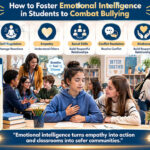
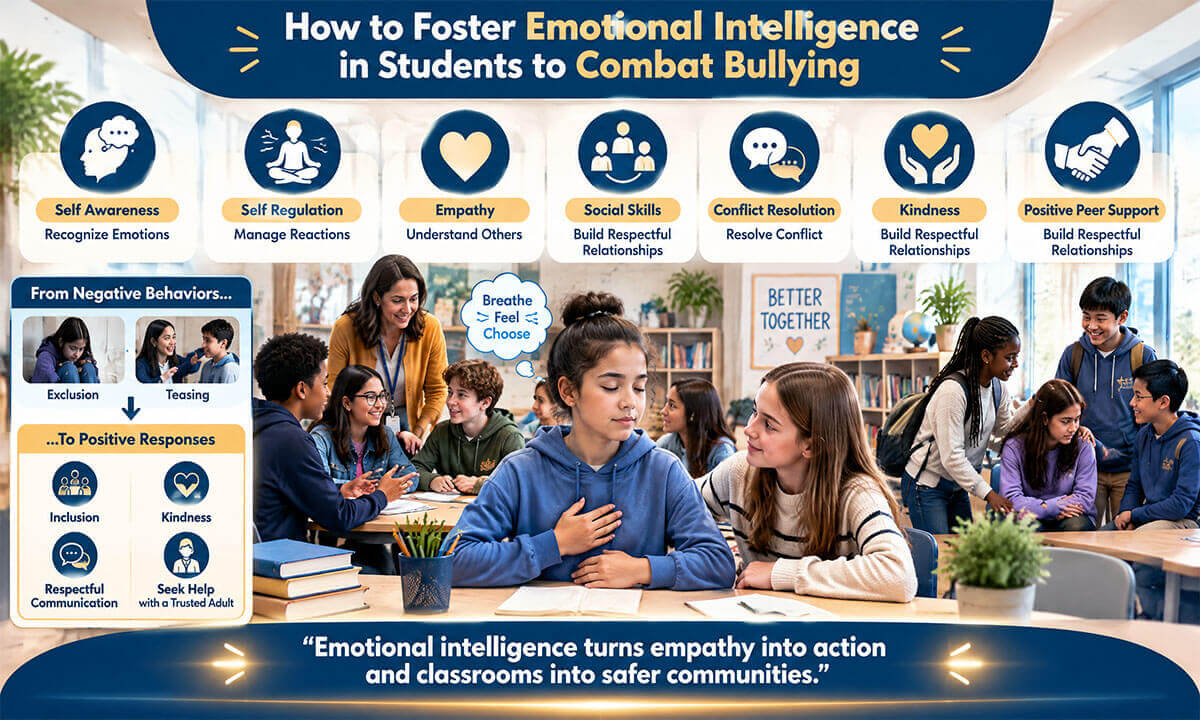
One way schools and families can help address bullying is by developing students’ emotional intelligence. Emotional intelligence refers to the ability to recognize and understand emotions, manage emotional responses, understand other people’s feelings, and build healthy relationships. These skills can help students respond to difficult situations without immediately turning to aggression, exclusion, or harmful behavior.
Emotional intelligence does not mean that students will never become angry, frustrated, jealous, or disappointed. Instead, it teaches them how to understand these emotions and respond to them in appropriate ways. It also helps students recognize how their behavior affects other people.
For this reason, emotional intelligence can be an essential part of a broader approach to bullying prevention. When schools intentionally teach emotional awareness, empathy, self-control, communication, and responsible decision-making, students can develop skills that support healthier relationships and a more respectful school environment.
What Is Emotional Intelligence?
Emotional intelligence is the ability to recognize, understand, express, and manage emotions while also responding appropriately to the emotions of others.
For students, emotional intelligence can involve several significant abilities:
- Recognizing their own emotions
- Understanding why they feel a particular way
- Managing anger, frustration, and disappointment
- Understanding other people’s feelings
- Showing empathy and compassion
- Communicating respectfully
- Handling disagreements constructively
- Making responsible decisions
- Building positive relationships
For example, a student who becomes angry after losing a game might respond by insulting another student. A student with stronger emotional skills may still feel angry but recognize the emotion and choose to take a break, talk about the problem, or use another appropriate coping strategy.
This difference is vital because emotions themselves are not usually the problem. The way students respond to their emotions can create either healthy or harmful outcomes.
Why Emotional Intelligence Matters in Schools:
Schools are places where students learn academic subjects, but they also learn how to interact with other people. Students spend significant amounts of time with classmates, teachers, administrators, and other members of the school community. During this time, they experience friendship, competition, disagreement, disappointment, success, failure, and many other emotions.
Not every student enters school with the same emotional or social skills. Some students may already know how to communicate their feelings and resolve disagreements. Others may struggle to understand their emotions or express them appropriately.
Without appropriate support, emotional difficulties can sometimes contribute to behaviors such as:
- Anger and frequent outbursts
- Insults and name-calling
- Teasing
- Social exclusion
- Aggressive behavior
- Intimidation
- Difficulty accepting differences
- Poor conflict management
These behaviors do not automatically mean that a student is a bully. Bullying is a specific pattern of behavior involving harmful or aggressive actions, usually with a power imbalance and repetition or a potential for repetition. However, emotional and social difficulties can contribute to conflict and harmful interactions.
Teaching emotional intelligence gives students tools for dealing with these challenges in healthier ways.
The Connection Between Emotional Intelligence and Bullying:
Emotional intelligence can support bullying prevention through several important areas.
- Self-Awareness: Self-awareness means recognizing and understanding one’s own emotions.
Students who develop self-awareness can learn to identify feelings such as anger, embarrassment, jealousy, sadness, fear, or frustration. They can also learn to recognize physical and behavioral signs that appear when their emotions become intense.
For example, a student might learn to notice: “I am becoming angry because I feel left out.”
This awareness creates an opportunity to respond before the emotion turns into harmful behavior.
- Self-Regulation: Recognizing an emotion is only the first step. Students also need to learn how to manage their emotional responses.
Self-regulation can involve:
- Taking a short break
- Breathing slowly
- Counting before responding
- Talking to a trusted adult
- Using positive self-talk
- Walking away from a heated argument
- Thinking about possible consequences
These strategies can help students avoid impulsive reactions.
- Empathy: Empathy is the ability to understand or respond to another person’s emotional experience.
A student who develops empathy may begin to think about how another person feels after being excluded, mocked, embarrassed, or insulted.
Teachers can encourage this type of thinking by asking questions such as:
- “How do you think that student felt?”
- “What might they have been thinking?”
- “How would you feel if this happened to you?”
These questions encourage students to consider experiences from another person’s perspective.
- Social Skills: Social skills help students communicate, cooperate, build friendships, and resolve disagreements.
Important social skills include:
- Listening
- Taking turns
- Sharing
- Respecting personal boundaries
- Communicating clearly
- Asking for help
- Disagreeing respectfully
- Solving problems together
Strong social skills can help students handle everyday disagreements without turning them into larger conflicts.
How Schools Can Foster Emotional Intelligence:
Emotional intelligence should not be treated as a one-time lesson. Students develop these abilities through regular practice and positive examples.
- Integrate Social and Emotional Learning Into the Curriculum: Social and emotional learning can provide structured opportunities for students to develop emotional and interpersonal skills.
Lessons can cover topics such as:
- Identifying emotions
- Managing stress
- Showing empathy
- Building relationships
- Resolving conflicts
- Making responsible decisions
- Understanding different perspectives
These lessons can be connected to everyday classroom situations rather than treated as completely separate from academic learning.
For example, after a group activity, a teacher might ask students what went well, what was difficult, and how the group handled disagreements.
- Create Safe Opportunities for Students to Talk: Students need environments where they can express concerns without immediately feeling judged or embarrassed.
Class meetings, group discussions, and regular emotional check-ins can provide opportunities for students to talk about their experiences.
Teachers might ask:
- “How are you feeling today?”
- “What was difficult for you this week?”
- “Did anything happen that made you feel uncomfortable?”
- “What can we do to make our classroom more welcoming?”
These conversations can help students develop emotional vocabulary and communication skills. They may also help educators notice problems that require further attention.
However, students should not be pressured to disclose private experiences publicly. Schools should provide appropriate confidential reporting and support systems when students experience bullying or other serious problems.
- Teach Students How to Resolve Conflicts: Conflict is a normal part of human relationships. The goal should not be to eliminate every disagreement. Instead, students should learn how to manage disagreements safely and respectfully.
Teachers can introduce a simple conflict resolution process:
- Stop and calm down.
- Explain what happened.
- Listen to the other person’s perspective.
- Identify the problem.
- Discuss possible solutions.
- Agree on a respectful next step.
- Ask an adult for help when necessary.
This approach can help students understand that disagreement does not have to become hostility.
- Model Emotional Intelligence: Teachers and other school staff play an important role because students observe adult behavior.
Educators can model emotional intelligence by:
- Staying calm during difficult situations
- Listening carefully
- Admitting mistakes
- Apologizing when appropriate
- Showing empathy
- Using respectful language
- Handling disagreement professionally
For example, a teacher might say: “I am frustrated because we have lost some learning time, so I am going to take a moment and then we will continue.”
This demonstrates that experiencing frustration is normal and that people can choose how they respond.
What Parents Can Do at Home:
Emotional intelligence develops across different environments. Parents and caregivers can reinforce the same skills at home.
- Talk About Emotions: Parents can make emotional conversations part of everyday life.
Instead of simply asking, “How was school?” they might ask:
- “What was the best part of your day?”
- “Was anything difficult today?”
- “How did you feel when that happened?”
- “What helped you feel better?”
These questions encourage children to recognize and describe their emotions.
- Help Children Name Their Feelings: Young people sometimes behave in difficult ways because they cannot clearly identify what they are experiencing.
A child who says, “I hate everyone,” may actually be feeling embarrassed, rejected, disappointed, or angry.
Parents can help by saying:
- “It sounds like you felt left out.”
- “You seem frustrated about what happened.”
- “You were disappointed when your friend did not invite you.”
This does not mean agreeing with inappropriate behavior. It simply helps children understand what they are experiencing.
- Set Clear Boundaries: Emotional intelligence does not mean allowing every behavior.
Children need clear boundaries around aggression, insults, harassment, and disrespect.
Parents can communicate both empathy and responsibility:
“I understand that you were angry. It is okay to feel angry, but it is not okay to hurt someone.”
This distinction helps children understand that emotions are acceptable while harmful actions still have consequences.
- Encourage Reflection: After a difficult situation, parents can help children reflect rather than simply punish them.
Questions might include:
- “What happened?”
- “What were you feeling?”
- “What were you thinking at the time?”
- “How do you think the other person felt?”
- “What could you do differently next time?”
- “How can you repair the situation?”
Reflection helps children learn from experiences and gradually develop better emotional responses.
Building Empathy Through Classroom Activities:
Empathy can be developed through regular practice.
- Literature and Storytelling: Stories allow students to consider experiences from different perspectives. Teachers can ask students to think about the emotions, motivations, and challenges faced by different characters.
Questions such as “How would you feel in this situation?” can encourage perspective-taking.
- Role Playing: Role playing allows students to practice responses to realistic situations.
For example, students might act out a situation in which:
- A classmate is being excluded
- Two students disagree
- Someone makes an offensive joke
- A student is being teased
- A new student is struggling to make friends
Afterward, teachers can discuss different ways the situation could have been handled.
- Cooperative Activities: Group activities can teach students how to cooperate with people who have different opinions and personalities.
Teachers can assign roles that require students to listen to one another, share responsibilities, and make decisions together.
Teaching Students to Appreciate Differences:
Bullying can sometimes target differences in appearance, culture, language, ability, interests, family background, or other characteristics.
Schools can help students understand that differences are a normal part of human communities.
Teachers can introduce:
- Diverse literature
- Inclusive classroom activities
- Cultural learning activities
- Discussions about respect
- Cooperative projects
- Stories featuring different perspectives and experiences
The purpose is not simply to celebrate differences on special occasions. Respect and inclusion should be part of everyday school culture.
Encouraging Kindness and Positive Peer Relationships:
Positive relationships can create a stronger sense of belonging.
Schools can encourage students to:
- Welcome new classmates
- Include others in activities
- Help classmates who are struggling
- Recognize acts of kindness
- Participate in peer support activities
- Work with different classmates
These practices can help create a classroom environment in which respectful behavior becomes normal.
However, kindness programs should complement, not replace, formal bullying prevention and reporting systems.
The Role of Bystanders:
Bullying usually affects more than the student who is directly targeted. Other students may witness the behavior and feel unsure about what to do.
Students can be taught safe ways to respond.
Depending on the situation, a student might:
- Tell the person to stop when it is safe to do so
- Support the targeted student
- Move away from the situation
- Report the behavior to a trusted adult
- Encourage others not to participate
Simple phrases can help students feel more prepared:
- “That is not okay.”
- “Let’s leave them alone.”
- “Come with me.”
- “I am going to get a teacher.”
Students should also understand that they should not physically intervene in dangerous situations. Seeking help from a trusted adult is often the safest response.
Training Student Leaders:
Peer leadership programs can give students opportunities to support a positive school environment.
Student leaders can participate in activities such as:
- Peer mentoring
- Welcome programs
- Buddy systems
- Student discussion groups
- Inclusion activities
- School awareness campaigns
Student leaders should receive appropriate training and adult supervision. They should not be expected to investigate serious bullying incidents or replace trained school staff.
How Teachers Can Recognize Emotional Difficulties:
Teachers spend considerable time with students and may notice changes in behavior.
Possible signs that a student is struggling can include:
- Sudden withdrawal
- Frequent anger
- Difficulty controlling emotions
- Repeated conflicts
- Changes in participation
- Social isolation
- Persistent fear or distress
These signs do not prove that a student is being bullied or bullying others. They simply suggest that further attention may be needed.
Schools should respond through appropriate communication, observation, safeguarding procedures, and professional support when necessary.
Creating a Whole School Approach:
Emotional intelligence is most effective when it becomes part of the wider school culture.
A whole school approach can include:
- Clear anti-bullying policies
- Social and emotional learning
- Teacher training
- Parent involvement
- Student participation
- Safe reporting systems
- Counseling and support services
- Consistent responses to harmful behavior
- Regular evaluation of school climate
This approach recognizes that bullying prevention is not the responsibility of one teacher or one student. It requires cooperation among educators, students, parents, administrators, and other members of the school community.
Measuring Progress:
Schools can also evaluate whether their efforts are making a difference.
They may monitor:
- Student perceptions of safety
- Reports of bullying
- Classroom behavior
- Student participation
- Sense of belonging
- Relationships between students
- Teacher observations
- Feedback from parents and students
It is significant to look at multiple sources of information rather than relying on a single measure.
Long-Term Benefits of Emotional Intelligence:
The benefits of emotional intelligence extend beyond bullying prevention.
Students who develop emotional and social skills may be better prepared to:
- Communicate effectively
- Manage difficult emotions
- Resolve disagreements
- Develop healthy relationships
- Cooperate with others
- Understand different perspectives
- Make responsible decisions
- Respond constructively to setbacks
These skills can support students not only during their school years but also in higher education, employment, friendships, family relationships, and community life.
In conclusion, bullying is a complex problem, and emotional intelligence is not a complete solution on its own. Schools also need clear policies, effective reporting systems, appropriate adult intervention, student support, and a safe school culture.
However, teaching emotional intelligence can give students valuable skills for understanding themselves and relating to others. Self-awareness can help students recognize their emotions. Self-regulation can help them manage difficult reactions. Empathy can help them understand how their behavior affects other people. Social skills can help them communicate, cooperate, and resolve disagreements more effectively.
Teachers can support these skills through social and emotional learning, classroom discussions, role-playing, literature, cooperative activities, and positive modeling. Parents can reinforce them through open conversations, clear boundaries, reflection, and respectful communication at home. Students themselves can contribute by including others, supporting classmates, reporting harmful behavior, and choosing respectful ways to respond to conflict.
The goal is not to create a school where students never experience anger, disagreement, or frustration. The goal is to help students learn what to do with those emotions.
When emotional intelligence becomes part of everyday education, students can develop a stronger understanding of themselves and greater awareness of the people around them. That can contribute to classrooms where respect, empathy, responsibility, and belonging have a stronger place in school life.

is an experienced educator and academic currently serving as a Lecturer at Nurul Amin Degree College. With a career dedicated to student development and institutional excellence, he brings a wealth of classroom expertise and pedagogical knowledge to his current role. Before joining the faculty, he served as an Assistant Teacher at Zinzira PM Pilot School and College.