Types of Institutions That Typically Maintain Archives:
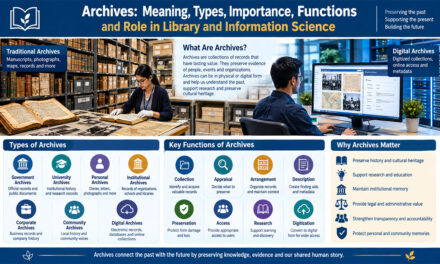
Archives are a crucial part of preserving human memory, knowledge, culture, and history. They contain records that have long-term value and need to be protected for future use. These records may include written documents, manuscripts, photographs, maps, letters, newspapers, audio recordings, videos, administrative records, research materials, and digital files.
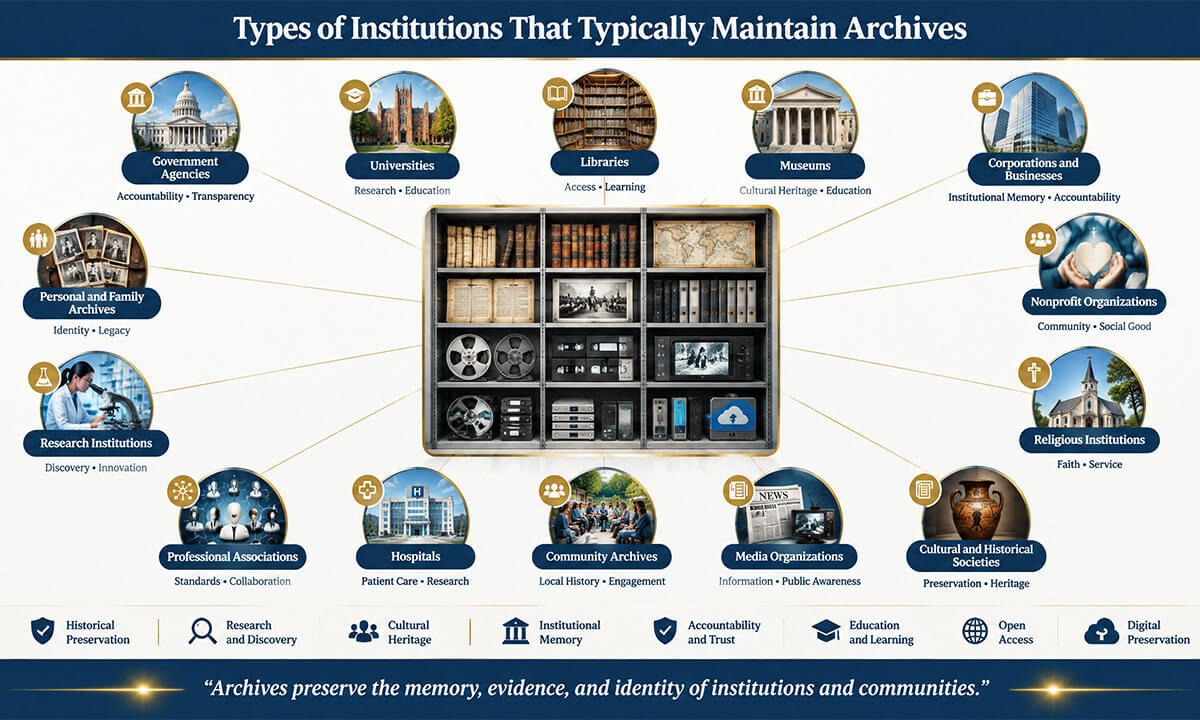
Archives are not maintained only by government departments or historical institutions. Many different types of organizations create and preserve archival collections as part of their work. Government agencies preserve records of laws, policies, decisions, and public administration. Universities maintain records related to education, research, students, faculty, and institutional development. Libraries and museums preserve rare materials and records connected to intellectual and cultural heritage. Businesses, religious organizations, nonprofit groups, media organizations, and community groups also maintain archives for different reasons.
The records preserved in archives can serve many purposes. They support historical research, protect institutional memory, provide evidence for legal and administrative purposes, promote accountability, and help people understand how societies and organizations have changed over time. In the digital age, archival work has also expanded to include websites, electronic documents, databases, digital photographs, social media content, and other forms of born-digital information.
The following are some of the major types of institutions that typically maintain archives.
1. Government Agencies:
Government agencies are among the most important organizations responsible for creating and maintaining archives. Governments produce a large amount of documentation during their daily activities. These records can provide evidence of how laws were created, policies were developed, public services were delivered, and important decisions were made.
Government archives may contain legislation, government reports, administrative files, court records, census information, maps, policy documents, executive orders, official correspondence, photographs, and records related to major national events.
Government archives may exist at different levels, including national, regional, state, provincial, and local levels.
Examples: Examples include the National Archives and Records Administration in the United States, The National Archives in the United Kingdom, and municipal or local government archives in many countries.
Purpose: Government archives help preserve the official history of public administration. They also support transparency and accountability because citizens, researchers, journalists, and legal professionals may use archival records to understand government activities.
These records can also become important historical evidence. Future researchers may use government archives to study political developments, social changes, economic conditions, wars, public health events, education systems, and other important aspects of national history.
2. Universities and Academic Institutions:
Universities and other academic institutions commonly maintain archives to preserve their institutional history and support education and research.
University archives may contain administrative records, meeting minutes, university publications, student records, faculty papers, photographs, research materials, course materials, institutional reports, correspondence, and records of important university events.
Many universities also maintain special collections that contain rare books, manuscripts, personal papers, historical documents, and other unique materials.
Examples: Harvard University Archives, Oxford University Archives, and Stanford University Special Collections.
Purpose: University archives preserve the history and development of academic institutions. They can show how a university developed from its establishment to the present day and document changes in academic programs, research activities, campus life, and administration.
These archives are also valuable for students and researchers. Historians may use them to study the history of education, while researchers may examine original documents connected to particular academic subjects or historical periods.
3. Libraries:
Libraries are important institutions for preserving knowledge, and many libraries maintain archival collections in addition to their regular circulating collections.
National libraries, university libraries, research libraries, public libraries, and special libraries may all hold archival materials. These materials can include rare books, manuscripts, newspapers, maps, photographs, personal papers, letters, local history collections, and historical documents.
Unlike ordinary library materials that may be widely available for borrowing, archival materials are often unique or rare. They may therefore be carefully preserved and accessed under special conditions.
Examples: Examples include the British Library, the Library of Congress, and special collections within major public and research libraries.
Purpose: Library archives preserve rare and unique materials that have long-term cultural, intellectual, or historical value. They can also document the history of a particular community or region.
For researchers, these collections can provide access to primary sources that cannot easily be found elsewhere. Local history archives in public libraries, for example, may preserve photographs, newspapers, maps, and personal papers that document the development of a town or community.
4. Museums:
Museums preserve objects and artifacts, but they also create and maintain large amounts of documentary information about their collections and activities.
Museum archives may contain acquisition records, exhibition records, catalogues, photographs, correspondence, curatorial research, conservation documentation, institutional reports, and information about the origin and ownership history of objects.
These records are important because an artifact by itself may not provide enough information about its historical significance.
Examples: Examples include the Smithsonian Institution Archives, Getty Research Institute Archives, and archives associated with major art and history museums.
Purpose: Museum archives provide important background information about objects, artworks, exhibitions, and institutional activities. Researchers and museum professionals can use these records to understand the history and context of collections.
Archival records can also help museums establish the provenance of objects, document previous exhibitions, and understand how collections have developed over time.
5. Corporations and Businesses:
Businesses and corporations also create records that can have long-term value. Large companies often maintain corporate archives to document their history, products, innovations, leadership, and organizational development.
Corporate archives may include annual reports, financial documents, advertisements, product designs, marketing materials, photographs, correspondence, company magazines, product development records, and records of important business decisions.
Examples: The Coca-Cola Company Archives, Ford Motor Company Archives, and IBM Corporate Archives.
Purpose: Corporate archives help organizations preserve institutional memory. They allow companies to understand how their products, services, business strategies, and public identity have changed.
Corporate archives may also support legal research, intellectual property management, internal research, historical publications, exhibitions, and corporate communication.
For example, an old product design or advertising campaign may help researchers understand how a company responded to changes in technology, consumer behavior, and society.
6. Nonprofit Organizations and Charities:
Nonprofit organizations and charitable institutions also produce records that can have historical and social value. Their archives may document their missions, campaigns, programs, fundraising activities, community services, and organizational development.
Records may include annual reports, correspondence, photographs, newsletters, campaign materials, project reports, meeting records, financial documents, and publications.
Examples: Red Cross Archives, Greenpeace Archives, and Amnesty International Archives.
Purpose: Nonprofit archives preserve the history of organizations and their contributions to society. They can demonstrate how an organization responded to social problems and how its programs developed over time.
These records can also support organizational accountability. Donors, researchers, historians, and members of the public may use archival materials to understand an organization’s activities and social impact.
7. Religious Institutions:
Religious institutions have preserved records for centuries. Churches, mosques, synagogues, temples, monasteries, seminaries, and other religious organizations may maintain archives documenting the history of their faith communities.
Religious archives may contain religious texts, manuscripts, correspondence, registers, photographs, records of ceremonies, organizational documents, publications, and records of religious leaders and communities.
Examples: Examples include the Vatican Apostolic Archives, archives maintained by major Christian institutions, Jewish archival collections, Islamic manuscript collections, and archives associated with monasteries and religious schools.
Purpose: Religious archives preserve the history and heritage of faith communities. They can document changes in religious practices, leadership, education, community organization, and theological thought.
Researchers can use these collections to study religious history, architecture, literature, social development, migration, education, and cultural traditions.
Religious archives can also help communities preserve their identity and pass knowledge about their traditions from one generation to another.
8. Cultural and Historical Societies:
Cultural and historical societies often focus on preserving the heritage of particular regions, communities, ethnic groups, or cultural traditions.
Their collections may include photographs, oral histories, personal papers, letters, newspapers, manuscripts, maps, posters, community publications, and other historical materials.
Examples: The Historical Society of Pennsylvania, The American Folklife Center, and The Irish Cultural Archives.
Purpose: Cultural and historical archives help preserve the experiences and traditions of particular communities. They are especially valuable when important historical records have not been preserved by larger institutions.
These archives can provide information about local traditions, migration, family histories, social movements, community organizations, cultural practices, and everyday life.
They also help ensure that historical narratives include the experiences of different communities rather than focusing only on major political or institutional events.
9. Media Organizations:
Newspapers, television networks, radio stations, news agencies, magazines, and digital media organizations create large quantities of information every day. Many preserve these materials in media archives.
Media archives may include newspaper articles, photographs, audio recordings, television broadcasts, interviews, video footage, advertisements, scripts, and digital publications.
Examples: BBC Archives, CNN News Archive, and The New York Times Archives.
Purpose: Media archives provide a record of how events were reported to the public. They can be valuable sources for studying political events, wars, disasters, elections, social movements, cultural changes, sports, and major public events.
Researchers can compare media reports from different periods to understand how public communication and journalism have changed.
Media archives are also useful to journalists who need to research previous events, people, organizations, or stories.
10. Community Archives:
Community archives are usually created and managed by members of a particular community. They can focus on neighborhoods, cultural groups, Indigenous communities, migrant communities, social groups, or other communities whose histories may not be adequately represented in larger archival institutions.
Community archives may contain oral histories, photographs, personal documents, community newspapers, posters, recordings, videos, newsletters, and other materials.
Examples: African American Heritage Archives and Indigenous Peoples’ Archives.
Purpose: Community archives allow communities to preserve their own stories and historical experiences. They can be particularly important for documenting everyday life and the experiences of groups that may have been overlooked by traditional archives.
Community members may contribute personal photographs, family papers, recordings, and memories. These materials can create a richer understanding of local history.
Community archives also encourage public participation in archival preservation and help strengthen connections between people and their shared heritage.
11. Political and Social Organizations:
Political parties, professional associations, trade organizations, social movements, and advocacy groups can also maintain archives.
Their records may include campaign materials, publications, meeting minutes, correspondence, photographs, speeches, policy documents, posters, newsletters, and records of organizational activities.
Purpose: These archives can document the development of organizations and social movements. They provide researchers with primary sources for studying political history, social change, labor history, civil rights, public campaigns, and community activism.
Such records can also help organizations understand their own development and preserve important institutional knowledge.
12. Hospitals and Healthcare Institutions:
Hospitals, medical schools, healthcare organizations, and research institutions may maintain archives containing records related to their institutional history and medical development.
These collections can include institutional reports, photographs, historical medical equipment records, publications, administrative documents, research materials, and records documenting the development of healthcare services.
Patient records are subject to strict privacy and legal requirements and are not simply treated as publicly accessible historical materials.
Purpose: Healthcare archives can help researchers study the history of medicine, hospitals, public health, medical education, and healthcare policy.
They can also preserve the institutional history of hospitals and document important developments in medical practice.
13. Professional Associations:
Professional organizations such as library associations, medical associations, legal associations, engineering organizations, and educational associations may maintain archives.
Their records can include conference proceedings, newsletters, membership publications, meeting minutes, policy documents, photographs, correspondence, and records of professional activities.
Purpose: Professional archives document the development of professions and professional organizations. They can show how professional standards, education, policies, and practices have changed over time.
For researchers, these records can provide valuable evidence about the history and development of a particular profession.
14. Research Institutions:
Research organizations and scientific institutions generate large quantities of valuable information. Many maintain archives to preserve important research records and institutional history.
These archives may contain research reports, laboratory notebooks, correspondence, datasets, photographs, publications, project documentation, and records related to major scientific discoveries.
Purpose: Research archives help preserve the history of scientific and scholarly work. They can allow researchers to understand how important discoveries were developed and how research institutions contributed to knowledge.
Preserving research records can also support the reproducibility and historical study of scientific work, although access may depend on ethical, legal, confidentiality, and data protection requirements.
15. Personal and Family Archives:
Although personal archives are not usually institutions in the traditional sense, individuals and families also maintain important archival collections.
Personal and family archives may contain diaries, letters, photographs, certificates, manuscripts, family histories, videos, recordings, and other personal documents.
Purpose: These materials can provide valuable evidence about family history and everyday life. When deposited in libraries, museums, universities, or historical societies, personal collections can become important sources for broader historical research.
Personal archives can help researchers understand the experiences of individuals and communities that may not appear in official records.
Importance of Institutional Archives:
The importance of archives extends beyond simply storing old documents. Archives perform several important functions in society.
- Preservation of History: Archives preserve records that document the past. Without proper preservation, many valuable records could be damaged, lost, or destroyed.
- Support for Research: Researchers depend on archival materials to study history, education, culture, politics, business, science, religion, and many other subjects.
- Institutional Memory: Archives help organizations remember their own development. They preserve information about previous decisions, projects, achievements, and challenges.
- Accountability and Transparency: Government and organizational records can provide evidence of decisions and activities. This can support accountability and responsible administration.
- Legal and Administrative Evidence: Some archival records may serve as evidence of rights, ownership, agreements, decisions, or other administrative matters.
- Cultural Heritage Preservation: Archives preserve traditions, languages, photographs, manuscripts, oral histories, and other materials that contribute to cultural identity.
- Education: Teachers and students can use archival materials as primary sources. Working with original documents can help learners understand historical events and research methods.
- Access to Forgotten Histories: Community and special collections can preserve the experiences of people and groups whose histories may not be well represented in mainstream historical records.
The Growing Importance of Digital Archives:
Modern institutions increasingly create digital records. Emails, databases, websites, digital photographs, electronic reports, social media content, videos, and other digital materials may become important historical records.
As a result, archival institutions must address new challenges. Digital records can become inaccessible when software, hardware, file formats, or storage systems become outdated. Institutions therefore need appropriate digital preservation strategies.
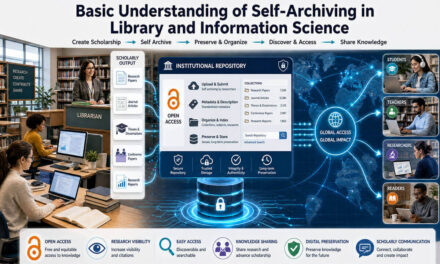
Digital archives can also make historical materials easier to discover and access. Digitization projects allow researchers and members of the public to view selected archival materials online without physically visiting an archive.
However, digital preservation requires proper planning. Institutions must consider storage, file formats, metadata, backup systems, cybersecurity, copyright, privacy, and long term access.
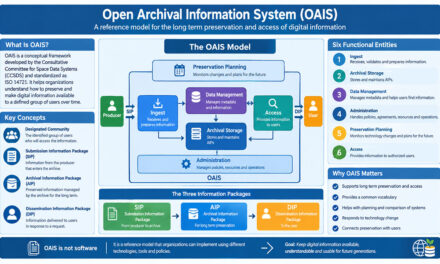
In conclusion, archives are maintained by many different types of institutions, and each institution preserves records according to its own responsibilities, activities, and historical importance. Government agencies preserve records of public administration and governance. Universities and research institutions protect academic and research history. Libraries preserve rare and valuable intellectual resources, while museums maintain documentation connected to collections and exhibitions.
Businesses preserve corporate history, nonprofit organizations document their social activities, and religious institutions protect records of faith communities. Cultural societies and community archives preserve local traditions and experiences. Media organizations maintain newspapers, broadcasts, photographs, and other forms of journalistic history.
Hospitals, professional associations, political and social organizations, research institutions, and even families can also create valuable archival collections.
The importance of archives is therefore much broader than the preservation of old documents. Archives protect evidence, support research, preserve cultural heritage, strengthen institutional memory, and help future generations understand the past. As more information is created digitally, institutions must also develop effective methods for preserving electronic records and ensuring long-term access.
Ultimately, every archive represents a connection between the past, the present, and the future. By identifying valuable records and preserving them responsibly, institutions help ensure that important knowledge, experiences, and memories remain available for generations to come.

is an experienced educator and academic currently serving as a Lecturer at Nurul Amin Degree College. With a career dedicated to student development and institutional excellence, he brings a wealth of classroom expertise and pedagogical knowledge to his current role. Before joining the faculty, he served as an Assistant Teacher at Zinzira PM Pilot School and College.