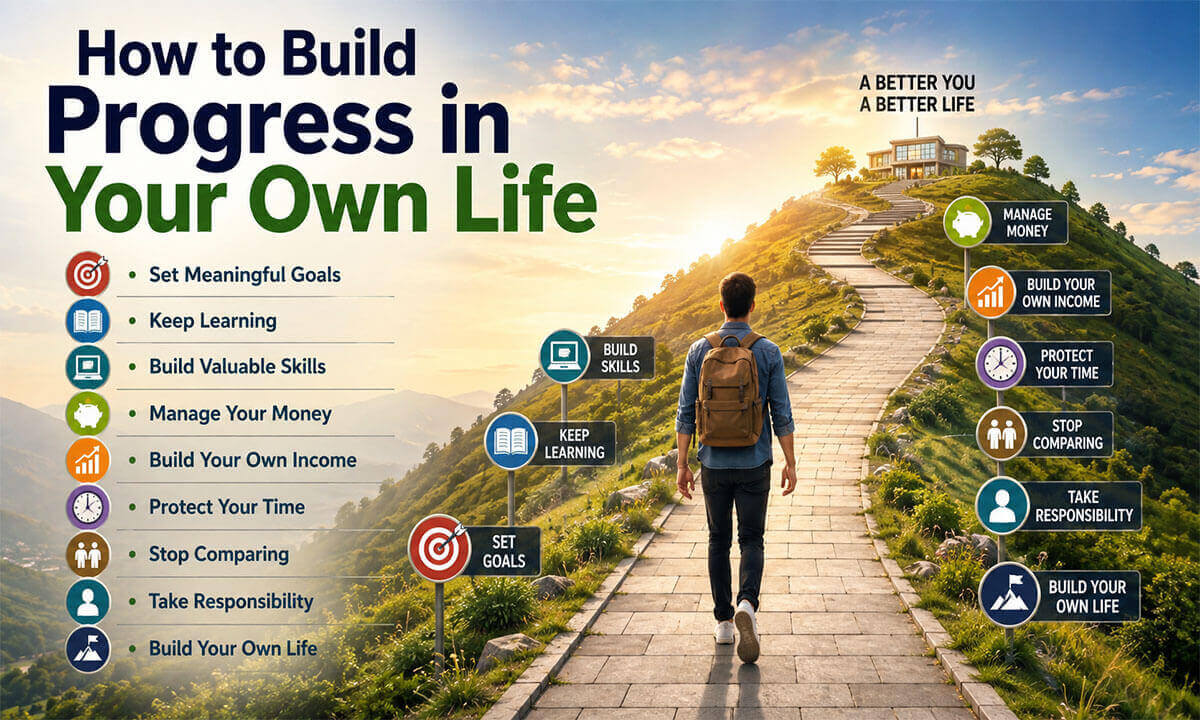
How to Build Progress in Your Own Life:
Everyone wants to make progress in life, but progress does not look the same for everyone. For one person, progress may mean getting a better job. For another, it may mean completing an education, becoming financially independent, learning a valuable skill, or simply becoming a better and more confident person. The essential thing is to understand that progress is not created by one big decision. It is built through small choices that you make every day. What you learn, how you spend your time, how you manage your money, the people you choose to trust, and the skills you develop can slowly shape your future. Many people also make the mistake of comparing their lives with others. They see someone else’s success and feel that they are falling behind. But every person has a different starting point, different responsibilities, and a different path. Real progress begins when you stop trying to live someone else’s life and start building your own. Here, we are going to explore how to build progress in your own life.
1. Know What Progress Means to You:
Before you can build progress, you need to understand what you actually want.
Ask yourself some simple questions:
- What kind of person do I want to become?
- What kind of work do I want to do?
- What skills do I need?
- What kind of financial life do I want?
- What kind of relationships do I want?
- What would make me proud of my life?
Your answers can help you create direction.
For example, a young person may decide that their main goal for the next three years is to complete their education, develop strong computer skills, find stable employment, and start saving money. That is a clear direction.
You do not need to have your entire life planned. You only need to know the next important step.
2. Keep Some Things Private:
Not everything needs to be shared with everyone.
Your personal goals, financial situation, family matters, relationships, and future plans can remain private. Being private does not mean being unfriendly. It means understanding that your life does not need constant public explanation.
Sometimes, talking too much about your plans can create unnecessary pressure. People may give unwanted advice or discourage you because they do not understand your goals.
For example, suppose you want to learn a new professional skill. Instead of announcing it to everyone, you can quietly spend six months studying and practicing. When you become good at it, your results can speak for you.
Privacy can also protect your peace.
Be friendly. Be respectful. But learn what should remain yours.
3. Set Ambitious but Realistic Goals:
You should have goals that make you excited about your future.
Ambition means believing that you can improve your situation and being willing to work for it. It does not mean becoming better than everyone else. It means becoming better than your previous self.
Suppose you want to improve your English. Saying, “I want to speak English perfectly” may feel too large. Instead, create smaller goals:
- Read for 20 minutes every day.
- Learn five new words each day.
- Write one short paragraph every day.
- Practice speaking for 15 minutes.
After several months, these small actions can produce noticeable improvement.
Large goals become easier when you divide them into small actions.
Dream about the future, but work on today.
4. Keep Educating Yourself:
Education is one of the strongest foundations of progress.
A degree or certificate can be valuable, but education does not stop when you leave school or university. The world changes constantly, so you must continue learning.
Learn skills that can improve your career and your everyday life.
You might learn computer applications, communication, writing, accounting, research, digital marketing, programming, design, teaching, or another useful skill.
For example, an employee who learns how to use spreadsheet software effectively may become more productive at work. Someone who learns professional communication may become better at interviews and workplace relationships.
Read books. Take useful courses. Listen to experienced people. Ask questions. Learn from your mistakes.
The more you learn, the more prepared you become.
5. Become Really Good at Something:
You do not need to be good at everything.
Find one or two useful skills and develop them seriously.
A valuable skill can create opportunities. It can help you find employment, earn additional income, solve problems, and become more confident.
For example, imagine someone who spends two years developing strong writing skills. They practice every week, study good writing, learn how to research properly, and understand how websites work. Eventually, they may be able to work as a content writer, editor, researcher, or communication professional.
Another person may develop strong skills in graphic design and begin offering design services.
The principle is simple:
- Do not only collect qualifications. Build real ability.
A certificate can show that you completed something. Your skill shows what you can actually do.
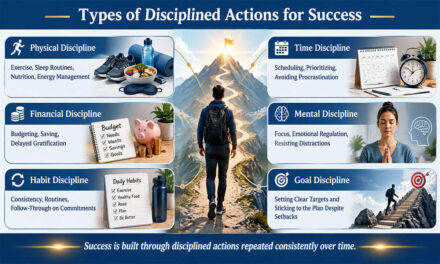
6. Take Your Finances Seriously:
Financial responsibility is an important part of building a stable life.
You do not need to be wealthy to become financially responsible. You need to understand how you use your money.
Know how much you earn and how much you spend:
- Create a simple budget.
- Separate your needs from your wants.
- Save regularly.
- Avoid unnecessary debt.
For example, if you earn 30,000 taka each month, you should know how much goes toward food, transportation, housing, education, family responsibilities, savings, and other expenses.
You do not have to save a huge amount at first. Even a small amount saved consistently can develop a strong financial habit.
Before buying something expensive, ask yourself whether you really need it.
Financial discipline today can give you greater freedom tomorrow.
7. Build Your Own Income:
Having your own income can increase your independence and confidence.
A regular job is one way to earn money. You can also develop skills that allow you to earn from additional work.
For example, someone who is good at writing may offer writing services. Someone who is good at teaching may provide tutoring. A person with computer skills may provide technical services. Someone with design skills may work with clients.
The first step is not to think about becoming rich.
Think about becoming useful.
Ask yourself:
- What can I do well enough to solve a problem for another person?
- If you can solve a real problem, your skill can have economic value.
Start small. Learn from experience. Improve your service. Build trust. Over time, a small source of income may become something more meaningful.
8. Build a Good Reputation:
Your name can become one of your most valuable assets.
When people hear your name, what do you want them to think?
- Reliable?
- Honest?
- Skilled?
- Hardworking?
- Respectful?
- Professional?
Your reputation is built through your everyday behavior.
If you promise to complete something, complete it. If you make a mistake, accept it. If you do not know something, be honest. Treat people with respect.
Imagine two workers with similar qualifications. One regularly arrives on time, completes tasks properly, communicates clearly, and takes responsibility. The other often makes excuses and fails to meet deadlines.
The first person will usually have a stronger professional reputation.
You do not need to become famous.
Try to become trustworthy.
9. Protect Your Time:
Time is one of the most valuable resources in life because you cannot get it back.
Everyone needs rest and entertainment. You should enjoy your life. However, you should also notice how much time you spend on activities that do not improve your life.
If you spend several hours every day scrolling through social media, watching meaningless videos, or worrying about other people’s lives, you may have less time for your own development.
Try to give part of each day to something useful:
- Read a book.
- Study a subject.
- Practice a skill.
- Work on an important project.
- Plan your future.
Even 30 minutes of focused work every day can become more than 180 hours in a year.
Small amounts of time become powerful when used consistently.
10. Stop Comparing Yourself With Others:
Comparison is one of the easiest ways to lose confidence.
You may look at someone who has a better job, bigger house, newer car, successful business, or more followers and think that you are behind.
But you do not know their entire story.
You see their achievements. You may not see their struggles.
Instead of constantly asking, “Why are they ahead of me?” ask: “Am I moving forward?”
- Maybe you are earning more than you did two years ago.
- Maybe you have learned a new skill.
- Maybe you are managing your money better.
- Maybe you are more confident.
- Maybe you are making better decisions.
These are also forms of progress.
Your journey does not need to look like someone else’s journey.
11. Learn to Be Patient:
Progress takes time.
People often want quick results. They want a successful career immediately. They want financial freedom quickly. They want to become experts after taking one course.
Real development rarely works that way.
A person becomes skilled through practice. A business grows through patience. A reputation develops through repeated good behavior. Financial stability develops through consistent decisions.
Think about planting a tree.
You cannot plant a seed today and expect a large tree tomorrow. You have to provide water, sunlight, and care. For a long time, progress may happen where you cannot see it.
Your personal development can work in the same way.
Keep working even when the results are not immediately visible.
12. Take Responsibility for Your Choices:
Life is not always fair.
People face different circumstances. Some receive more opportunities than others. Some have greater responsibilities or face serious difficulties:
- You cannot control everything that happens to you.
- But you can often control how you respond.
- You can decide whether to learn from a mistake.
- You can decide whether to improve your skills.
- You can decide whether to manage your money carefully.
- You can decide whether to continue after failure.
Taking responsibility does not mean blaming yourself for everything that goes wrong. It means focusing your energy on the things you can influence.
Instead of saying, “My life will never improve,” ask, “What is one thing I can improve today?”
That question can change your direction.
13. Choose Your Environment Carefully:
The people around you can influence your thinking, habits, and decisions.
You do not need to cut everyone out of your life. But you should notice how different relationships affect you.
Good people can encourage you to learn, work, improve, and stay responsible.
Negative relationships can sometimes encourage unhealthy habits, unnecessary spending, constant complaining, or poor decisions.
For example, if your friends are serious about their studies or careers, their habits may encourage you to work harder. If everyone around you wastes their time and makes fun of personal improvement, staying focused may become more difficult.
Choose people who respect your goals.
And remember that you should also be the kind of person who helps others grow.
14. Build Your Own Life:
The final goal is not simply to make more money or collect achievements.
The real goal is to build a life that feels meaningful and belongs to you.
Do not live entirely according to other people’s expectations.
Someone may think you should choose a particular career. Someone else may think you should earn a certain amount of money. Another person may compare your life with their own.
Listen to useful advice, but make your own decisions.
Your life may look different from the lives of your friends, relatives, or people you see online.
That is okay.
One person may choose a traditional career. Another may start a business. Someone may prefer a simple life. Someone else may have ambitious professional goals.
There is no single definition of a successful life.
Build a life that matches your values, responsibilities, abilities, and goals.
15. Keep Improving Yourself:
Personal progress is not a destination.
Even after reaching one goal, there will be another area where you can grow.
You may improve your communication.
Then you may improve your professional skills.
Then you may improve your finances.
Then you may become better at managing your time.
Then you may work on becoming a better leader, friend, family member, or community member.
The process continues throughout life.
You do not need to become perfect.
You simply need to keep moving forward.
In conclusion, building progress in your own life is a gradual process. It requires patience, discipline, learning, courage, and responsibility.
Know what you want. Keep some parts of your life private. Set meaningful goals. Continue your education. Become good at something valuable. Manage your money carefully. Build your own income. Protect your time. Develop a strong reputation. Stop comparing your journey with other people.
Most importantly, take responsibility for your future.
You may not be able to change everything today. But you can always improve something.
Read one more page. Learn one more skill. Save a little money. Complete one important task. Make one better decision. Take one more step.
These actions may look small, but small actions repeated over time can change your life.
Progress is not about becoming someone else. It is about becoming a better version of yourself and building a life that you can respect, enjoy, and be proud of.

is an experienced educator and academic currently serving as a Lecturer at Nurul Amin Degree College. With a career dedicated to student development and institutional excellence, he brings a wealth of classroom expertise and pedagogical knowledge to his current role. Before joining the faculty, he served as an Assistant Teacher at Zinzira PM Pilot School and College.