How to Never Be Jobless Again:
Job security is not only about having a job today. It is about developing skills, building relationships, and creating opportunities that can help you find work even when the job market becomes difficult. Companies change, industries change, and some jobs disappear. However, a person who keeps learning, stays visible, and builds strong professional relationships can create more opportunities for themselves. You do not need to be famous or highly experienced to become valuable. You need to develop useful skills and show people what you can do. Here are six practical ways to reduce your chances of being jobless for a long time.
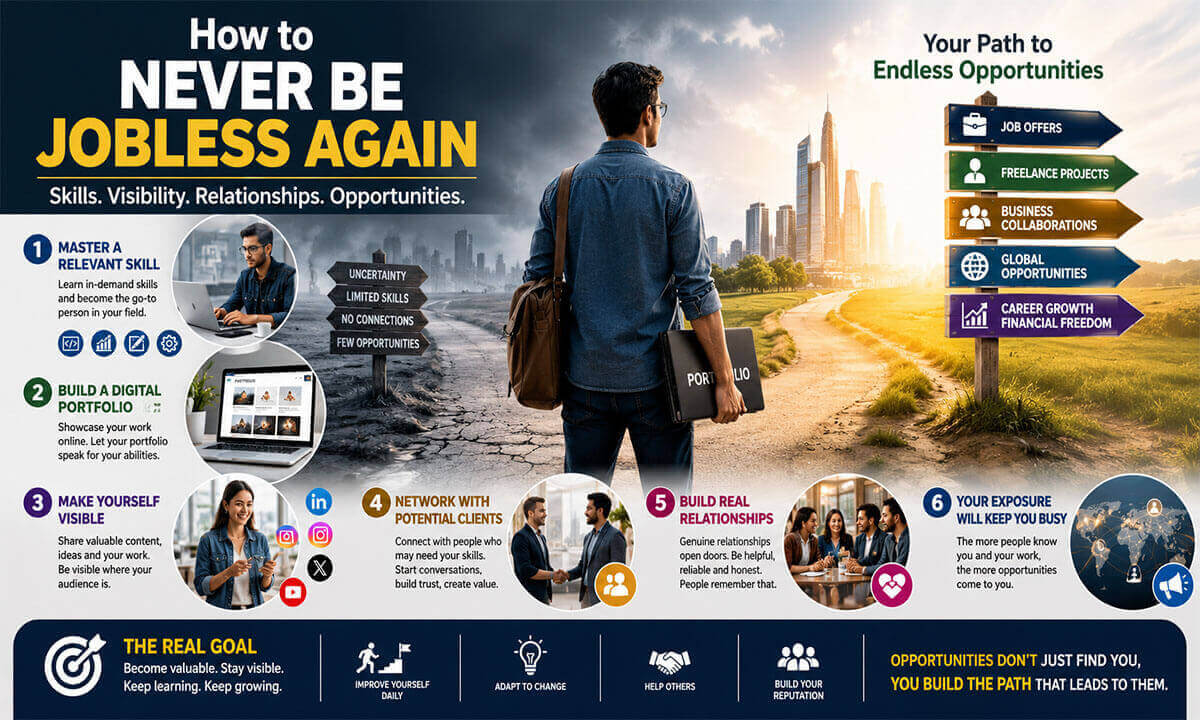
1. Master a Relevant Skill:
The first step is to become good at something that people need. A relevant skill can make you valuable to employers, clients, or businesses.
For example, someone interested in digital marketing can learn search engine optimization, content writing, social media marketing, and basic analytics. A person interested in graphic design can learn tools such as Photoshop, Illustrator, or Canva. Someone working in administration can improve their skills in Excel, data management, communication, and office software.
The goal is not to learn everything. Choose one useful skill and become genuinely good at it. Then continue improving as technology and industry requirements change.
A strong skill gives you something valuable to offer. The better you become, the more opportunities you can create.
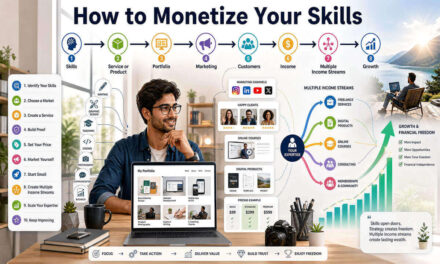
2. Build a Digital Portfolio:
Knowing a skill is important, but showing your skill is even more powerful. A digital portfolio allows people to see what you can actually do.
For example, if you are a writer, create a collection of your best articles. If you are a graphic designer, display your designs. If you are a web developer, show websites or projects you have created. If you are a teacher, you could share lesson plans, educational resources, or useful learning materials.
Your portfolio does not need to be complicated. A simple website, professional profile, or online collection of your work can be enough to start.
Think of your portfolio as your proof. Instead of saying, “I can do this,” you can show people, “Here is what I have done.”
3. Make Yourself Visible to the Public:
Being talented is not always enough. People need to know that you exist.
Share useful information related to your field. Write articles, post helpful tips, participate in professional discussions, or share examples of your work. You can use professional and social platforms to build your public presence.
For example, a person who wants to work in education could regularly share teaching ideas, educational resources, and thoughtful articles about learning. Gradually, other teachers, organizations, and employers may begin to recognize that person as someone who understands education.
Visibility creates opportunities because people cannot recommend you if they do not know what you can do.
You do not need to post every day. Focus on being useful, professional, and consistent.
4. Start Networking With Potential Clients:
Networking is not simply collecting hundreds of contacts. It is about building genuine professional connections with people who may need your skills.
Suppose you are a freelance graphic designer. Instead of waiting for someone to find you, you can connect with small businesses, entrepreneurs, content creators, and organizations. Introduce yourself, learn about their work, and explain how your skills could help them.
The same idea applies to almost every profession. A teacher can connect with educational organizations. A writer can connect with publishers and website owners. A technology professional can connect with businesses that need technical support.
Good networking is based on relationships, not desperation. Do not approach people only when you need a job. Build relationships before you need opportunities.
5. Build Real Friendships and Relationships:
Professional networking is important, but genuine relationships are even more valuable.
People often find opportunities through people they already know and trust. A former colleague may tell you about an opening. A friend may introduce you to a potential client. Someone you helped in the past may recommend you to another organization.
This does not mean you should make friends only for professional benefits. Build relationships because people matter. Be respectful, helpful, honest, and reliable.
For example, if you regularly help a colleague solve a problem, share useful information, or support their work, they may remember you when an opportunity appears. Your reputation can become one of your strongest professional assets.
A good relationship can sometimes open a door that a CV alone cannot.
6. Your Exposure Will Keep You Busy:
When you have a useful skill, a strong portfolio, public visibility, and good relationships, opportunities can begin to come from different directions.
You may receive a job offer from an employer. A client may contact you about a project. Someone may recommend you to an organization. A former colleague may introduce you to another professional. Your online work may attract someone who needs your expertise.
This is the power of exposure.
Imagine two people with similar skills. One person keeps their work private and waits for someone to discover them. The other person regularly improves their skills, shares their work, builds relationships, and stays active in their professional community. The second person is more likely to hear about opportunities because more people know what they can do.
Exposure does not guarantee constant work, but it increases the number of opportunities that can reach you.
The Real Goal Is to Become Valuable:
The goal should not simply be to “never be jobless.” A better goal is to become someone who can create value wherever they go.
Keep learning. Keep improving. Keep building. Keep meeting people. Keep showing your work.
If one job disappears, your skills can help you find another. If one client leaves, your network can help you find another. If one industry changes, your ability to learn can help you adapt.
Your career becomes stronger when it does not depend on one employer, one position, or one opportunity.
In conclusion, being jobless can happen to anyone. Companies close, industries change, and unexpected circumstances can affect employment. You cannot control every part of the job market, but you can control how prepared you are.
Master a relevant skill. Build a digital portfolio. Make your work visible. Network with potential clients. Build genuine relationships. Keep increasing your exposure.
When people know you, trust you, and understand what you can do, opportunities become easier to find. The strongest form of job security is not simply having a job. It is having the skills, reputation, relationships, and confidence to create your next opportunity when you need it.

is an experienced educator and academic currently serving as a Lecturer at Nurul Amin Degree College. With a career dedicated to student development and institutional excellence, he brings a wealth of classroom expertise and pedagogical knowledge to his current role. Before joining the faculty, he served as an Assistant Teacher at Zinzira PM Pilot School and College.