How to Teach a Second Language to Young Learners:
Teaching a second language to young learners can be both rewarding and challenging. Children learn best when lessons are simple, engaging, and suited to their age. With patience, regular practice, and activities such as games, songs, stories, and conversation, language learning can become a natural part of their daily lives. This article explores practical ways to help young learners build confidence and develop useful second language skills.
Why Start Early?
Teaching a second language at a young age has several benefits. Children are still developing their language skills, so they can learn new sounds, words, and sentence patterns more easily.
- Young Brains Learn Quickly: Children are often good at picking up new languages because their brains are still developing. They can learn by listening to people, copying sounds, and using new words in everyday situations.
- Better Pronunciation and Accent: Starting early can help children develop clearer pronunciation. They are more likely to notice and copy sounds that may be difficult for older learners.
- Cognitive Benefits: Learning two languages can support memory, problem-solving, attention, and flexible thinking. Children also learn to switch between languages and think about how different languages work.
Core Principles of Teaching a Second Language to Kids:
A good approach should match the way children learn. Lessons should be active, simple, and enjoyable.
- Keep It Fun: Children learn better when they enjoy the activity. Games, songs, stories, drawing, and simple classroom activities can make language learning more interesting. Long lectures and difficult grammar exercises may make children lose interest.
- Use Repetition in Different Ways: Children need to hear and use new words many times. But repeating the same exercise can become boring. Teachers can use the same words in songs, stories, games, questions, and everyday conversations.
- Use Different Senses: Children can learn through seeing, hearing, speaking, moving, and touching. Teachers can use pictures, objects, sounds, actions, and hands-on activities. This gives children more ways to understand and remember new language.
Step-by-Step Guide to Teaching a Second Language:
Teaching a second language becomes easier when lessons follow a simple and consistent approach. The following steps can help teachers and parents support young learners.
1. Start With Listening: Children need to hear a language before they can speak it well. Give them plenty of opportunities to listen. Play songs, read picture books, and use the second language during simple daily activities.
Tip: Play songs or simple conversations in the second language while children are playing or doing other activities. Regular exposure helps them become familiar with the sounds and rhythm of the language.
2. Use Songs and Rhymes: Songs and rhymes make it easier for children to remember new words and phrases. They also help children practice pronunciation, rhythm, and sentence patterns.
Tip: Add simple hand movements to songs. Actions can help children understand and remember the words.
3. Make Story Time Part of Learning: Simple stories are a useful way to introduce new language. Choose books with repeated words, short sentences, and clear pictures. Point to the pictures as you read so children can connect words with their meanings.
Tip: Children do not need to understand every word. Pictures, actions, and the story itself can help them understand the general meaning.
4. Use Play-Based Learning: Play gives children a natural way to use language. Teachers can turn language practice into simple games and activities. For example, children can find objects around the room and name them. They can also pretend to shop at a store, visit a zoo, or cook a meal.
Tip: Use activities that encourage children to speak and respond naturally.
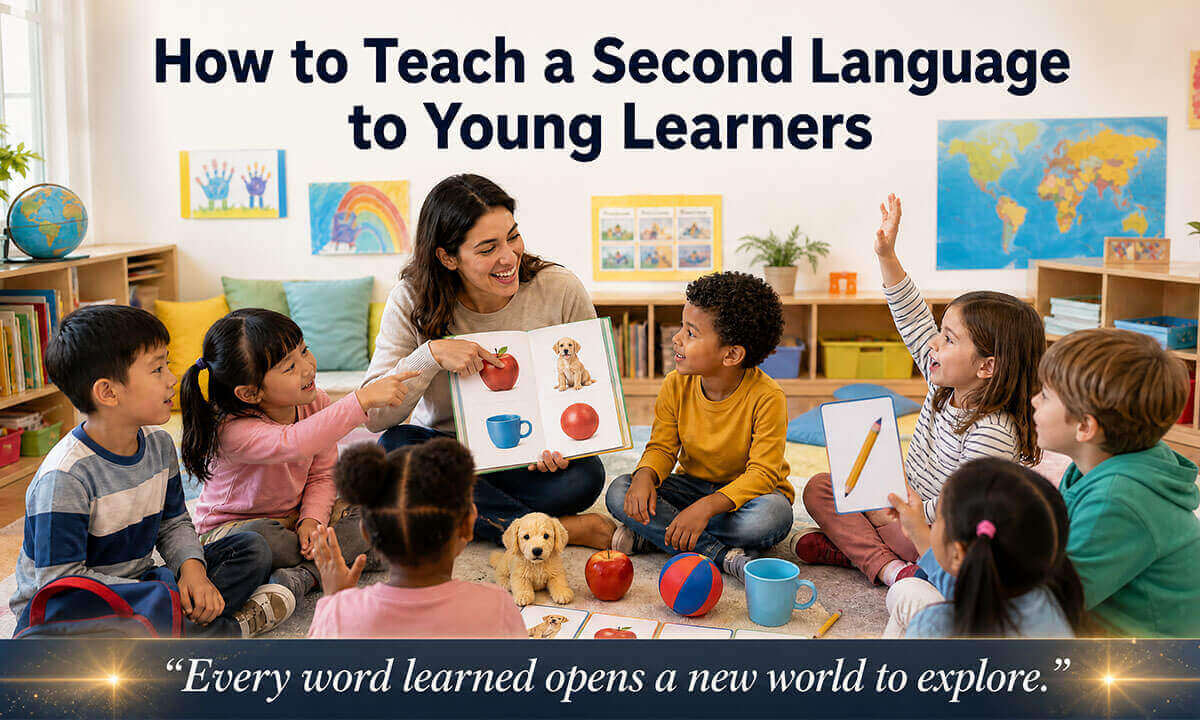
5. Use Visuals and Real Objects: Pictures, flashcards, toys, puppets, and real objects can make new words easier to understand. Visual materials also help children connect words with things they already know.
Example: When teaching the word “apple,” show children a real apple if possible. Let them see it, touch it, and say the word.
6. Encourage Speaking: Give children regular chances to speak. Do not expect perfect grammar at the beginning. Let them use single words, short phrases, and simple sentences.
Tip: If a child makes a mistake, respond with the correct form instead of stopping the conversation. This allows the child to hear the correct language without feeling discouraged.
7. Create a Regular Routine: Children benefit from regular practice. Include short language activities in their daily routine. For example, use the second language for morning greetings, songs, simple questions, or a short review before dinner.
Tip: Short and regular practice is often more useful than a long lesson once a week.
8. Encourage Interaction: Children need to use language with other people. Encourage them to speak with teachers, parents, siblings, and friends. Simple language learning apps can also provide extra practice when used in moderation.
Tip: Focus on real communication. Let children ask questions, answer simple prompts, describe things, and talk about their daily activities.
Common Challenges and How to Overcome Them:
Teaching a second language does not always go smoothly. Children may take time to speak, mix languages, or lose interest. These are common parts of the learning process. With the right support, parents and teachers can help children continue learning.
- They Are Not Speaking Yet: Some children understand a lot before they start speaking. This is sometimes called a silent period. They may be listening, observing, and learning without using many words.
Give them time and continue providing regular exposure to the language. Avoid forcing them to speak before they are ready.
- Mixing Languages: Children who are learning two languages may use words from both languages in the same sentence. This is known as code-switching. It can happen when they know a word in one language but not the other.
There is usually no need to worry. Continue speaking clearly and naturally in the target language. With more experience, children can learn when and how to use each language.
- Losing Interest: Children may lose interest when activities become repetitive or difficult. When this happens, change the activity. Try a new game, story, song, or hands-on task.
Keep lessons short and suitable for the child’s age. Give children some choice in what they want to do.
Tips for Parents Teaching at Home:
Parents can support second language learning through simple activities at home. They do not need to be language experts. Regular exposure and practice can make a difference.
- Label Everyday Objects: Place labels on common household items using the second language. For example, label a table, chair, door, or window.
Children will see these words regularly and gradually connect them with the objects around them.
- Use Technology Wisely: Educational apps, songs, videos, and cartoons can provide extra language practice. Choose content that matches the child’s age and language level.
Try to make screen time interactive. Ask questions, repeat new words, and talk about what the child is watching.
- Join a Language Group: Language groups can give children more chances to hear and use the language. Parents can look for local playgroups, classes, or suitable online communities.
Regular interaction with other learners can make practice more social and enjoyable.
The Role of Culture in Language Learning:
Language is closely connected to culture. Teaching children about the customs, traditions, celebrations, food, and daily life of people who speak the language can make learning more meaningful.
For example, children learning Spanish can learn about Día de los Muertos through stories, crafts, music, and traditional foods. These activities can help them understand the language while learning about the culture behind it.
Assessment Without Pressure:
Children do not always need formal tests to show what they have learned. Teachers and parents can observe their progress during everyday activities.
Look for simple signs of learning. A child may respond to questions, understand instructions, sing a song, name objects, or use new words during play.
Use simple and open questions instead of putting children under pressure. For example, ask, “What animal is this?” rather than asking them to translate or repeat a specific word. This gives children a more natural chance to use the language.
In conclusion, teaching a second language to young learners takes time, patience, and regular practice. Children learn best when language is part of enjoyable and meaningful activities. Songs, stories, games, conversations, and daily routines can all support their progress.
The goal is not perfection. It is to give children regular opportunities to listen, understand, and use the language with confidence. Small moments of practice each day can help build strong language skills over time.

is an experienced educator and academic currently serving as a Lecturer at Nurul Amin Degree College. With a career dedicated to student development and institutional excellence, he brings a wealth of classroom expertise and pedagogical knowledge to his current role. Before joining the faculty, he served as an Assistant Teacher at Zinzira PM Pilot School and College.