Open Educational Resources and Their Role in Project-Based Learning:
Education is changing quickly. Students today have access to more information than ever before. They can watch lessons, read research, explore simulations, and communicate with people around the world using digital tools. However, access to information does not always mean access to quality education. The cost of textbooks, learning platforms, and other educational materials can still create barriers for many students.
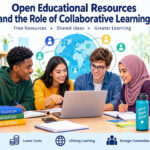
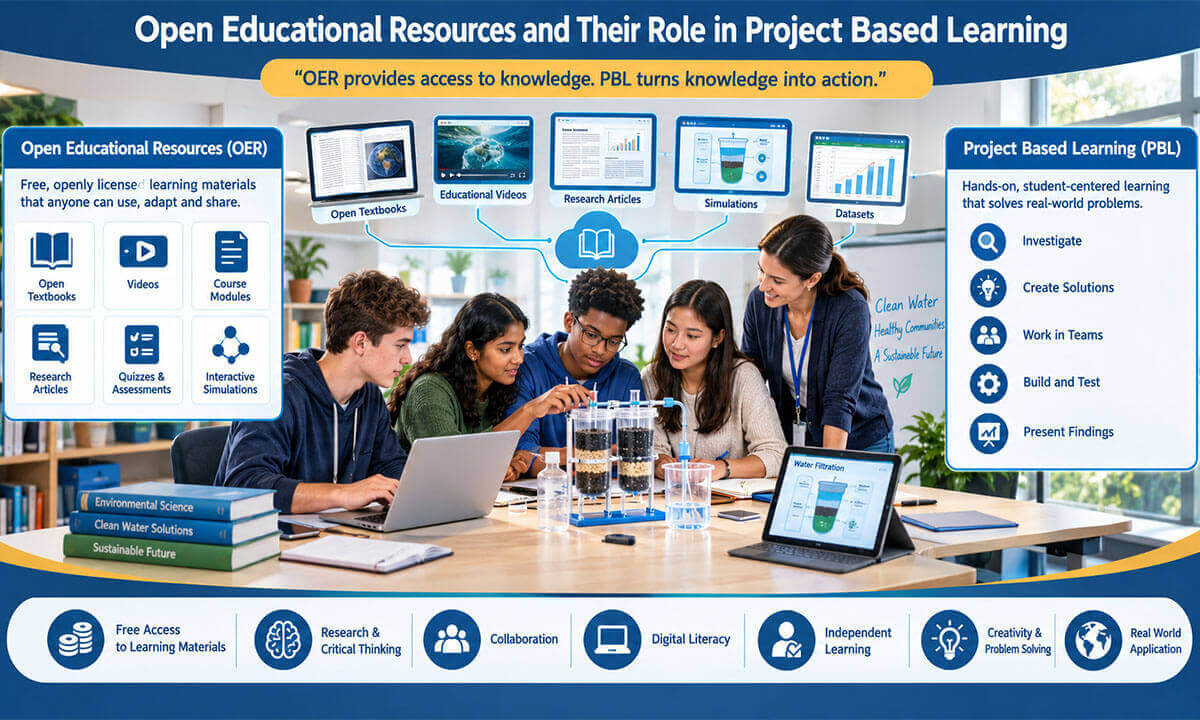
Open Educational Resources, commonly known as OER, can help reduce these barriers. OER are educational materials that are freely available and openly licensed for people to use, adapt, and share. They can include textbooks, videos, lesson plans, research materials, quizzes, simulations, and complete courses.
At the same time, Project-Based Learning, or PBL, is becoming an important approach to teaching and learning. Instead of focusing mainly on lectures and memorization, PBL gives students opportunities to investigate meaningful questions, solve problems, create products, and apply what they learn to real situations.
When OER and PBL are used together, students can gain access to a wide range of learning materials while working on practical projects. This combination can support independent learning, collaboration, creativity, research skills, critical thinking, and digital literacy.
This article explores the role of OER in Project-Based Learning, its major benefits, practical applications, challenges, and ways educators can use it effectively.
What Are Open Educational Resources?
Open Educational Resources are teaching, learning, and research materials that are available for free use and are usually released under an open license. The license determines what users are allowed to do with the material.
Depending on the license, educators and students may be able to use, copy, revise, combine, and share OER.
OER can take many forms, including:
- Open textbooks
- Lecture notes
- Lesson plans
- Educational videos
- Research materials
- Interactive simulations
- Images and infographics
- Quizzes and assessments
- Course modules
- Tutorials
- Openly licensed presentations
- Educational datasets
One key feature of OER is flexibility. A teacher can select relevant materials from different sources and organize them around a particular learning goal or project.
For example, a teacher working on an environmental science project might combine an open textbook chapter, a video about water pollution, an interactive simulation, and publicly available environmental data. Students can then use these materials as they investigate a local environmental problem.
Understanding Project-Based Learning:
Project-Based Learning is a student-centered approach in which students learn by investigating a meaningful question, problem, or challenge over a period of time.
In a traditional classroom, students may first learn information and then complete an exercise to demonstrate what they remember. In PBL, the process can work differently. Students begin with a problem or question and then learn the information they need while working toward a solution or final product.
For example, instead of simply reading about climate change, students might investigate how climate change affects their local community. They could collect information, analyze data, interview community members, develop possible solutions, and present their findings.
A PBL project can therefore involve several skills at the same time. Students may need to research, communicate, collaborate, analyze information, use technology, manage time, and present their conclusions.
This makes access to reliable learning materials particularly essential.
Why OER and PBL Work Well Together:
OER and PBL support several of the same educational goals. Both can encourage active participation, exploration, collaboration, and independent learning.
A project rarely depends on one textbook or one source of information. Students often need information from different perspectives and formats. OER can provide that variety without requiring every student to purchase additional materials.
The relationship can be understood simply: PBL gives students a meaningful reason to learn, while OER gives them flexible resources to support that learning.
1. OER Improves Access to Learning Materials: One of the most indispensable contributions of OER is improved access.
Traditional educational materials can be expensive. When students cannot afford required textbooks or supplementary materials, their ability to participate fully in a project may be affected.
OER can reduce this problem by providing learning materials at no cost to students.
For example, students working on a public health project can access open textbooks, research papers, statistical information, educational videos, and other resources without purchasing multiple books.
This is particularly useful in PBL because projects often require students to consult several sources rather than relying on one textbook.
2. OER Allows Teachers to Adapt Content: PBL projects are often designed around specific students, communities, and problems. A standard textbook may not always match the needs of a particular project.
Openly licensed resources give educators greater flexibility to adapt appropriate materials.
A teacher might:
- Remove unnecessary sections
- Simplify difficult explanations
- Add local examples
- Combine information from several resources
- Translate or adapt selected material where licensing permits
- Create a project-specific learning package
For example, a teacher developing a project about local water quality could adapt an environmental science resource and add information about nearby rivers, water sources, or community concerns.
This can make learning more relevant to students.
3. OER Provides Different Types of Media: Students learn through different forms of information. A project may require more than written material.
OER can include videos, diagrams, simulations, interactive activities, datasets, presentations, and other digital materials.
This variety can help students understand complicated concepts.
For example, students studying renewable energy might read about solar power, watch a video explaining solar panels, use a simulation to explore energy production, and analyze publicly available data.
Using different formats can also make project work more engaging.
4. OER Supports Student Research: Research is a central part of many PBL activities. Students need to locate information, evaluate sources, compare evidence, and decide which information is useful.
OER gives students opportunities to practice these skills.
Instead of receiving all information directly from the teacher, students can explore different resources and determine what they need for their project.
This supports a more active learning process.
For example, students working on a project about plastic pollution could research:
- Sources of plastic waste
- Effects on ecosystems
- Recycling practices
- Consumer behavior
- Government policies
- Possible alternatives to plastic
Students can then compare information from different sources and use evidence to develop their project.
5. OER Encourages Collaboration: Collaboration is an important part of Project-Based Learning. Students often work in groups where each person has a different responsibility.
OER can support this process because students can share resources and work together on common materials.
One student might collect research articles. Another might analyze data. Another might create a presentation. Another might prepare visual materials.
Students can also create new educational materials during the project. Depending on the license, these materials may be shared with classmates or a wider audience.
This changes students from being only consumers of information into contributors to a learning community.
6. OER Supports Critical Thinking: Having access to large amounts of information does not automatically make students good researchers. Students need to learn how to judge information.
PBL creates opportunities for students to ask questions such as:
- Is this source reliable?
- Who created this information?
- What evidence supports the claim?
- Is the information current?
- Do other sources agree?
- What information is missing?
- How can this evidence help solve our problem?
These questions develop critical thinking.
Teachers can use OER as part of activities where students compare different explanations, evaluate evidence, and identify weaknesses in arguments.
7. OER Develops Digital Literacy: Modern students need more than basic computer skills. They need to know how to search for information, evaluate online sources, manage digital materials, communicate online, and use digital tools responsibly.
OER-supported PBL can provide practical opportunities to develop these abilities.
For example, students might need to search open repositories, identify appropriate resources, download materials, organize research notes, analyze data, create digital presentations, and share their final project.
These activities connect digital literacy with a meaningful learning task.
8. OER Encourages Independent Learning: Project-Based Learning gives students more responsibility for their learning. They may need to decide what information they need and where to find it.
OER can support this independence.
Students can explore additional resources when they become interested in a topic. They do not always need to wait for the teacher to provide every piece of information.
For example, if students are designing a small solar energy project, they might independently explore information about energy storage, solar panel efficiency, battery systems, and environmental effects.
The teacher remains an important guide, but students become more active participants in the learning process.
9. OER Connects Learning With Real-World Problems: One of the strengths of PBL is its connection to real life. Students can work on problems that exist outside the classroom.
OER can provide the background information needed to investigate those problems.
A project about food waste, for example, could involve open resources about nutrition, agriculture, environmental science, economics, and consumer behavior.
Students can use these materials to understand the problem from several perspectives before developing a solution.
This helps students see that academic subjects are connected rather than completely separate areas of knowledge.
10. OER Can Support More Up-to-Date Learning: Some printed educational materials can become outdated. This can be a problem in subjects where information changes quickly.
OER can provide access to newer materials, although educators still need to check publication dates and evaluate the quality of each resource.
This is particularly remarkable for projects involving technology, environmental issues, scientific developments, economics, and other changing fields.
Teachers should encourage students to check when a resource was published or updated and whether the information is still relevant.
A Practical Example of OER in Project-Based Learning:
Consider a secondary school science class working on a project about clean drinking water.
The teacher begins with a question: How can we improve access to safe drinking water in a community?
Students form small groups and investigate the problem.
They might use OER to:
- Learn about water contamination
- Study basic filtration methods
- Watch educational videos about water treatment
- Explore simulations of filtration systems
- Read openly available scientific materials
- Examine environmental data
- Study examples of low-cost water purification systems
Students then design a small filtration model.
They test the model, record their observations, identify problems, and make improvements.
Finally, each group presents its design and explains the scientific principles behind it.
In this example, OER does not replace the project. Instead, it provides the information students need to complete the project.
The learning process becomes active. Students are reading, researching, designing, testing, discussing, and presenting.
The Role of the Teacher:
Using OER in PBL does not mean that teachers become less important. In many cases, the teacher’s role becomes more focused on guidance and learning design.
Teachers can help students:
- Define clear project goals
- Identify appropriate resources
- Evaluate the quality of information
- Understand difficult concepts
- Organize group work
- Monitor progress
- Provide feedback
- Connect project activities with curriculum requirements
- Assess the final product and learning process
Teachers also need to review OER before recommending them to students. Free access does not automatically mean that a resource is accurate, suitable, or well-designed.
Challenges of Using OER in PBL:
Although OER can provide many benefits, educators also need to recognize the challenges.
1. Quality Can Vary: Not every freely available resource is accurate or appropriate.
Some resources may contain outdated information, weak explanations, or unsupported claims.
Teachers and students should evaluate resources carefully before using them.
2. Finding Appropriate Resources Can Take Time: The large amount of online material can make searching difficult.
Students may find thousands of resources but struggle to determine which ones are useful.
Teachers can help by creating curated resource lists and teaching students how to search effectively.
3. Digital Access Is Not Equal: Some students may have limited internet access, older devices, or insufficient digital skills.
This can create unequal learning opportunities.
Schools can respond by downloading materials for offline use, providing access to school devices, allowing printed versions when necessary, and designing projects that do not depend entirely on continuous internet access.
4. Copyright and Licensing Can Be Confusing: Not every free online resource is an OER.
A resource being available online does not automatically mean that people have permission to modify or redistribute it.
Teachers should understand basic open licensing and check the license attached to each resource before adapting or sharing it.
5. Too Much Information Can Become a Problem: More information is not always better.
Students can become overwhelmed when they are given too many resources.
A carefully selected collection of relevant materials is often more useful than a huge list of links.
How Educators Can Use OER Effectively in PBL:
Educators can take several practical steps to make OER-supported PBL more effective.
- Start With a Meaningful Question: Begin with a problem that students can understand and investigate.
A strong project question gives students a reason to search for information and apply what they learn.
- Curate Resources: Instead of giving students unlimited search results, provide a starting collection of reliable resources.
Students can then expand their research as they develop their projects.
- Teach Source Evaluation: Students should learn how to identify reliable information.
They can check the author, organization, publication date, evidence, references, and purpose of a resource.
- Allow Students to Make Choices: PBL works best when students have some control over their learning.
Teachers can provide boundaries while allowing students to choose topics, research methods, project formats, or possible solutions.
- Connect Projects With the Curriculum: Projects should not be separate from academic learning.
Teachers should identify the knowledge and skills that students are expected to develop and design project activities around those goals.
- Encourage Students to Create and Share: Students can create presentations, guides, infographics, reports, videos, or other educational materials as part of their projects.
Where licensing allows, these materials can become resources for future learners.
OER and PBL in Different Subjects:
The combination of OER and PBL can be used across many subjects.
- Science: Students can investigate pollution, renewable energy, water quality, biodiversity, or public health using open scientific resources and datasets.
- Mathematics: Students can use real-world data to investigate population growth, budgeting, transportation, business problems, or environmental measurements.
- Social Studies: Students can research local history, community development, social issues, migration, or cultural change.
- Language Learning: Students can use open reading materials, videos, audio resources, and writing examples while completing projects such as interviews, digital magazines, or community information campaigns.
- Technology: Students can use open tutorials, documentation, examples, and software resources to design websites, applications, prototypes, or digital solutions.
Measuring Student Learning:
Assessment is a vital part of OER-supported PBL.
Teachers should assess more than the final product. The learning process also matters.
Assessment can consider:
- Research quality
- Problem-solving
- Critical thinking
- Collaboration
- Communication
- Creativity
- Use of evidence
- Digital skills
- Reflection
- Final project quality
Students can also complete self-assessments and peer assessments. These activities encourage them to think about what they learned, what they struggled with, and how they could improve.
Why OER and PBL Matter for Modern Education:
The combination of OER and PBL reflects an important shift in education.
Learning is no longer limited to a classroom, a teacher, or a single textbook. Students can access information from many sources and use that information to investigate problems that matter to them.
At the same time, educators need to make sure that technology and open resources are used with purpose. Simply giving students access to thousands of online resources does not automatically create better learning.
The value comes from how those resources are selected, evaluated, adapted, and connected to meaningful learning activities.
OER provides access and flexibility. PBL provides purpose and application. Together, they can create opportunities for students to learn through research, practice, collaboration, and problem-solving.
In conclusion, Open Educational Resources can play an important role in strengthening Project-Based Learning. They can reduce the cost of learning materials, provide different forms of content, support independent research, encourage collaboration, and give teachers greater freedom to adapt learning materials.
Project-Based Learning gives students an opportunity to use those resources in meaningful ways. Instead of simply reading about a subject, students can investigate questions, solve problems, create products, test ideas, and explain their findings.
However, effective use of OER requires careful planning. Teachers need to evaluate resources, consider licensing, support students who have limited digital access, and help learners develop the skills needed to judge information.
The goal is not to replace teachers or traditional learning completely. The goal is to give teachers and students more useful choices.
When carefully selected OER are combined with well-designed projects, learning can become more active, flexible, and connected to real life. Students can move beyond memorizing information and begin using knowledge to understand problems, develop ideas, and create practical solutions. That is one of the most valuable contributions OER can make to Project-Based Learning.

is an experienced educator and academic currently serving as a Lecturer at Nurul Amin Degree College. With a career dedicated to student development and institutional excellence, he brings a wealth of classroom expertise and pedagogical knowledge to his current role. Before joining the faculty, he served as an Assistant Teacher at Zinzira PM Pilot School and College.