Preparing Special Needs Students for Life Beyond High School:
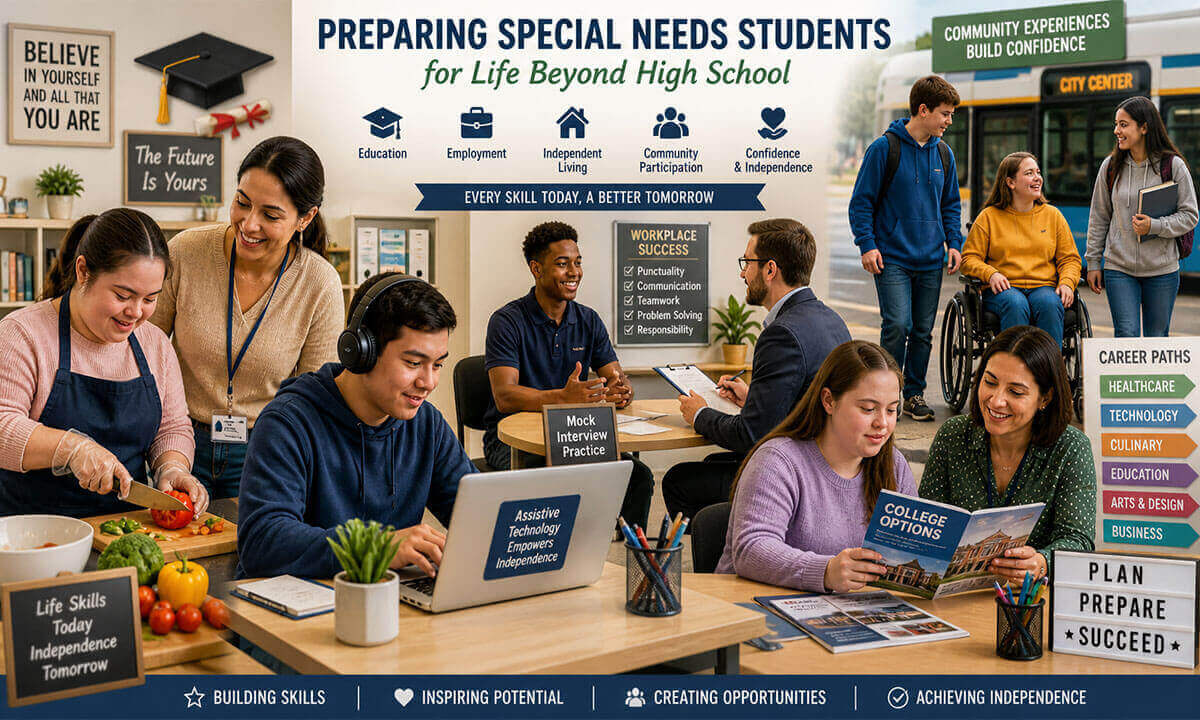
The transition from high school to adulthood is a significant milestone for every student, but for students with special needs, this transition often requires additional planning, support, and guidance. Life beyond high school may involve higher education, vocational training, employment, independent living, or community participation. Without appropriate preparation, many students with disabilities face barriers related to communication, employment opportunities, social adaptation, and independent living skills (Lo, 2024). Schools, families, therapists, and communities therefore play a crucial role in helping these students develop the academic, social, emotional, and practical abilities needed for adult life. Preparing special needs students for adulthood is not solely about academic success. It also involves teaching life skills, encouraging self-advocacy, fostering independence, and creating opportunities for real-world experiences. Research and educational practice increasingly emphasize transition planning as an essential part of special education programs because successful transitions contribute to improved quality of life, employment outcomes, and social inclusion (Lo, 2024). This article explores the importance of transition planning, the development of life skills, vocational preparation, emotional support, family involvement, and the challenges associated with preparing special needs students for life beyond high school.
Understanding Transition Planning:
Transition planning refers to the structured process of preparing students with disabilities for adult life after high school. It typically begins during secondary education and focuses on identifying the student’s goals, strengths, interests, and support needs. According to the Individuals with Disabilities Education Act (IDEA), transition services are legally required for students with disabilities in many educational systems, particularly in the United States (Lo, 2024).
Transition planning often includes:
- Postsecondary education planning
- Career exploration and vocational training
- Independent living skills development
- Social and communication skill enhancement
- Community participation
- Financial literacy and self-management
Effective transition planning is collaborative. Teachers, parents, therapists, counselors, and students themselves work together to establish realistic and meaningful goals. Studies show that students who actively participate in their transition planning are more likely to achieve successful adult outcomes because they develop greater self-awareness and self-determination (Transition Abilities, 2025).
Furthermore, transition planning recognizes that success looks different for every student. For some individuals, success may involve independent employment and living, while for others it may mean supported employment, assisted living, or active participation in community activities. The focus is therefore individualized rather than standardized.
The Importance of Life Skills Education:
Life skills education is one of the most important aspects of preparing special needs students for adulthood. Academic knowledge alone is often insufficient for navigating everyday responsibilities. Students must also learn practical skills that allow them to function effectively in daily life.
Life skills include:
- Personal hygiene and self-care
- Cooking and meal preparation
- Time management
- Money management and budgeting
- Communication skills
- Transportation use
- Safety awareness
- Decision-making and problem-solving
Many students without disabilities acquire these skills naturally through observation and experience. However, students with special needs often require direct instruction, repetition, and structured practice to master these tasks (MummyPages, n.d.).
Life skills training promotes independence and reduces dependence on caregivers. It also increases self-confidence and emotional well-being. According to Sorem Special Children School (2026), learning daily living skills helps students gain dignity, autonomy, and a sense of control over their lives. Even small accomplishments, such as independently preparing a meal or using public transportation, can significantly improve self-esteem.
Educational programs increasingly incorporate functional learning environments where students practice real-world tasks in authentic settings. Community-based instruction, such as shopping at grocery stores or using public transportation, helps students generalize their skills beyond the classroom (Reddit contributors, 2025).
Developing Social and Communication Skills:
Social and communication skills are essential for adult success. These skills influence relationships, employment opportunities, and participation in community life. Many students with disabilities, particularly those with autism spectrum disorder or communication disorders, may struggle with interpreting social cues, maintaining conversations, or expressing emotions appropriately.
Schools and special education programs often focus on teaching:
- Conversation skills
- Emotional regulation
- Conflict resolution
- Teamwork and cooperation
- Understanding social boundaries
- Nonverbal communication
Social skills instruction may occur through role-playing activities, peer interaction, group projects, or real-life simulations. Consistent practice helps students become more comfortable navigating social environments.
Communication is equally important. Some students may use alternative communication systems such as picture exchange systems, speech-generating devices, or sign language. The goal is not perfect speech but effective communication that enables students to express needs, opinions, and emotions (Sorem Special Children School, 2026).
Strong communication abilities also improve workplace readiness. Employers value employees who can interact respectfully, follow instructions, and collaborate with others. Research from vocational training programs highlights that “soft skills,” including communication and professionalism, are often as important as technical skills for long-term employment success (Project ACCESS, 2017).
Vocational Training and Employment Preparation:
Employment is a major goal for many special needs students transitioning into adulthood. Vocational training provides students with practical job-related skills and work experiences that prepare them for future employment opportunities.
Vocational preparation may include:
- Job-shadowing experiences
- Internships
- Workplace simulations
- Career counseling
- Resume writing
- Interview preparation
- Workplace behavior training
Special education programs increasingly emphasize workplace readiness skills such as punctuality, responsibility, adaptability, and teamwork. LEARN Academy (2025) notes that these “soft skills” help bridge the gap between classroom learning and successful employment outcomes.
Community partnerships with local businesses can provide valuable hands-on experience. Students may participate in school-based enterprises, internships, or supported employment programs where they practice workplace routines in real environments. Such experiences help students build confidence while learning employer expectations.
However, barriers to employment still exist for many individuals with disabilities. Research indicates that young adults with autism and other developmental disabilities often experience lower employment rates than their peers (Beyer, 2018). These challenges may result from limited support services, social communication difficulties, or lack of workplace accommodations.
Therefore, successful employment preparation requires ongoing collaboration between schools, employers, families, and support agencies to ensure students receive the guidance and accommodations necessary for workplace success.
Postsecondary Education Opportunities:
Higher education is becoming an increasingly viable option for students with special needs. Colleges, universities, vocational institutes, and community education programs now offer various support services designed to accommodate diverse learning needs.
Postsecondary options may include:
- Traditional college programs
- Vocational schools
- Technical training institutes
- Supported college programs
- Apprenticeships
- Online education opportunities
Many institutions provide accommodations such as note-taking assistance, extended testing time, tutoring services, assistive technology, and academic coaching. These supports can help students succeed academically while fostering independence.
However, transitioning to postsecondary education may present challenges. Students must often learn to manage schedules independently, advocate for accommodations, and navigate unfamiliar social environments. Teaching self-advocacy skills during high school is therefore essential.
Parents and educators also need to encourage realistic planning. Educational success should align with the student’s strengths, interests, and long-term goals rather than societal expectations alone (Parenting Special Needs Magazine, n.d.).
Emotional and Psychological Preparation:
The transition to adulthood can be emotionally overwhelming for students with disabilities and their families. Anxiety about independence, employment, social acceptance, and future uncertainty is common. Emotional preparation is therefore just as important as academic or vocational preparation.
Students benefit from learning:
- Coping strategies
- Stress management techniques
- Emotional regulation skills
- Self-awareness
- Resilience and adaptability
Mental health support services, including counseling and therapy, can help students manage anxiety and build confidence. Emotional readiness contributes significantly to successful adjustment during adulthood.
Family encouragement also plays an important role. Overprotectiveness, while understandable, can sometimes limit opportunities for independence. Parents who gradually encourage responsibility and decision-making help students develop confidence in their abilities (Sorem Special Children School, 2026).
The Role of Families:
Families are central to successful transition planning. Parents and caregivers often know the student’s strengths, challenges, preferences, and needs better than anyone else. Their involvement helps ensure continuity between school and home environments.
Families can support transition preparation by:
- Encouraging independence at home
- Reinforcing life skills practice
- Participating in transition meetings
- Exploring community resources
- Supporting career exploration
- Advocating for appropriate services
Collaboration between families and schools improves consistency in expectations and learning opportunities. Research consistently shows that students achieve better transition outcomes when families are actively involved in planning and support processes (Lo, 2024).
At the same time, families may experience emotional stress regarding their child’s future. Support groups, counseling, and access to community resources can help families navigate these concerns effectively.
Challenges in Transitioning to Adult Life:
Despite improvements in special education services, many challenges remain in preparing students for adulthood. Common difficulties include:
- Limited access to vocational programs
- Insufficient funding for transition services
- Social stigma and discrimination
- Inadequate employment opportunities
- Lack of community support systems
- Mental health concerns
- Difficulty accessing higher education accommodations
Additionally, transition planning quality may vary across schools and regions. Some students receive comprehensive services, while others lack individualized support.
Students with more severe disabilities may require lifelong assistance, making long-term planning even more critical. Effective systems must therefore provide ongoing adult support services rather than ending assistance immediately after graduation.
Strategies for Improving Transition Outcomes:
Improving transition outcomes for students with special needs requires a comprehensive, individualized, and collaborative approach. Transition outcomes refer to the long-term results students experience after leaving high school, including employment, higher education participation, independent living, social inclusion, and overall quality of life. Successful transitions do not happen automatically; they depend on careful planning, consistent support, skill development, and opportunities for real-world experience.
Research consistently shows that students with disabilities achieve better adult outcomes when schools, families, communities, and support agencies work together to provide structured transition services (Lo, 2024). Effective transition strategies focus not only on academic achievement but also on functional independence, emotional readiness, and community participation.
1. Early and Continuous Transition Planning: One of the most effective strategies for improving transition outcomes is beginning transition planning early. Waiting until the final years of high school often leaves insufficient time to develop essential life and vocational skills. Early planning allows students to gradually build independence and prepare for adult responsibilities.
Transition planning should ideally begin during early adolescence and continue throughout secondary education. This process includes identifying:
- Student strengths and interests
- Career aspirations
- Academic goals
- Independent living needs
- Social and communication challenges
- Required accommodations and support services
Early planning helps educators and families create realistic and achievable goals tailored to the student’s abilities. It also reduces anxiety by giving students time to explore future possibilities and adjust to changing expectations.
Continuous assessment is equally important because students’ interests and abilities may change over time. Flexible transition plans allow adjustments based on the student’s growth, preferences, and experiences (Transition Abilities, 2025).
2. Individualized Transition Programs: Every student with special needs has unique strengths, challenges, and goals. Therefore, transition services should be individualized rather than standardized. A personalized transition plan ensures that supports and educational experiences are meaningful and relevant to the student’s future aspirations.
Individualized transition programs may include:
- Customized vocational training
- Personalized learning strategies
- Specialized communication supports
- Behavioral and emotional support plans
- Independent living instruction
- Postsecondary education preparation
Individualization also means recognizing varying definitions of success. For some students, independent employment may be the goal, while others may benefit more from supported employment or community participation programs.
Student-centered planning is especially important. When students actively participate in decision-making, they develop greater self-determination and motivation. Self-determination refers to the ability to make choices, set goals, solve problems, and advocate for oneself. Studies indicate that self-determination is strongly associated with positive adult outcomes for individuals with disabilities (Wehmeyer & Schwartz, 1997).
3. Teaching Functional Life Skills: Functional life skills instruction is critical for successful adult living. Many students with disabilities require explicit teaching in practical daily activities that others may learn naturally through observation.
Important life skills include:
- Personal hygiene and grooming
- Cooking and nutrition
- Household management
- Budgeting and money management
- Shopping skills
- Transportation use
- Time management
- Safety awareness
- Health management
Teaching these skills within real-world contexts increases their effectiveness. For example, students may practice shopping at grocery stores, using public transportation, or managing a personal budget. Community-based instruction allows students to apply classroom learning in authentic situations, improving skill retention and independence.
Life skills education also enhances confidence and reduces dependence on caregivers. Students who feel capable of managing daily tasks are more likely to participate actively in their communities and pursue independent lifestyles (Sorem Special Children School, 2026).
4. Vocational Training and Work-Based Learning: Employment preparation is one of the most significant components of transition planning. Work-based learning experiences help students develop practical job skills while becoming familiar with workplace expectations and responsibilities.
Effective vocational strategies include:
- Career exploration activities
- Job-shadowing opportunities
- School-based enterprises
- Internships and apprenticeships
- Volunteer experiences
- Workplace simulations
- Resume and interview training
These experiences help students identify their interests and strengths while developing essential workplace behaviors such as punctuality, teamwork, communication, and professionalism.
Research shows that students who participate in paid or unpaid work experiences during high school are more likely to secure employment after graduation (Test et al., 2009). Real-world job experiences also improve confidence and social competence.
Additionally, vocational programs should teach “soft skills,” including:
- Problem-solving
- Adaptability
- Conflict resolution
- Workplace etiquette
- Emotional regulation
Employers often value these interpersonal abilities as much as technical skills because they contribute to long-term workplace success (LEARN Academy, 2025).
5. Strengthening Social and Communication Skills: Social competence is essential for employment, relationships, and community participation. Many students with disabilities experience difficulties with communication, emotional regulation, or understanding social expectations. Without targeted support, these challenges can affect adult independence and inclusion.
Strategies for improving social outcomes include:
- Social skills training groups
- Peer mentoring programs
- Role-playing exercises
- Conflict resolution training
- Emotional literacy instruction
- Group projects and cooperative learning
Communication support should also be individualized. Some students may benefit from speech therapy or assistive communication devices. Others may require direct instruction in conversation skills, nonverbal communication, or workplace interaction.
Positive peer relationships can significantly improve confidence and social participation. Inclusive educational environments that encourage interaction between students with and without disabilities help reduce social isolation and promote acceptance.
6. Encouraging Self-Advocacy and Self-Determination: Self-advocacy is the ability to express one’s needs, rights, opinions, and goals effectively. This skill becomes increasingly important after high school because adult systems often expect individuals to independently request accommodations and support services.
Students should be taught how to:
- Understand their disability
- Identify their strengths and challenges
- Request accommodations
- Participate in decision-making
- Set personal goals
- Solve problems independently
Self-determination instruction empowers students to take ownership of their futures rather than relying entirely on parents or teachers. Research demonstrates that self-determined students are more likely to achieve employment, higher education participation, and independent living success (Wehmeyer & Schwartz, 1997).
Teachers and families can encourage self-advocacy by gradually allowing students to make choices and take responsibility for decisions in safe and supportive environments.
7. Family Involvement and Support: Families play a vital role in transition success. Parents and caregivers often provide emotional support, advocacy, and practical guidance throughout the transition process.
Effective family involvement includes:
- Participating in transition meetings
- Reinforcing life skills at home
- Supporting career exploration
- Encouraging independence
- Connecting with community resources
- Helping students set realistic goals
However, balancing support and independence can be challenging. Some families may unintentionally become overprotective due to concerns about safety or failure. While these concerns are understandable, gradually increasing independence helps students build confidence and resilience.
Family education programs and support groups can help caregivers understand transition services, legal rights, and community resources available for adults with disabilities.
8. Collaboration Between Schools and Community Agencies: Transition success often depends on coordinated support across multiple systems. Schools alone cannot provide every service students need for adulthood. Collaboration between schools and external agencies improves continuity of care and support.
Important partnerships may include:
- Vocational rehabilitation agencies
- Employers and businesses
- Community organizations
- Mental health services
- Postsecondary institutions
- Independent living centers
- Healthcare providers
Interagency collaboration helps students access employment opportunities, adult services, counseling, housing support, and vocational training programs. Effective communication among service providers prevents gaps in support after graduation.
Community partnerships also increase opportunities for real-world learning experiences, which are essential for skill generalization and adult readiness.
9. Promoting Inclusive Education and Community Participation: Inclusive environments allow students with disabilities to interact with peers, develop social confidence, and participate fully in community life. Inclusion reduces stigma while promoting understanding and acceptance.
Community participation opportunities may include:
- Sports and recreation programs
- Volunteer activities
- Clubs and organizations
- Religious or cultural events
- Community service projects
These experiences help students build social networks and develop a sense of belonging. Participation in community activities also teaches practical skills such as communication, responsibility, and teamwork.
Inclusive practices benefit society as well by fostering diversity, empathy, and equal opportunity.
10. Providing Emotional and Mental Health Support: Transitioning into adulthood can create emotional stress for students with disabilities. Anxiety about employment, independence, social relationships, or future uncertainty is common.
Mental health support strategies include:
- Counseling services
- Stress management training
- Emotional regulation instruction
- Peer support groups
- Mindfulness practices
- Crisis intervention support
Students who receive emotional support are often better able to cope with change and adapt to new environments. Addressing mental health concerns early can prevent long-term emotional difficulties and improve overall transition success.
11. Using Assistive Technology: Assistive technology can significantly improve independence and participation for students with disabilities. Technology tools help students communicate, organize tasks, access education, and perform daily activities more effectively.
Examples include:
- Speech-generating devices
- Screen readers
- Organizational apps
- Mobility aids
- Adaptive computer software
- Communication boards
Technology increases accessibility and allows many students to participate more independently in education, employment, and community life.
Educators should provide training so students learn how to use assistive technology confidently in real-world settings.
12. Monitoring and Evaluating Progress: Transition planning should include ongoing evaluation to ensure strategies remain effective. Regular monitoring helps educators and families identify areas where students are improving and areas needing additional support.
Evaluation methods may include:
- Skill assessments
- Workplace feedback
- Student self-reflection
- Parent input
- Academic progress monitoring
- Community participation observations
Data-driven decision-making allows transition teams to adjust goals and interventions as needed. Continuous evaluation ensures that transition services remain responsive to the student’s evolving needs and aspirations.
In conclusion, preparing special needs students for life beyond high school is a complex but essential process that extends far beyond academic instruction. Successful transition planning involves equipping students with life skills, vocational abilities, communication skills, emotional resilience, and self-confidence. Schools, families, and communities must collaborate to create supportive environments where students can explore their strengths and develop independence.
Every student’s path to adulthood is unique. Some may pursue higher education, while others may focus on employment, supported living, or community participation. The goal is not to force students into a single definition of success but to empower them to lead meaningful and fulfilling lives according to their individual abilities and aspirations.
As educational systems continue to evolve, greater emphasis on inclusion, personalized support, and real-world preparation can help ensure that students with special needs transition into adulthood with dignity, confidence, and opportunity.
Frequently Asked Questions (FAQs):
What does “transition planning” mean for students with special needs?
Transition planning refers to the process of preparing students with disabilities for life after high school. It involves helping students develop the academic, vocational, social, and independent living skills needed for adulthood. Transition planning may include career preparation, college readiness, life skills instruction, employment training, and community participation (Lo, 2024).
When should transition planning begin?
Transition planning should begin as early as possible, ideally during early adolescence or the middle school years. Early planning provides students with enough time to develop important life and vocational skills gradually. Many educational systems formally begin transition services by age 14–16, depending on local policies and regulations (Transition Abilities, 2025).
Why are life skills important for students with special needs?
Life skills help students become more independent and confident in managing daily responsibilities. Skills such as cooking, personal hygiene, money management, transportation use, communication, and decision-making prepare students for adulthood and reduce dependence on caregivers. These skills also improve self-esteem and community participation (Sorem Special Children School, 2026).
What are some examples of transition goals?
Transition goals vary depending on the student’s strengths, interests, and support needs. Common goals include:
- Obtaining employment
- Attending college or vocational school
- Living independently or semi-independently
- Improving communication skills
- Learning financial management
- Developing social relationships
- Participating in community activities
Effective transition goals are individualized and realistic.
How can schools support students during transition?
Schools can support students by providing:
- Individualized transition plans
- Vocational training programs
- Career counseling
- Life skills instruction
- Community-based learning experiences
- Social skills training
- Postsecondary education guidance
- Assistive technology support
Collaboration between teachers, families, and community agencies also strengthens transition outcomes (Test et al., 2009).
What role do families play in transition planning?
Families play a crucial role by encouraging independence, reinforcing life skills at home, participating in planning meetings, and advocating for appropriate services. Parents and caregivers often provide emotional support and guidance throughout the transition process. Active family involvement is strongly linked to better adult outcomes for students with disabilities (Lo, 2024).
Can students with special needs attend college?
Yes, many students with special needs successfully attend colleges, universities, vocational institutes, and technical schools. Postsecondary institutions often provide accommodations such as extended test time, note-taking assistance, tutoring, assistive technology, and academic coaching. Choosing a program that matches the student’s strengths and interests is important for success.
What is self-advocacy, and why is it important?
Self-advocacy is the ability to understand and communicate one’s needs, rights, strengths, and challenges. It is important because adults are often expected to request accommodations and make independent decisions. Teaching self-advocacy helps students gain confidence, independence, and greater control over their lives (Wehmeyer & Schwartz, 1997).
How does vocational training help special needs students?
Vocational training provides practical job-related skills and real-world work experience. Students may participate in internships, job-shadowing, workplace simulations, or apprenticeships. These experiences improve workplace readiness, communication skills, confidence, and employment opportunities after graduation (LEARN Academy, 2025).
What challenges do special needs students face after high school?
Common challenges include:
- Difficulty finding employment
- Limited access to support services
- Social isolation
- Financial dependence
- Barriers to higher education
- Transportation difficulties
- Mental health concerns
- Discrimination and stigma
Comprehensive transition planning can help reduce these barriers and improve long-term outcomes.
What is community-based instruction?
Community-based instruction involves teaching students practical skills in real-world settings rather than only in classrooms. Examples include practicing shopping in grocery stores, using public transportation, visiting workplaces, or learning banking skills. This approach helps students apply skills more effectively in everyday life.
How can technology support transition success?
Assistive technology helps students communicate, organize tasks, access learning materials, and complete daily activities more independently. Examples include speech-generating devices, screen readers, communication apps, and adaptive software. Technology can greatly improve independence, education, and employment opportunities.
Why is emotional support important during transition?
Transitioning into adulthood can create stress and anxiety for students with disabilities. Emotional support helps students cope with change, build resilience, and develop confidence. Counseling, peer support, stress management strategies, and family encouragement can improve emotional well-being during the transition process.
What are “soft skills,” and why do employers value them?
Soft skills are interpersonal and behavioral skills that help individuals work effectively with others. Examples include communication, teamwork, punctuality, adaptability, problem-solving, and professionalism. Employers highly value these skills because they contribute to workplace success and long-term employment stability (LEARN Academy, 2025).
What makes a transition program successful?
Successful transition programs are:
- Individualized
- Student-centered
- Family-inclusive
- Community-connected
- Focused on real-world experiences
- Supportive of independence and self-determination
Programs that combine academic instruction with life skills, vocational training, and emotional support tend to produce the best long-term outcomes for students with disabilities.
References:
- Beyer, R. (2018). Life after high school. Boston University. https://www.bu.edu/articles/2018/life-after-high-school
- LEARN Academy. (2025). The skills that help students succeed beyond the special education classroom. https://thelearnacademy.com/blog/the-skills-that-help-students-succeed-beyond-the-special-education-classroom
- Lo, L. (2024). Preparing students with disabilities for life beyond school. Edutopia. https://www.edutopia.org/article/transition-planning-students-disabilities
- Mummy Pages. (n.d.). Preparing special needs children for life after secondary school. https://www.mummypages.ie/preparing-special-needs-children-for-life-after-secondary-school
- Parenting Special Needs Magazine. (n.d.). Educational options after high school for students with special needs. https://www.parentingspecialneeds.org/article/educational-options-after-high-school-for-students-with-special-needs
- Project ACCESS. (2017). Preparing for life after high school (LAHS): Thinking beyond grades. Missouri State University. https://blogs.missouristate.edu/access/2017/05/02/preparing-for-life-after-high-school-lahs-thinking-beyond-grades
- Sorem Special Children School. (2026). Life skills training: Preparing special children for the real world. https://soremspecialchildren.org/life-skills-training-preparing-special-children-for-the-real-world
- Test, D. W., Mazzotti, V. L., Mustian, A. L., Fowler, C. H., Kortering, L., & Kohler, P. (2009). Evidence-based secondary transition predictors for improving postschool outcomes for students with disabilities. Career Development for Exceptional Individuals, 32(3), 160–181. https://doi.org/10.1177/0885728809346960
- Transition Abilities. (2025). Your Q&A guide to transition planning in special education. https://transitionabilities.com/guide-to-transition-planning-in-special-education
- Wehmeyer, M. L., & Schwartz, M. (1997). Self-determination and positive adult outcomes: A follow-up study of youth with mental retardation or learning disabilities. Exceptional Children, 63(2), 245–255. https://doi.org/10.1177/001440299706300207

is an experienced educator and academic currently serving as a Lecturer at Nurul Amin Degree College. With a career dedicated to student development and institutional excellence, he brings a wealth of classroom expertise and pedagogical knowledge to his current role. Before joining the faculty, he served as an Assistant Teacher at Zinzira PM Pilot School and College.