The Role of Open Educational Resources in Modernizing Education Systems:
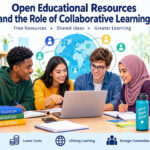
Education is changing quickly, and traditional teaching methods cannot always meet today’s needs. Textbooks can become outdated, and many students still lack access to quality learning materials. Open Educational Resources (OER) offer a useful solution. They provide free and accessible educational materials that can be updated and shared easily. OER are helping make education more flexible, affordable, and accessible for learners around the world. In the rest of this article, we will explore the role of Open Educational Resources in modernizing education systems.
What Are Open Educational Resources?
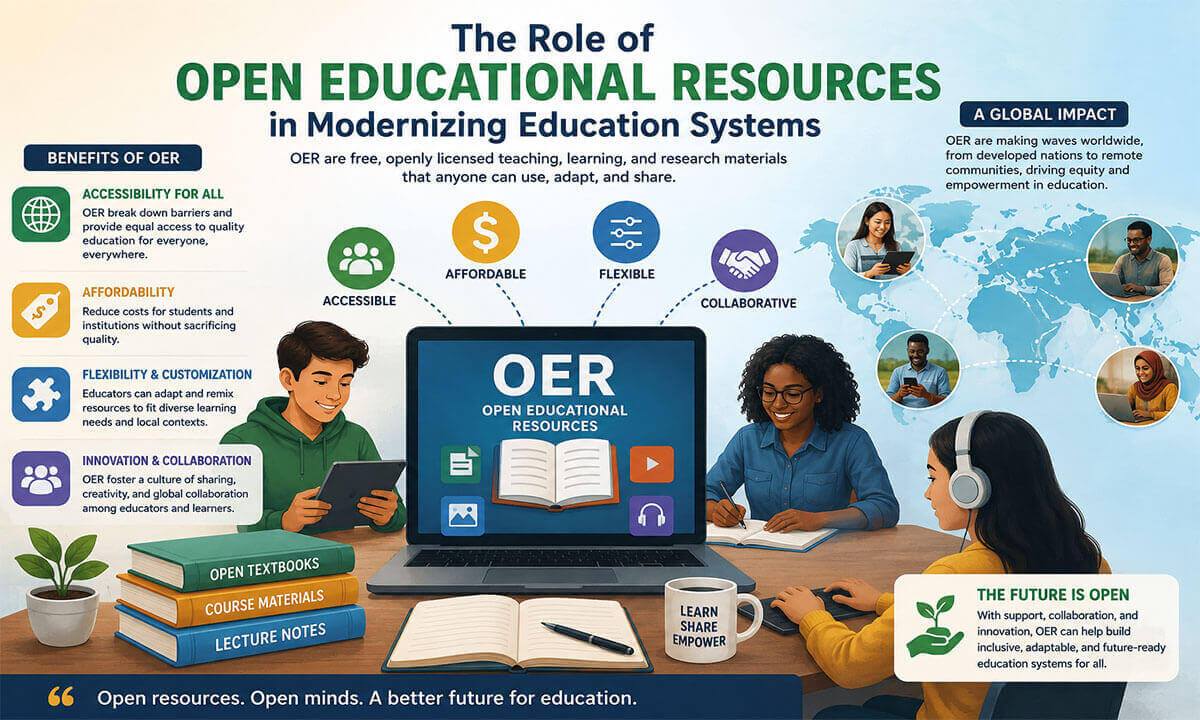
Open Educational Resources (OER) are teaching, learning, and research materials that are freely available for people to use. They can include many types of educational content, such as textbooks, lecture notes, study guides, quizzes, videos, presentations, and complete courses.
The main idea behind OER is to make learning materials easier to access. Students do not always need to buy expensive textbooks or pay for every learning resource. Teachers can also find useful materials without having to create everything from the beginning.
OER are usually available in the public domain or shared under an open license. These licenses give people permission to use the materials in different ways. Depending on the license, users may be able to copy, share, change, combine, or adapt the materials for their own needs.
One of the most common systems used for sharing OER is Creative Commons licensing. A Creative Commons license explains how a resource can be used and whether the creator needs to be credited. For example, a teacher may take an open textbook, add new examples, update some information, and use the revised version with students, as long as the license allows these changes.
OER can benefit both teachers and students. Teachers can access educational materials created by educators and institutions around the world. They can select resources that match their lessons and adapt them to suit their students. This can save time and support better teaching.
For students, OER can reduce the cost of education. Instead of buying several expensive textbooks, they may be able to access free digital materials online. This is especially helpful for students who have limited financial resources.
In simple terms, OER make educational knowledge more open and accessible. They allow teachers and students to find, use, share, and sometimes improve learning materials without the high costs normally associated with traditional educational resources.
Why Traditional Education Resources Are Falling Behind:
Traditional educational resources have played an important role in education for many years. Textbooks, printed study guides, workbooks, and other learning materials have helped teachers deliver lessons and students understand different subjects. However, these resources also have several limitations in modern education.
One major problem is the high cost of traditional textbooks. College and university textbooks can be very expensive, especially when students need several books for different courses. For students from low income families, these costs can create an additional financial burden. Some students may even avoid buying required books because they cannot afford them.
Another problem is that textbooks can become outdated quickly. New information, research, technology, and ideas are developing all the time. A textbook may be useful when it is first published, but some of its information may become less relevant after a few years. When a new edition is published, students may be expected to buy another expensive book, even when only a small part of the content has changed.
Traditional resources can also be difficult to change or adapt. Once a printed textbook is published, teachers cannot easily modify its content to match the needs of their students. They may need to follow the material as it is presented, even when some topics require more explanation or additional examples.
One more important issue is the one-size-fits-all approach. Traditional educational materials are often designed for a general group of learners. However, students do not all learn in the same way. Some students understand better through written explanations, while others benefit from videos, examples, activities, or visual materials. Students also have different levels of knowledge, learning speeds, and educational needs.
For this reason, educational resources need to become more flexible and adaptable. Instead of expecting every learner to adjust to the same materials, teachers should have the opportunity to adjust learning materials to suit their students.
This is one area where Open Educational Resources can make a difference. OER allow teachers to access, adapt, and share educational materials according to their teaching needs. They can update information, add local examples, and provide different types of learning activities. In this way, learning resources can become more relevant, affordable, and responsive to the needs of modern learners.
The Superpowers of OER in Modern Education:
Open Educational Resources are changing the way teachers teach and students learn. They provide learning materials that are easier to access, less expensive, and more flexible than many traditional resources. They also encourage teachers and students to share knowledge and work together. Here are some of the main benefits of OER in modern education.
- Accessibility for All: One of the paramount benefits of OER is improved access to educational materials. Students can often find textbooks, lecture notes, videos, activities, and other resources online without having to pay for them.
This can be especially helpful for students who have limited financial resources. It can also support learners who live in rural or remote areas where educational resources may be difficult to obtain.
OER can also help reduce differences in access to learning materials. When teachers and educational institutions share useful resources openly, more students can benefit from them. Learners are not limited only to the materials available in their local schools or colleges. They can explore resources created by educators and institutions from different parts of the world.
However, access to OER still depends on internet access and digital devices in many situations. Therefore, education systems also need to improve digital access so that more learners can benefit from open resources.
- Affordability Without Sacrificing Quality: The cost of education is a major concern for many students and families. Textbooks, subscriptions, and other learning materials can become expensive, especially when students need resources for several courses.
OER can help reduce these costs because many resources are available for free. Students may not need to purchase expensive textbooks for every subject. This can reduce the financial pressure associated with education.
Schools and colleges can also benefit from lower material costs. The money saved can potentially be used for other important needs, such as teacher training, library resources, classroom facilities, computers, and other educational technologies.
Some people may think that free resources are automatically lower in quality. However, this is not always true. Many OER are developed by experienced teachers, researchers, universities, and other educational organizations. Some resources are also reviewed by other educators before they are shared.
The key point is that OER should be selected carefully. Teachers and institutions should check the accuracy, quality, relevance, and reliability of a resource before using it.
- Flexibility and Customization: Every classroom is different, and every student has different learning needs. A single textbook may not work equally well for everyone.
OER provide teachers with greater freedom to adapt learning materials. When the license allows it, teachers can change, combine, or update resources to make them more suitable for their students.
For example, a teacher can add local examples to a lesson so that students can understand the topic more easily. A teacher can also remove information that is no longer relevant or add activities that support student learning.
This flexibility is particularly useful in different cultural and educational settings. A teacher can make learning materials more relevant to the local community, language, and experiences of students.
As a result, OER can help teachers move away from a fixed approach to teaching. Instead, they can develop learning materials that better match the needs and abilities of their students.
- Encouraging Innovation and Collaboration: OER also encourage teachers and educational institutions to work together. Educators from different regions and countries can share their knowledge, teaching ideas, and learning materials.
A teacher may use a resource created by another educator, improve it, and share the updated version with others. In this way, educational materials can continue to develop over time.
Students can also benefit from learning materials created by experts from different parts of the world. This can introduce them to new ideas, cultures, examples, and points of view.
This open exchange of knowledge can encourage creativity and innovation in education. Instead of every teacher creating all materials alone, educators can learn from one another and build on existing resources.
Generally, OER are more than free educational materials. They support a more open, flexible, collaborative, and inclusive approach to education. When used effectively, they can help teachers provide better learning experiences while giving students greater access to knowledge.
How OER Are Being Used Around the World:
Open Educational Resources are being used in many countries to improve access to education. Governments, universities, schools, teachers, and educational organizations are using OER in different ways. Although each country has different educational needs, the main goal is similar: to make quality learning materials more accessible and affordable.
United States:
In the United States, many colleges and universities have introduced OER to reduce the cost of learning materials for students. Traditional textbooks can be expensive, so open textbooks and other free resources can help students save money.
Some colleges have developed complete degree programs where students can study without having to buy traditional textbooks. These programs are sometimes called Z degree programs, where the “Z” refers to zero textbook costs.
Several states have also supported OER projects. For example, California and New York have invested in initiatives that encourage the development and use of open educational materials. These efforts show that OER are becoming an important part of discussions about college affordability and access to education.
Europe:
OER are also being promoted across Europe. The European Union has supported different projects that use open educational materials to improve digital learning, lifelong learning, and access to knowledge.
Countries such as Poland, the Netherlands, and Norway have taken steps to include OER in their education systems. Teachers and students can use digital resources to support classroom learning and independent study.
OER are particularly useful for lifelong learning because adults can access educational materials outside traditional classrooms. This makes it easier for people to continue developing their knowledge and skills throughout their lives.
Africa:
OER can be especially valuable in parts of Africa where schools and universities may have limited access to expensive textbooks and other educational resources. Open materials can provide teachers and students with additional learning opportunities without the same financial costs associated with traditional resources.
Organizations such as OER Africa have worked to support educators and institutions by providing access to open educational materials and encouraging the development of local resources.
OER can also support educational equality. When teachers can access and share useful materials, they can provide students with more learning opportunities. This can be particularly important in communities where educational resources are limited.
Asia:
Countries across Asia are also using OER to expand access to education. India, for example, has developed and supported open digital learning resources that allow students and teachers to access educational content online.
OER can help large and diverse populations access learning materials without depending entirely on expensive printed resources. Digital platforms also make it possible to reach learners who may not be able to attend traditional classes regularly.
The use of OER in Asia shows how open resources can support large-scale education and help connect learners with knowledge from different sources.
Latin America:
OER are also being used in Latin American countries to expand access to digital education. Brazil, for example, has developed digital educational resources and platforms that provide learners and teachers with access to a wide range of materials.
These resources can support schools, universities, teachers, and independent learners. They can also help educational institutions reach communities that have traditionally had fewer learning opportunities.
A Growing Global Movement:
The use of OER is growing in different parts of the world. Countries may use different approaches, but they share many common goals. These include reducing the cost of education, improving access to learning materials, supporting teachers, and encouraging digital learning.
The global growth of OER shows that education does not have to depend only on expensive and fixed resources. By sharing knowledge openly, countries and educational institutions can create more flexible opportunities for learners.
OER are therefore becoming an important part of modern education. They can help make learning more accessible, affordable, and inclusive for people in different parts of the world.
Challenges in the OER Movement:
Open Educational Resources have many benefits, but they also face several challenges. Simply making educational materials freely available does not guarantee that teachers and students will use them effectively. There are still problems related to awareness, technology, language, culture, and copyright that need attention.
- Lack of Awareness and Adoption: One main challenge is that some teachers and students are not aware of OER. They may not know where to find reliable open educational materials or how these resources can support teaching and learning.
Some educators may also be unsure about the quality of OER. They may believe that free resources are less reliable than traditional textbooks. Others may want to use OER but do not have enough experience finding, evaluating, adapting, or creating them.
Training can help address these problems. Schools, colleges, and universities can organize workshops and provide guidance on how to find and use OER effectively. Greater awareness can encourage more educators to include OER in their teaching.
- Technological Barriers: OER are often accessed through digital platforms, so technology plays an important role in their use. However, not all learners have reliable internet access, computers, tablets, or smartphones.
This problem can be serious in rural and low-income communities. Slow internet connections, limited electricity, and a lack of suitable devices can prevent students from accessing online learning materials.
For OER to reach more people, educational systems need to improve digital infrastructure. Offline versions of resources can also help learners who have limited internet access.
- Language and Cultural Relevance: An additional challenge is language. A large amount of OER is available in English, but many learners around the world use other languages. Students may find it difficult to understand materials when they are not available in their first language.
Cultural relevance is also important. A resource created for students in one country may not always be suitable for learners in another country. Examples, activities, images, and explanations may need to be changed to match local cultures and experiences.
More multilingual and culturally relevant OER are therefore needed. Translating and adapting resources can make them more useful to different groups of learners.
- Copyright and Licensing Confusion: Copyright and open licenses can sometimes be difficult for teachers and students to understand. Just because a resource is available online does not mean that anyone can freely copy or change it.
Different Creative Commons licenses have different conditions. For example, some licenses require users to give credit to the original creator. Others may require modified versions to be shared under the same license.
Educators need to understand these conditions before using or adapting OER. Clear guidance and basic training on copyright and Creative Commons licenses can help prevent mistakes.
The Future of OER in Education:
Open Educational Resources are likely to become an even more significant part of education in the future. As technology develops and more people recognize the benefits of open learning materials, the use of OER may continue to grow. Several developments can help shape the future of OER.
- More Government Support: Government support can play an essential role in expanding OER. Governments can create policies that encourage schools, colleges, and universities to use open educational materials.
They can also provide funding for the creation, translation, updating, and distribution of OER. When public money is used to support research and educational projects, governments can encourage the results to be shared openly when appropriate. This can allow more teachers and students to benefit from publicly funded work.
Strong government policies can also help educational institutions develop long-term OER programs. This can make open education a regular part of the education system rather than a small or temporary project.
- Stronger OER Communities: The future of OER will also depend on cooperation among educators. Teachers and researchers can create communities where they share, review, improve, and discuss educational resources.
For example, a teacher can create an open lesson and share it with other educators. Other teachers can review the material, suggest improvements, add new examples, or adapt it for different groups of students. The improved resource can then be shared again.
This type of collaboration can help keep OER accurate, useful, and relevant. It also allows educators to learn from one another and develop better teaching practices.
- Technology-Driven Improvements: Technology is creating new possibilities for OER. Artificial intelligence, adaptive learning systems, multimedia, and interactive activities can make open educational materials more engaging.
For example, future OER may be able to provide different learning activities based on a student’s progress. A student who understands a topic quickly may receive more advanced activities, while a student who needs additional support may receive simpler explanations and extra practice.
Interactive videos, simulations, quizzes, podcasts, and digital activities can also provide students with different ways to understand a topic. These technologies can make OER more flexible and suitable for different learning needs.
Why Educators Should Embrace OER:
OER give educators greater freedom to design lessons that meet the needs of their students. Teachers do not have to depend completely on a single textbook or follow every part of a fixed resource.
Instead, they can select useful materials, adapt them when the license allows it, and combine different resources to create lessons that are more relevant to their classes.
Teachers can also include local examples, current information, activities, and different types of media. This can make lessons more engaging and meaningful for students.
Using OER can also connect educators with a wider professional community. By sharing their own materials and learning from others, teachers can contribute to the improvement of education beyond their own classrooms.
Why Students Should Pay Attention:
OER can also make a major difference in the learning experience of students. One of the most important benefits is lower educational costs. Students can access many learning materials without paying for expensive textbooks.
OER can also give students access to a wider range of information. They can explore textbooks, videos, podcasts, quizzes, activities, and other resources from different educators and institutions.
Students can often study these materials at their own pace. They can review difficult topics several times, explore subjects that interest them, and choose learning formats that work best for them.
This can encourage students to become more independent learners. Instead of depending only on one textbook or classroom, they can take a more active role in finding and using educational resources.
In conclusion, Open Educational Resources are playing a vital role in modernizing education. They make learning materials more accessible, affordable, flexible, and easier to adapt. Although OER cannot solve every problem in education, they offer a strong way to improve teaching and learning.
With greater support from educators, students, institutions, and governments, OER can help create a more inclusive and effective education system. The future of education is becoming more open, and OER can be an imperative part of that future.

is an experienced educator and academic currently serving as a Lecturer at Nurul Amin Degree College. With a career dedicated to student development and institutional excellence, he brings a wealth of classroom expertise and pedagogical knowledge to his current role. Before joining the faculty, he served as an Assistant Teacher at Zinzira PM Pilot School and College.