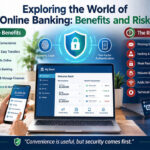
Exploring the World of Online Banking: Benefits and Risks
Banking has changed greatly over the past few decades. People once had to visit a bank branch to check their balance, transfer money, pay bills, or deposit a check. Today, many of these tasks can be completed within minutes using a smartphone or computer.
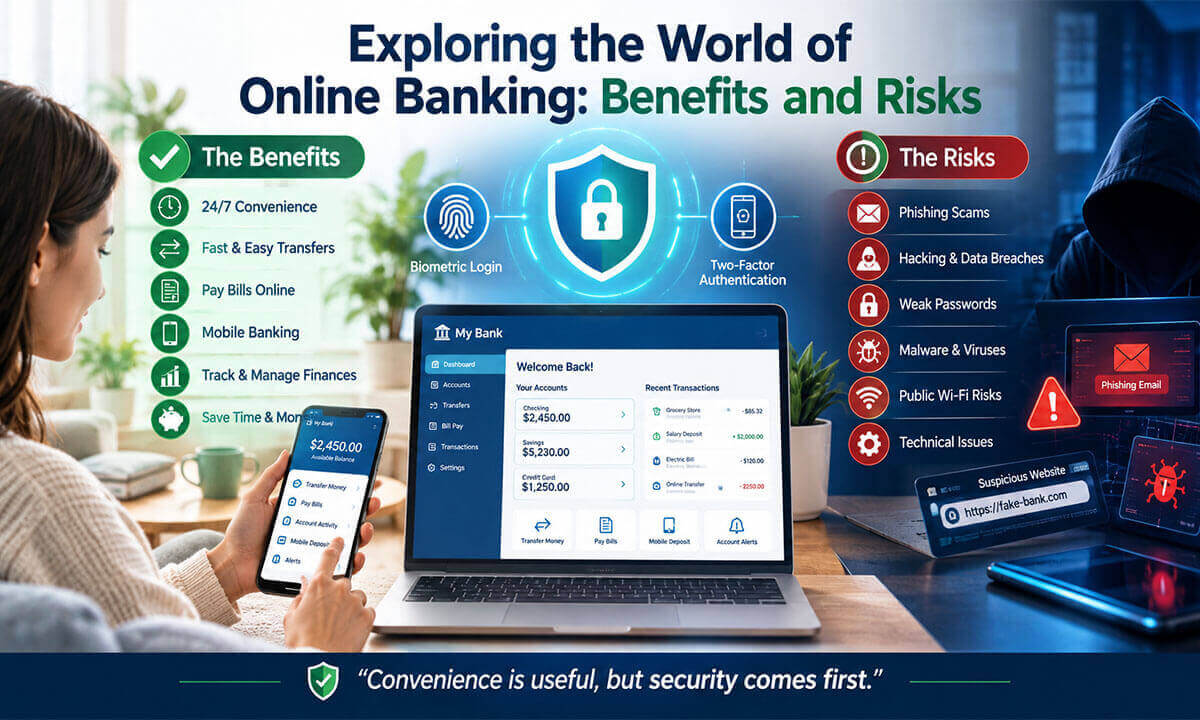
Online banking has made financial services easier to access. People can manage their accounts from home, at work, or while travelling. They can transfer money, pay bills, check transactions, deposit checks through mobile apps, and receive account alerts without visiting a branch.
However, convenience also comes with risks. Online banking depends on internet connections, digital devices, passwords, and security systems. Criminals may use phishing, malware, fake websites, stolen passwords, or other methods to gain access to financial information.
For this reason, understanding both the benefits and risks of online banking is important. Good security habits can help people enjoy the convenience of digital banking while reducing the chance of financial loss.
What Is Online Banking?
Online banking is a banking service that allows customers to manage their financial accounts through the internet. Banks usually provide online banking through websites and mobile applications.
Depending on the bank and account type, customers may be able to:
- Check account balances
- Review transaction history
- Transfer money between accounts
- Send money to other people
- Pay bills
- Deposit checks using a mobile device
- Manage debit and credit cards
- Download account statements
- Set up automatic payments
- Receive security and transaction alerts
- Apply for certain financial products
Online banking has become an important part of modern financial services because it allows customers to complete many routine banking activities without visiting a physical branch.
Benefits of Online Banking:
1. 24 Hour Convenience: One of the main benefits of online banking is convenience. Traditional bank branches have opening and closing hours. Online banking services are generally available at any time, although some transactions may be processed during specific banking hours.
For example, a person may check their balance late at night, pay a bill early in the morning, or transfer money while travelling.
This flexibility is especially useful for people who have busy work schedules or live far from a bank branch.
2. Saves Time: Online banking can significantly reduce the amount of time people spend on routine banking tasks.
Instead of travelling to a branch and waiting in line, customers can often complete simple tasks within a few minutes. Checking a balance, downloading a statement, or paying a bill may require only a few taps or clicks.
This makes banking more practical for people with limited free time.
3. Easy Money Transfers: Online banking makes transferring money much easier. Customers can often move money between their own accounts or send money to another person without visiting a branch.
For example, someone may transfer money to a family member, pay a service provider, or move money from a checking account to a savings account.
The exact speed and availability of transfers depend on the bank and the type of payment service being used.
4. Easier Bill Payments: Online banking allows customers to pay many bills electronically. This can include utility bills, credit card payments, education fees, subscriptions, and other regular expenses.
Some banks also allow customers to schedule recurring payments.
This can reduce the need for paper bills, checks, cash payments, and physical visits to payment centers.
5. Better Access to Financial Information: Online banking gives customers quick access to their financial information.
Instead of waiting for a monthly statement, customers can usually view recent transactions through their online account. This makes it easier to understand where money is going.
Regularly reviewing transactions can also help people notice unauthorized payments or unusual activity sooner.
6. Mobile Banking: Mobile banking has made online banking even more accessible. A smartphone can provide access to many banking services through a mobile application.
Depending on the bank, customers may be able to:
- Check balances
- Transfer money
- Pay bills
- Deposit checks
- Freeze or lock a card
- Receive notifications
- Find nearby ATMs
- Contact customer support
This means that basic banking services can be available almost anywhere with a suitable internet connection.
7. Greater Control Over Personal Finances: Online banking can help people manage their money more carefully.
Customers can review transactions, monitor account balances, set alerts, and track regular payments. Some banking applications also provide spending summaries and budgeting features.
Having this information easily available can encourage people to pay closer attention to their financial habits.
8. Reduced Paperwork: Digital banking can reduce the need for paper statements, printed payment records, and physical forms.
Customers can often receive statements electronically and download them when needed. This can make financial records easier to store and organize.
9. Access to Additional Digital Services: Many banks now provide services through their websites and mobile applications that were once available mainly through branches.
For example, customers may be able to request a new card, update certain account information, manage payment settings, or apply for financial products online.
The services available vary from one financial institution to another.
Risks of Online Banking:
Although online banking provides many benefits, it also creates security and practical risks.
1. Phishing Scams: Phishing is one of the most common threats facing online banking customers.
A criminal may send an email, text message, or other communication that appears to come from a bank. The message may claim that there is a problem with the person’s account and ask them to click a link.
The link may lead to a fake website designed to steal usernames, passwords, card information, or other sensitive details.
Customers should avoid clicking unexpected banking links. Instead, they should open the official banking application or enter the bank’s official website address themselves.
2. Account Hacking: Criminals may attempt to gain unauthorized access to online banking accounts.
They may obtain login information through phishing, malware, password reuse, data breaches, or other methods.
If an attacker gains access to an account, they may attempt unauthorized transfers or other fraudulent activity.
Strong passwords, multi-factor authentication, updated devices, and careful online behavior can reduce these risks.
3. Identity Theft: Online criminals may attempt to collect personal information such as names, addresses, account details, identification information, or passwords.
This information can potentially be used for identity theft or other forms of fraud.
People should therefore be careful about the information they share online and should avoid sending sensitive financial information through unsecured communication channels.
4. Weak Passwords: A weak password can make an account easier to compromise.
Using simple passwords, reusing the same password across multiple websites, or sharing passwords with others can increase security risks.
A strong and unique password for banking is an essential part of protecting an account.
A password manager can also help people create and store strong passwords without having to remember every password themselves.
5. Unsafe Public WiFi: Public WiFi networks can create security concerns, particularly when people use unfamiliar networks for sensitive activities.
People should avoid accessing online banking through unsecured public networks when possible. Using mobile data or another trusted connection can be a safer option.
6. Malware and Malicious Software: Malware is software designed to harm a device or steal information.
A compromised computer or smartphone may allow criminals to monitor activity, steal login information, or interfere with online transactions.
People should keep their operating systems, banking applications, browsers, and security software updated.
They should also avoid downloading software or opening attachments from unknown sources.
7. Technical Problems: Online banking depends on technology. Websites and applications can sometimes experience technical problems, maintenance, or service interruptions.
Internet connectivity can also fail.
If someone urgently needs to make a payment or access cash, a technical problem can become inconvenient. Keeping an alternative payment method or some emergency cash can be useful.
8. Human Error: Not every online banking problem is caused by sophisticated hacking.
People can also make mistakes. They may send money to the wrong account, enter incorrect information, share an authentication code with a scammer, or accidentally click a fake link.
Careful checking before approving a transaction is therefore important.
How to Stay Safe While Using Online Banking:
Online banking security is not only the responsibility of banks. Customers also have a vital role to play.
A. Use a Strong and Unique Password: Create a long, difficult-to-guess password for your banking account.
Do not use the same password for your bank account and other websites. If another website is compromised, a reused password could put the banking account at greater risk.
A password manager can help create and store unique passwords.
B. Enable Multi-Factor Authentication: Multi-factor authentication provides an additional security step when logging in.
Depending on the bank, this may involve an authentication application, security key, biometric verification, or another verification method.
Even if a password is stolen, an additional authentication requirement can make unauthorized access more difficult.
C. Never Share Security Codes: Banks may use one-time passwords or verification codes to confirm certain actions.
Customers should never give these codes to someone who contacts them unexpectedly.
Scammers may pretend to be bank employees and ask for a security code. A genuine bank representative should not need customers to disclose confidential authentication information in this way.
D. Check the Website or App Carefully: Before entering banking information, make sure you are using the official banking application or website.
Be cautious with links received through unexpected emails or text messages.
If you receive a message saying that your account has a problem, contact the bank through an official phone number or website rather than using the contact details provided in the suspicious message.
E. Keep Devices Updated: Install security updates for your phone, computer, browser, and banking applications.
Updates often include security fixes that address known vulnerabilities.
Delaying important updates can leave devices exposed to threats that have already been identified.
F. Monitor Your Accounts: Regularly review your account activity.
Look for unfamiliar transactions, withdrawals, transfers, or purchases. If something appears suspicious, contact the bank as soon as possible.
Account alerts can also help customers notice certain transactions quickly.
G. Be Careful With Emails and Text Messages: Do not assume that a message is genuine simply because it contains the bank’s logo or appears professional.
Scammers can create convincing messages.
Look for unusual requests, urgent language, unexpected attachments, suspicious links, and requests for passwords or security codes.
H. Avoid Banking on Shared Devices: Whenever possible, use your own trusted device for online banking.
Avoid saving banking passwords on public or shared computers.
Always log out after using a shared device.
I. Protect Your Phone: A smartphone can provide access to financial accounts, so it should be protected.
Use a screen lock, keep the operating system updated, and install applications only from trusted sources.
If your phone is lost or stolen, contact your bank and mobile service provider if necessary.
J. Contact the Bank Quickly When Something Goes Wrong: If you believe that someone has accessed your account without permission, contact your bank immediately.
The bank can explain the appropriate steps for securing the account, reviewing transactions, and reporting suspected fraud.
Quick action can be important when dealing with unauthorized activity.
Online Only Banks and Traditional Banks With Online Services:
Online banking does not always mean that a bank operates entirely online. There are two common models.
- Online Only Banks: Online only banks operate mainly through websites and mobile applications. They usually have few or no traditional branches.
Because their operating model is largely digital, some online-only banks may offer competitive fees, interest rates, or digital features.
However, customers may have fewer options for face-to-face service.
The availability of ATMs, cash deposits, customer support, and other services depends on the individual institution.
- Traditional Banks With Online Services: Traditional banks operate physical branches while also offering websites and mobile applications.
Customers can often manage routine activities online while still having the option of visiting a branch when they need face-to-face assistance.
This model can be useful for people who want both digital banking and access to physical banking services.
However, fees, interest rates, account features, and digital services vary between banks.
Online Banking and Financial Responsibility:
Online banking can make financial management easier, but convenience does not automatically lead to better financial decisions.
Easy access to money can sometimes make spending feel less noticeable. Digital payments can be completed quickly, which means people may spend money without physically handling cash.
For this reason, customers should use online banking as a tool for financial awareness.
Regularly checking transactions, setting spending limits, creating a budget, and reviewing recurring payments can help people understand their financial situation.
Frequently Asked Questions:
Is online banking safe?
Online banking can be secure when customers use trusted banking services and follow good security practices. However, no digital system is completely free from risk.
Strong passwords, multi-factor authentication, updated devices, careful browsing, and regular account monitoring can help reduce common risks.
Can I deposit a check through online banking?
Many banks offer mobile check deposit. Customers can usually photograph the check through the bank’s mobile application and follow the instructions provided.
Availability and limits depend on the bank.
What should I do if I notice an unauthorized transaction?
Contact your bank as soon as possible. Follow the bank’s instructions for reporting the transaction and securing the account.
You should also review your recent account activity for other suspicious transactions.
Should I use public WiFi for online banking?
It is better to avoid online banking through unfamiliar or unsecured public Wi Fi networks. Use a trusted internet connection whenever possible.
Are online only banks safe?
Online only banks can use security measures similar to those used by traditional banks, but customers should still evaluate the specific institution, its regulatory status, security practices, account protections, fees, and customer support before opening an account.
In conclusion, online banking has changed the way people manage their money. It provides convenient access to banking services without requiring customers to visit a physical branch for every transaction.
Checking balances, transferring money, paying bills, reviewing transactions, and managing accounts can often be done quickly through a website or mobile application.
At the same time, online banking requires responsible digital behavior. Phishing scams, stolen passwords, malware, identity theft, technical problems, and human mistakes can create financial risks.
The safest approach is to use online banking carefully. Create strong and unique passwords, enable multi-factor authentication, keep devices updated, avoid suspicious links, protect personal information, monitor accounts regularly, and contact the bank quickly when something looks wrong.
Online banking is a useful financial tool. Its benefits are greatest when convenience is combined with good security habits and careful financial management.

is an experienced educator and academic currently serving as a Lecturer at Nurul Amin Degree College. With a career dedicated to student development and institutional excellence, he brings a wealth of classroom expertise and pedagogical knowledge to his current role. Before joining the faculty, he served as an Assistant Teacher at Zinzira PM Pilot School and College.