Types of Disciplined Actions for Success:
Success rarely comes from one big decision. In most cases, it develops through small actions that are repeated over time. Discipline is what helps a person continue those actions even when motivation is low, progress is slow, or distractions are everywhere.
Discipline does not mean living a rigid or joyless life. It means learning to control your actions and make choices that support your long-term goals. A disciplined person understands that what they do regularly can have a greater effect than what they do occasionally.
Different areas of life require different forms of discipline. Physical discipline helps maintain health and energy. Time discipline helps people use their limited hours wisely. Financial discipline creates greater control over money. Mental discipline improves focus and emotional control. Habit discipline makes positive behaviors more consistent, while goal discipline helps people stay committed to meaningful objectives.
Here are six important types of disciplined actions that can support personal and professional success.
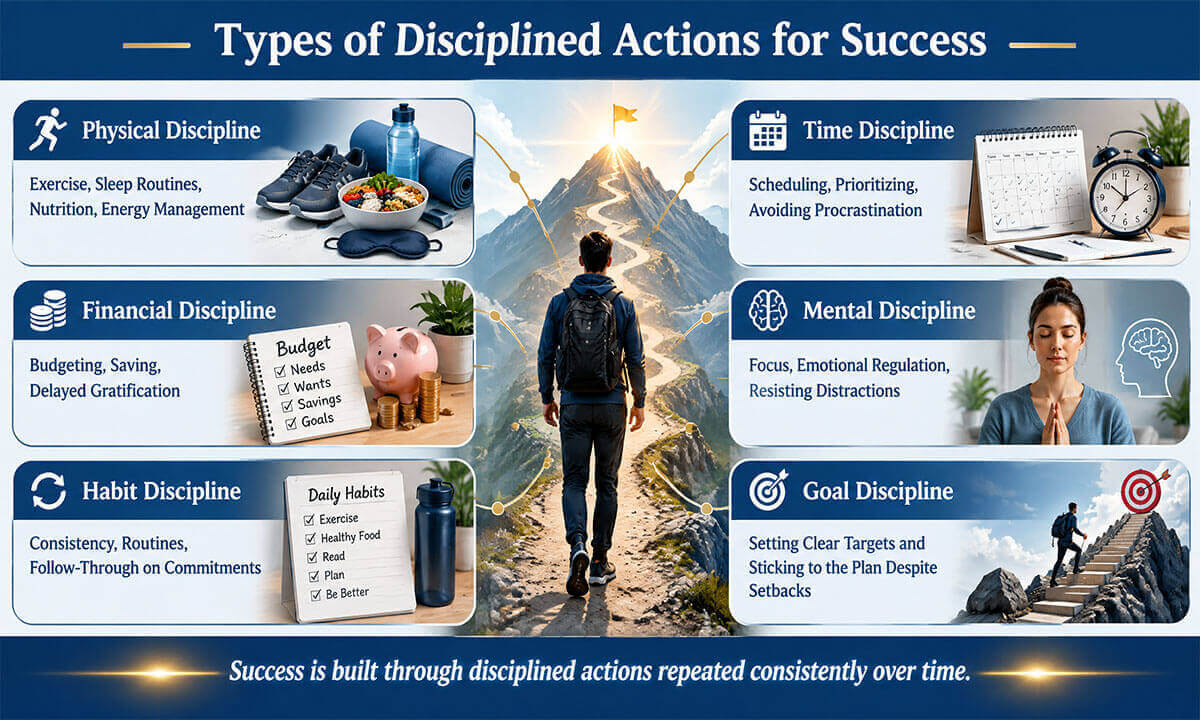
1. Physical Discipline: Physical discipline involves taking consistent care of the body. Health affects energy, concentration, mood, and the ability to perform daily responsibilities.
- Exercise: Regular physical activity can improve strength, fitness, energy, and overall well-being. Exercise does not always require an intense workout. Walking, stretching, cycling, swimming, or strength training can all become part of a healthy routine. Exercising for a short period regularly is often more sustainable than exercising intensely for a few days and then stopping.
- Sleep routines: A consistent sleep schedule can help the body and mind recover. Staying up late unnecessarily, constantly changing sleeping times, or sacrificing sleep for less important activities can affect concentration and energy. Creating a regular bedtime and reducing unnecessary screen use before sleep can make a healthy routine easier to maintain.
- Nutrition: Physical discipline also includes making thoughtful food choices. A balanced diet provides the nutrients and energy needed for everyday activities. This does not mean that every meal has to be perfect. It means developing sensible eating habits and avoiding patterns that regularly harm health.
- Energy management: Discipline is not only about managing time. It is also about managing energy. People have different levels of physical and mental energy throughout the day. Momentous or demanding tasks can often be scheduled during periods when concentration and energy are highest. This can make productive work easier.
2. Time Discipline: Everyone has the same basic amount of time each day, but people use that time differently. Time discipline means deliberately deciding how to use available hours instead of allowing distractions to control the day.
- Scheduling: A schedule provides structure. It can include work, study, exercise, family responsibilities, rest, and personal activities. A simple daily plan can help prevent important tasks from being forgotten. It also gives a person a clearer idea of where their time is going.
- Prioritizing: Not every task has the same importance. Time discipline requires identifying what needs attention first. A useful approach is to separate tasks into categories such as urgent, important, and less important. High-value tasks should receive appropriate attention before activities that provide little benefit.
- Avoiding procrastination: Procrastination is one of the major obstacles to effective time management. People may delay difficult tasks because they feel boring, uncomfortable, or overwhelming. Breaking a large task into smaller steps can make it easier to begin. Once the first step is completed, continuing often becomes easier.
- Protecting focused time: Constant notifications, social media, unnecessary conversations, and frequent interruptions can consume valuable time. Creating periods of uninterrupted work can improve concentration and productivity. Time discipline does not mean working every minute. Rest is also part of effective time management.
3. Financial Discipline: Financial discipline means making thoughtful decisions about earning, spending, saving, and using money.
- Budgeting: A budget helps people understand where their money goes. It can include income, essential expenses, savings, debt payments, and discretionary spending. Without a clear idea of spending patterns, it can be difficult to make informed financial decisions.
- Saving: Saving regularly can provide greater financial security. Even small amounts can become meaningful when they are saved consistently over time. An emergency fund can also help a person deal with unexpected expenses without immediately depending on borrowing.
- Delayed gratification: Financial discipline often requires delaying purchases that are not necessary. Wanting something immediately does not always mean buying it immediately is the best decision. Before making a purchase, a person can ask whether the item is necessary, affordable, and consistent with their financial goals.
- Controlling unnecessary spending: Small expenses can accumulate. Eating out frequently, making impulse purchases, or subscribing to services that are rarely used can gradually affect a budget. Financial discipline involves recognizing these patterns and making adjustments when necessary.
4. Mental Discipline: Mental discipline involves controlling attention, managing thoughts and emotions, and continuing to work despite distractions.
- Developing focus: Modern life provides many sources of distraction. Phones, social media, entertainment, and constant notifications can make sustained concentration difficult. Mental discipline means deliberately directing attention toward the task that matters at a particular moment.
- Managing emotions: Emotions influence decisions and behavior. Anger, frustration, fear, and disappointment can sometimes lead to impulsive choices. Emotional regulation does not mean ignoring emotions. It means recognizing them and choosing an appropriate response instead of automatically reacting.
- Resisting distractions: Discipline becomes particularly important when something more entertaining is available. A person may know that studying is important but still feel tempted to spend hours scrolling through social media. Creating boundaries around distractions can help. For example, a person might keep their phone away while studying or working.
- Developing patience: Meaningful results often take time. Mental discipline helps people tolerate periods when progress is not immediately visible. Instead of expecting instant results, disciplined people can focus on improving their actions and learning from the process.
5. Habit Discipline: Habits are behaviors that become increasingly automatic through repetition. Habit discipline means creating useful routines and consistently following them.
- Building consistency: A person does not need to make dramatic changes overnight. Small actions performed regularly can gradually become established habits. For example, reading a few pages every day can eventually become a regular reading habit.
- Creating routines: Routines reduce the amount of decision-making required for everyday activities. A morning routine, study routine, exercise routine, or evening routine can provide structure. A good routine should be realistic. If it is too complicated, maintaining it may become difficult.
- Following through on commitments: Discipline also means doing what you have decided to do. If someone repeatedly makes promises to themselves but does not follow through, it becomes harder to trust their own plans. Keeping small commitments can strengthen self-discipline.
- Recovering after failure: Habit discipline does not mean never missing a day. People can become sick, tired, busy, or face unexpected problems. The key thing is to return to the routine instead of allowing one missed day to become a permanent interruption.
6. Goal Discipline: Goal discipline involves setting meaningful objectives and continuing to work toward them despite difficulties.
- Setting clear targets: Vague goals are difficult to follow. Instead of saying, “I want to improve my career,” a person might identify a specific skill they want to learn or a particular qualification they want to complete. Clear goals make it easier to determine what actions are necessary.
- Creating a plan: A goal becomes more useful when it is connected to specific actions. A person can divide a large objective into smaller steps and establish realistic deadlines. For example, someone preparing for an examination might create a study plan that divides subjects into weekly and daily tasks.
- Staying committed during setbacks: Setbacks are a normal part of pursuing long-term goals. A failed attempt does not necessarily mean that the goal should be abandoned. Goal discipline involves examining what went wrong, making reasonable adjustments, and continuing when the goal remains meaningful.
- Tracking progress: Tracking progress provides useful feedback. A person can record completed tasks, study hours, savings, workouts, or other measurable activities. Seeing progress can also make long-term efforts feel more manageable.
How These Forms of Discipline Work Together:
These six types of discipline are connected. Improving one area can support another.
For example, physical discipline can improve energy, which can make time and mental discipline easier. Financial discipline can reduce money-related stress and support long-term goals. Habit discipline can make physical exercise, studying, or saving easier to maintain.
Goal discipline provides direction, while habit discipline provides consistency. Time discipline determines when actions happen, and mental discipline helps a person stay focused while doing them.
Success therefore does not depend on one type of discipline alone. A balanced approach can help people manage different parts of life more effectively.
How to Develop Discipline Gradually:
Discipline can be developed through practice. A useful starting point is to choose one area that needs improvement rather than trying to change everything at once.
Start with a small action. Make it specific and realistic. Repeat it regularly. Track your progress and adjust the routine when necessary.
It is also necessary to understand the difference between discipline and perfection. Missing one workout, exceeding a budget once, or having an unproductive day does not erase previous progress. What matters is returning to the plan and continuing.
Over time, repeated actions can become easier because they develop into habits. This is why small consistent improvements can be more sustainable than dramatic changes that cannot be maintained.
In conclusion, discipline is a dynamic foundation for long-term success. It helps people turn intentions into consistent actions and gives structure to their efforts.
Physical discipline supports health and energy. Time discipline helps people use their hours effectively. Financial discipline encourages responsible money management. Mental discipline strengthens focus and emotional control. Habit discipline creates consistency, while goal discipline keeps people moving toward meaningful objectives.
Success is rarely created by motivation alone. Motivation can encourage a person to begin, but discipline helps them continue. By developing these six forms of disciplined action gradually, people can build routines that support their personal, academic, professional, and financial goals.

is an experienced educator and academic currently serving as a Lecturer at Nurul Amin Degree College. With a career dedicated to student development and institutional excellence, he brings a wealth of classroom expertise and pedagogical knowledge to his current role. Before joining the faculty, he served as an Assistant Teacher at Zinzira PM Pilot School and College.