The Role of Community Archives in Preserving Local Histories:
History is not created only through major political events, famous people, or national institutions. It is also created through the everyday experiences of ordinary people. Family photographs, letters, newspapers, school records, personal diaries, oral histories, maps, community newsletters, business records, and photographs of local events can all help us understand how a community developed over time.
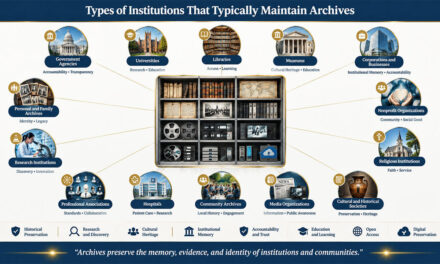
Community archives play an important role in collecting and preserving these materials. They are often created and managed by local people, community groups, historical societies, cultural organizations, libraries, museums, and other organizations that have a connection with a particular place or community. They can preserve stories that might otherwise be overlooked by larger archival institutions.
Research on community archives shows that community participation, control, and ownership are important characteristics of community-based archival work. Such archives can help communities document their own histories and make those histories accessible to present and future generations.
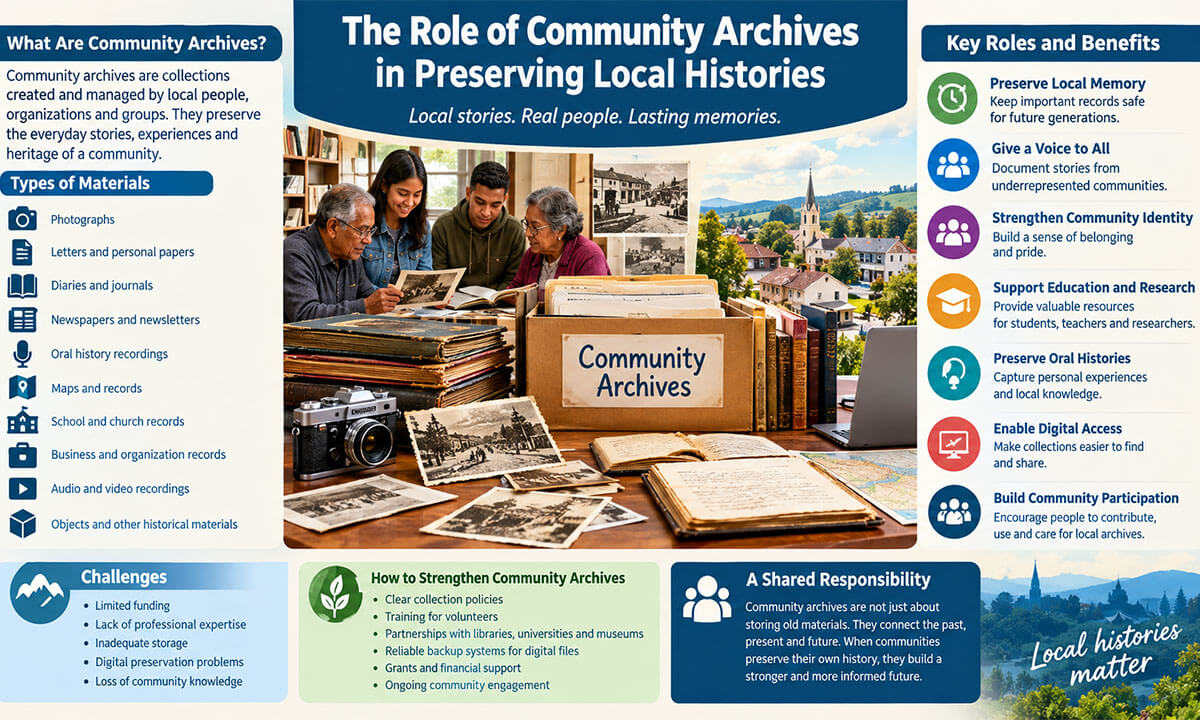
What Are Community Archives?
Community archives are collections created, collected, preserved, and sometimes managed by people who share a particular place, culture, identity, interest, or experience. The community may be based on a geographical area such as a village, town, neighborhood, or region. It may also be based on a cultural group, occupation, organization, or shared experience.
The materials in a community archive can take many forms. They may include:
- Photographs
- Letters and personal papers
- Diaries and journals
- Newspapers and newsletters
- Oral history recordings
- Maps and architectural records
- School and church records
- Business records
- Community organization records
- Posters and event programs
- Audio and video recordings
- Digital photographs and websites
- Objects and other historical materials
Community archives are particularly valuable because they often document everyday life. Formal archives may have strong collections of government or institutional records, while community archives can provide evidence of how people actually lived, worked, communicated, celebrated, and responded to changes in their surroundings.
Preserving Local Memories:
One of the most necessary functions of a community archive is preserving local memory. Memories can disappear as people grow older, buildings are demolished, businesses close, organizations disappear, and communities change.
For example, an old photograph of a local marketplace can show how a town looked several decades ago. A collection of school photographs can document changes in education and student life. Oral history interviews can preserve the memories of people who experienced important events in the community.
Without deliberate preservation, many of these materials can be lost. Community archives provide a place where such records can be collected and protected.
Research on regional archives also shows that local historical collections can help present and future generations understand the history of a particular place and develop a stronger connection with their community.
Giving a Voice to Underrepresented Communities:
Another essential role of community archives is documenting voices that may be underrepresented in traditional archival collections. Historical records are not always created equally. Some communities have historically had fewer opportunities to create, preserve, or control official records about themselves. Community archives can help address this gap by allowing people to document their own experiences and perspectives.
Research on community archiving has found that communities can use their own archives to create richer local histories and increase the representation of groups that have been overlooked in mainstream archival collections.
This does not mean that community archives replace national, government, university, or other formal archives. Instead, they can complement them by adding different types of evidence and perspectives.
Strengthening Community Identity:
Local history can contribute to a sense of belonging. When people learn about the history of their neighborhood, village, town, or cultural group, they can develop a stronger understanding of the place where they live.
Community archives can preserve information about:
- Local traditions
- Festivals and celebrations
- Community leaders
- Schools and educational institutions
- Religious and cultural activities
- Local businesses
- Migration and settlement
- Changes in buildings and landscapes
- Important community events
- Everyday social life
These records help connect generations. Older members of a community can share their experiences, while younger people can learn about the history of their community through original materials.
Supporting Education and Research:
Community archives are also valuable educational resources. Students, teachers, historians, journalists, researchers, and local residents can use archival materials to study the development of a particular community.
Instead of learning only from general textbooks, students can examine original photographs, newspaper reports, maps, interviews, and documents from their own area. This can make history more meaningful and encourage students to investigate questions about their local environment.
Local historical collections can also support historical literacy and critical thinking because users must examine evidence, compare sources, and consider how historical records were created and preserved.
Researchers can use community archives to study subjects such as social history, education, migration, architecture, local economies, cultural practices, environmental change, and community development.
Preserving Oral Histories:
Not all historical information exists in written form. Much of a community’s knowledge may exist in people’s memories. Oral history is therefore a vital part of community archiving. Older residents can be interviewed about their childhood, education, employment, family life, local traditions, major events, and changes they have witnessed.
Recording these memories can preserve information that may never appear in official documents. Oral histories should be carefully documented and preserved. Archives should record information about the speaker, date, location, subject, and permissions associated with each recording. Proper documentation makes oral histories more useful for future researchers.
Digitization and Online Access:
Digital technology has changed the way community archives preserve and share local history. Old photographs, documents, newspapers, and recordings can be digitized and stored as digital files. These materials can then be made available through websites, digital repositories, online exhibitions, or social media platforms.
Digitization can provide several benefits. It can make materials easier to discover, reduce the need to handle fragile originals, and allow people living outside the community to access local historical resources.
However, digitization is not a complete preservation solution. Digital files also require proper storage, backup systems, file management, metadata, and long-term preservation planning. Recent research on community archives emphasizes the importance of preservation practices, skilled staff, funding, collaboration, governance, and community engagement for long-term sustainability.
Community Participation and Ownership:
Community participation is central to successful community archives. Local people should have meaningful involvement in deciding what should be collected, how materials should be described, who can access them, and how the collection should be used.
Community archives are distinctive partly because communities can participate directly in documenting their own histories. Research has described community participation, control, and ownership as important features of community-driven archiving.
This approach can also help build trust. People may be more willing to donate family photographs, personal papers, recordings, and other materials when they know that their community has a role in preserving and interpreting them.
Challenges Facing Community Archives:
Although community archives are valuable, they often face serious challenges.
- Limited Funding: Many community archives operate with limited financial resources. They may depend on donations, grants, membership fees, or volunteer support.
- Lack of Professional Expertise: Volunteers may have strong knowledge of local history but limited training in archival arrangement, preservation, cataloguing, digitization, or digital preservation.
- Inadequate Storage: Historical documents can be damaged by humidity, heat, water, insects, fire, and poor storage conditions. Regional archives can be particularly vulnerable to environmental disasters. Research on regional archives has highlighted the damage caused by floods and the need for better preservation planning and investment.
- Digital Preservation Problems: Digitization creates new responsibilities. Digital files can become inaccessible because of hardware failure, corrupted files, obsolete formats, or inadequate backup systems.
- Loss of Community Knowledge: When experienced volunteers or community historians pass away or move away, valuable knowledge about collections can disappear if it has not been properly documented.
How Community Archives Can Be Strengthened:
Several steps can improve the sustainability of community archives; some of them are given below:
First, communities can establish clear collection policies. These policies should explain what types of materials the archive collects and why.
Second, volunteers can receive basic training in archival preservation, cataloguing, digitization, copyright, and ethical handling of personal information.
Third, community archives can develop partnerships with public libraries, universities, museums, professional archivists, and historical organizations. These partnerships can provide technical expertise and training.
Fourth, archives can create reliable backup systems for digital materials. Important digital files should not exist in only one location.
Fifth, communities can seek grants and other forms of financial support to improve storage facilities, digitization, equipment, and staff training.
Finally, community archives should continue engaging the people whose histories they preserve. Community exhibitions, talks, educational programs, oral history projects, and online collections can encourage people to contribute and use archival resources.
The Importance of Preserving Local History for the Future:
Local history is constantly changing. A neighborhood that looks familiar today may be completely different in several decades. Businesses close, roads change, buildings disappear, populations move, and cultural practices develop.
Community archives provide evidence of these changes. They allow future generations to understand not only what happened but also how ordinary people experienced those changes.
Regional archival collections can also contribute to understanding wider national history. A collection documenting one village, neighborhood, organization, or town may appear small, but many such collections together create a much richer picture of society. Research has noted that community archives can contribute to broader understandings of cultural heritage and social change.
In conclusion, community archives are an important part of preserving local history. They collect and protect photographs, documents, oral histories, recordings, and other materials that describe the lives and experiences of communities.
Their value goes beyond simply storing old materials. Community archives can preserve local memory, support education and research, strengthen connections between generations, document underrepresented experiences, and help communities understand how their surroundings have changed.
At the same time, community archives need sustainable support. Funding, appropriate storage, professional guidance, digitization, digital preservation, and active community participation are important for their long-term survival.
Preserving local history is not only the responsibility of large national institutions. Communities themselves have an important role in deciding which stories should be remembered and how those stories should be passed to future generations. When community members actively participate in collecting and preserving their own records, archives become living resources that connect the past, present, and future.

is an experienced educator and academic currently serving as a Lecturer at Nurul Amin Degree College. With a career dedicated to student development and institutional excellence, he brings a wealth of classroom expertise and pedagogical knowledge to his current role. Before joining the faculty, he served as an Assistant Teacher at Zinzira PM Pilot School and College.