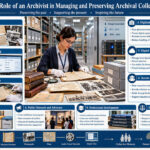
The Role of an Archivist in Managing and Preserving Archival Collections:
Archives preserve records that have long-term value for society, institutions, organizations, and individuals. They may contain historical documents, manuscripts, photographs, maps, newspapers, audio recordings, films, electronic files, emails, and other forms of recorded information. These materials can provide important evidence about the past and support research, education, administration, legal work, and cultural activities.
An archivist is the professional responsible for managing these valuable records. The work of an archivist goes far beyond simply storing old documents. Archivists identify records that deserve permanent preservation, organize them so that they can be understood and located, protect them from physical and digital damage, and provide appropriate access to researchers and other users.
The role has become even more important as organizations increasingly create records in digital formats. Archivists now have to manage both traditional physical collections and complex digital materials. They must understand preservation methods, metadata, digitization, records management, access policies, privacy, copyright, and changing technologies.
Through these activities, archivists help protect the documentary heritage of society and ensure that important records remain available for present and future generations.
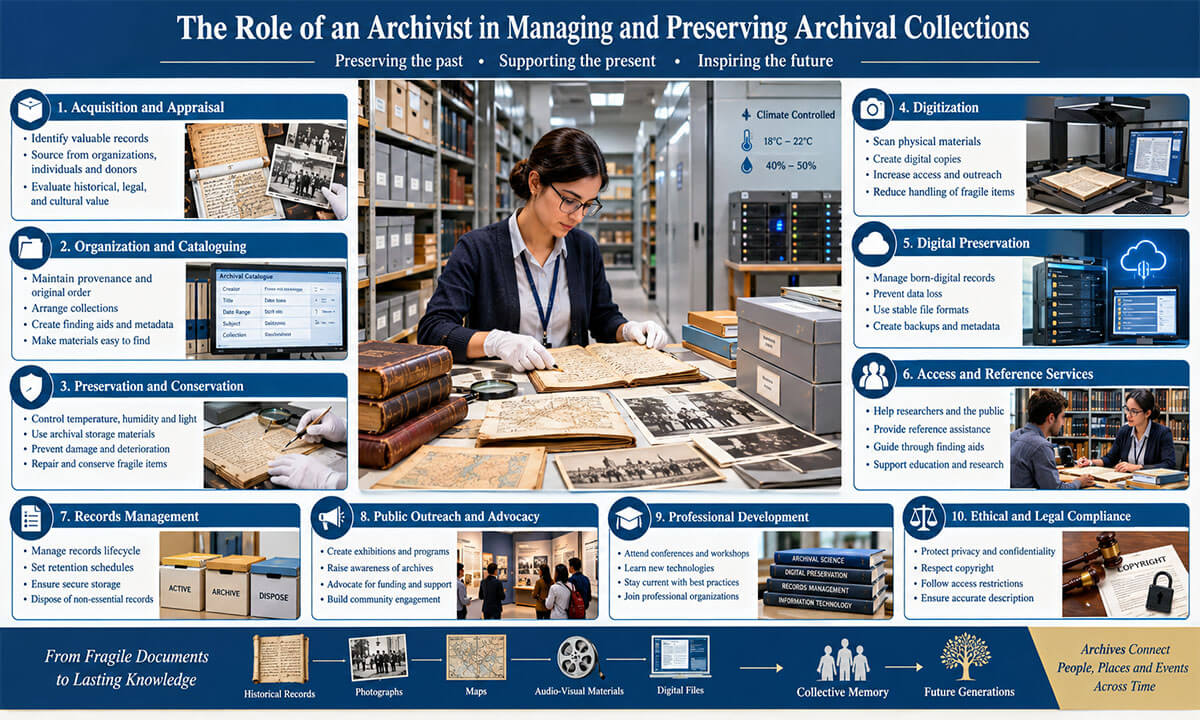
Who Is an Archivist?
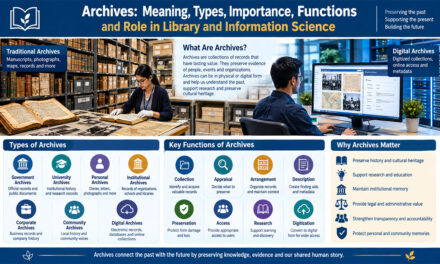
An archivist is a trained professional who acquires, evaluates, organizes, describes, preserves, and provides access to records that have continuing value. These records may have historical, cultural, legal, administrative, scientific, or social importance.
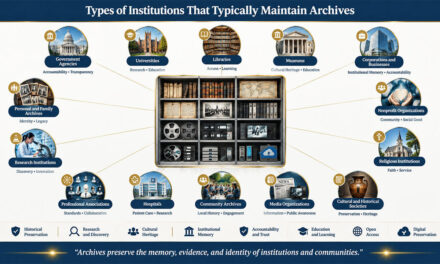
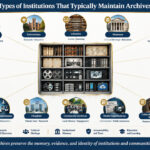
Archivists work in many different environments, including:
- Government archives
- Universities and colleges
- Libraries
- Museums
- Historical societies
- Corporate archives
- Religious and cultural organizations
- Hospitals and research institutions
- Nonprofit organizations
- Digital archives and special collections
An archivist may manage a collection containing thousands or even millions of individual records. The records can exist in many formats, from handwritten letters and paper files to photographs, films, recordings, databases, websites, emails, and other digital objects.
The archivist’s responsibility is to maintain the context, authenticity, integrity, and usability of these records while making appropriate materials available to users.
Why Archivists Are Important:
Archives help society understand its history and development. They provide primary sources that can be used to study people, institutions, communities, governments, events, and social changes.
Archivists are important because they help ensure that valuable records are not lost, damaged, or forgotten. Without professional management, records can become disorganized, deteriorate, disappear, or become difficult to locate.
Archivists also help institutions maintain evidence of their activities. Government agencies, universities, businesses, and other organizations may need records to demonstrate decisions, policies, transactions, rights, and responsibilities.
Their work therefore supports several important areas, including:
- Historical research
- Academic research
- Legal and administrative needs
- Cultural heritage preservation
- Institutional accountability
- Education
- Genealogical research
- Public awareness
- Organizational memory
Key Responsibilities of an Archivist:
The work of an archivist involves several connected responsibilities. Each activity contributes to the long-term management and preservation of archival collections.
1. Acquisition of Archival Records: One of the first responsibilities of an archivist is acquiring records that have continuing value.
Records may come from government departments, universities, businesses, organizations, families, individuals, or other sources. Archivists may actively identify potential collections or work with donors who want to preserve essential materials.
For example, an archivist may receive:
- Personal letters
- Diaries
- Official reports
- Institutional records
- Photographs
- Maps
- Manuscripts
- Newspapers
- Audio recordings
- Video recordings
- Emails
- Websites
- Digital documents
The acquisition process requires careful documentation. Archivists need to understand where the records came from, who created them, their original purpose, and any conditions associated with their transfer.
2. Appraisal and Selection of Records: Archives cannot preserve every record that an organization or individual creates. Large quantities of records are produced every day, and preserving everything would require enormous amounts of space, money, staff time, and technology.
Archivists therefore appraise records to determine which materials have continuing value.
During appraisal, an archivist may consider:
- Historical significance
- Evidential value
- Informational value
- Uniqueness
- Authenticity
- Relationship to other records
- Legal or administrative importance
- Research potential
- Condition of the materials
- Duplication
- Long-term preservation requirements
Appraisal is a vital professional responsibility because decisions about what is preserved influence what evidence will remain available in the future.
3. Maintaining Provenance and Original Order: Two important principles in archival arrangement are provenance and original order.
Provenance means maintaining records according to their creator or source. Records created by one organization or person should generally remain associated with that creator rather than being mixed with records from unrelated sources.
Original order refers to maintaining the arrangement established by the creator when that arrangement is meaningful and can be preserved.
These principles help protect the context of archival materials. A document can have greater meaning when users understand who created it, why it was created, and how it was originally related to other records.
4. Arrangement and Organization: After records are acquired and appraised, archivists arrange them into a logical structure.
Large archival collections may be divided into groups such as:
- Fonds or collections
- Series
- Subseries
- Files
- Items
The exact structure depends on the nature of the collection.
Good arrangement makes it easier for researchers to understand the collection and locate relevant materials. It also helps archivists manage preservation activities and control the physical or digital location of records.
5. Cataloguing and Description: Archivists create descriptions that explain what a collection contains. These descriptions help users determine whether a collection is relevant to their research.
Archival descriptions may include information about:
- The creator of the records
- The title of the collection
- Dates covered by the records
- Scope and content
- Administrative history
- Biographical information
- Physical extent
- Languages
- Access restrictions
- Copyright information
- Finding aids
- Related collections
Archivists may also create metadata for digital materials.
Finding aids are particularly useful because they provide researchers with a structured overview of an archival collection. Instead of searching through every document individually, users can first examine the description and organization of the collection.
Preservation and Conservation of Archival Materials:
Preservation is one of the most imperative functions of an archivist. Archival materials can deteriorate because of temperature, humidity, light, dust, pests, pollutants, poor handling, physical damage, and unsuitable storage materials.
Archivists therefore use preventive preservation methods to reduce the risk of damage.
1. Environmental Control: Paper, photographs, films, magnetic media, and other materials can be affected by environmental conditions.
Archives may therefore monitor:
- Temperature
- Relative humidity
- Light exposure
- Air quality
- Dust
- Pest activity
Stable environmental conditions can help slow deterioration and extend the useful life of archival materials.
2. Archival Storage Materials: Archivists use suitable storage materials to protect collections. Archival folders, boxes, sleeves, containers, and other protective materials can reduce exposure to harmful substances and physical damage.
Proper shelving and storage also reduce risks caused by overcrowding, moisture, handling, and accidental damage.
3. Proper Handling: Archival materials can be damaged through careless handling. Archivists establish handling procedures and educate staff and users about appropriate practices.
Depending on the material, users may be required to:
- Keep hands clean
- Avoid food and drinks near collections
- Support fragile materials properly
- Use appropriate equipment
- Avoid unnecessary handling
- Follow reading room procedures
These simple practices can significantly reduce damage to valuable records.
4. Conservation: Some archival materials may already be damaged or fragile. Conservation involves specialized treatment intended to stabilize or repair materials when appropriate.
Conservation work may include cleaning, repairing tears, stabilizing damaged pages, or treating other forms of deterioration. Such work should be carried out carefully because inappropriate treatment can sometimes cause further damage or affect the historical characteristics of an item.
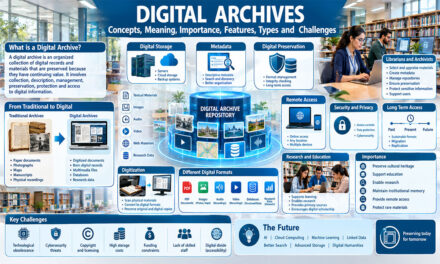
5. Digitization of Archival Collections: Digitization has become an important part of modern archival work. It involves creating digital copies of physical materials such as photographs, manuscripts, maps, newspapers, and documents.
Digitization can provide several benefits.
First, it can increase access. Researchers may be able to consult digital copies without physically visiting the archive.
Second, digitization can reduce the need to handle fragile originals. Researchers can use digital copies while the original materials remain protected in appropriate storage.
Third, digital collections can support education and public engagement. Archives can create online exhibitions and digital collections that allow wider audiences to discover historical materials.
However, digitization does not mean that the original materials are no longer important. Digital copies can also require long-term management and preservation.
6. Digital Preservation: Modern archivists increasingly manage records that were created digitally. These are known as born-digital records.
Examples include:
- Emails
- Digital photographs
- Electronic reports
- Databases
- Websites
- Social media records
- Audio and video files
- Digital manuscripts
- Electronic spreadsheets
Digital preservation presents different challenges from physical preservation. Digital files can become inaccessible because of damaged storage media, obsolete software, outdated hardware, unsupported file formats, or loss of metadata.
Archivists may therefore use several strategies, including:
- Multiple copies of important files
- Reliable storage systems
- Regular integrity checks
- Appropriate file formats
- Metadata creation
- Format migration
- Preservation planning
- Controlled access systems
- Documentation of preservation activities
The goal is not simply to store a digital file. The goal is to ensure that the file remains authentic, understandable, accessible, and usable over time.
7. Access and Reference Services: Preserving records has little value if users cannot appropriately access them. Archivists therefore provide reference and access services.
Researchers may approach archives for many reasons. A historian may study a political event. A student may investigate local history. A family researcher may search for information about relatives. An organization may need historical records for administrative purposes.
Archivists assist users by:
- Explaining archival collections
- Helping researchers identify relevant sources
- Providing finding aids
- Answering reference questions
- Explaining access rules
- Providing information about related collections
- Helping users understand archival terminology
- Guiding users in handling materials
Archivists do not simply locate documents. They also help users understand the context and structure of archival collections.
8. Access Policies and Restrictions: Not every archival record can be made freely available immediately. Some materials may contain sensitive personal information, confidential information, copyrighted material, or records subject to legal restrictions.
Archivists must therefore manage access carefully.
Restrictions may relate to:
- Privacy
- Confidentiality
- Copyright
- Donor agreements
- Legal requirements
- Cultural sensitivities
- Institutional policies
- Preservation concerns
Archivists balance the goal of providing access with the responsibility to protect individuals, communities, institutions, and archival materials.
9. Records Management: In some organizations, archivists also work closely with records management.
Records management deals with records throughout their lifecycle. This may include their creation, use, storage, retention, and eventual disposition.
Archivists can contribute to decisions about which records should be transferred to permanent archives and which records may be disposed of according to approved retention requirements.
Effective records management helps organizations avoid unnecessary accumulation while ensuring that records with continuing value are not accidentally lost.
10. Ethical Responsibilities of Archivists: Archivists have important ethical responsibilities because their decisions can influence how people understand historical evidence.
They should work to maintain the authenticity and integrity of records and provide accurate descriptions of collections.
Ethical responsibilities may include:
- Protecting confidential information
- Respecting privacy
- Following copyright requirements
- Maintaining accurate descriptions
- Avoiding unnecessary alteration of original materials
- Documenting preservation activities
- Respecting culturally sensitive materials
- Providing fair and appropriate access
- Maintaining professional integrity
Archivists may also encounter records that contain outdated, offensive, or discriminatory language. Rather than simply removing historical evidence, archivists may provide contextual information that helps users understand the circumstances in which the records were created.
11. Public Outreach and Education: Archives are not only places where records are stored. They can also serve as educational and cultural resources.
Archivists may organize:
- Exhibitions
- Public lectures
- Workshops
- School programs
- Research sessions
- Online exhibitions
- Social media projects
- Digital collections
- Community history projects
These activities help people discover archival materials and understand their importance.
Public outreach can also encourage individuals and organizations to preserve their own records and contribute valuable materials to archival collections.
12. Advocacy for Archives: Archivists often advocate for the preservation of records and the development of strong archival programs.
Archives require suitable buildings, storage systems, preservation materials, technology, trained staff, and financial support. Archivists therefore need to communicate the value of archival work to administrators, government authorities, donors, researchers, and the public.
Advocacy can help organizations understand that archives are not simply collections of old documents. They are resources for research, accountability, cultural heritage, institutional memory, and education.
Professional Development: Archival practice continues to change as technology and research methods develop. Archivists therefore need continuing professional development.
They may participate in:
- Professional conferences
- Workshops
- Training programs
- Seminars
- Research projects
- Professional associations
- Digital preservation initiatives
Professional development helps archivists learn about new preservation methods, digital technologies, descriptive standards, records management practices, and ethical issues.
Skills Required by an Archivist:
The modern archivist needs a combination of professional, technical, organizational, and interpersonal skills.
Important skills include:
- Organizational Skills: Archivists must manage large collections systematically. Good organization helps maintain order and supports efficient retrieval.
- Research Skills: Archivists need research skills to understand collections, identify relevant information, and assist users.
- Information Management Skills: Archivists must understand how information is created, organized, described, stored, preserved, and accessed.
- Digital Skills: Modern archival work requires familiarity with digitization, metadata, digital storage, file formats, databases, and digital preservation.
- Communication Skills: Archivists regularly communicate with researchers, donors, colleagues, administrators, students, and members of the public.
- Attention to Detail: Small errors in description, arrangement, metadata, or documentation can make records difficult to find or understand. Attention to detail is therefore essential.
- Problem-Solving: Archival collections can present unexpected challenges. Archivists need to develop practical solutions while protecting the integrity and authenticity of the records.
The Changing Role of the Archivist in the Digital Age:
The traditional image of an archivist working mainly with old paper documents is no longer sufficient to describe the profession.
Modern archivists work with both physical and digital information. They may manage cloud-based records, institutional websites, electronic databases, social media content, digital photographs, email collections, and other forms of electronic evidence.
Technology has therefore expanded the archivist’s responsibilities. At the same time, traditional archival principles remain important.
The modern archivist must connect traditional practices such as provenance, arrangement, description, and preservation with newer approaches to digital preservation and access.
This combination of traditional knowledge and technological understanding is essential for managing modern archival collections.
Challenges Faced by Archivists:
Archivists face many challenges in managing and preserving collections.
- Limited Funding: Archives require suitable buildings, equipment, storage materials, preservation systems, and trained staff. Limited funding can make it difficult to meet these requirements.
- Large Volumes of Records: Organizations create enormous quantities of information. Archivists must determine which records have continuing value without allowing important materials to be overlooked.
- Digital Obsolescence: Technology changes rapidly. Hardware, software, and file formats can become outdated, making older digital records difficult to access.
- Physical Deterioration: Paper, photographs, films, and other materials naturally deteriorate over time. Poor environmental conditions can accelerate this process.
- Privacy and Copyright: Archivists must balance access with legal and ethical responsibilities relating to privacy, copyright, confidentiality, and other restrictions.
- Disaster Risks: Fire, flooding, pests, equipment failure, cyber incidents, and other disasters can threaten archival collections. Disaster preparedness and recovery planning are therefore important parts of archival management.
The Archivist as a Guardian of Collective Memory:
One of the most significant ways to understand the work of an archivist is to view the archivist as a guardian of collective memory.
Records provide evidence of how people, communities, organizations, and societies developed. They preserve personal experiences, institutional decisions, cultural traditions, scientific discoveries, and historical events.
Archivists help ensure that this evidence is not lost.
Their work also gives future researchers an opportunity to examine the past through primary sources. This makes archives valuable not only to historians but also to students, journalists, educators, legal researchers, genealogists, artists, and members of the public.
In conclusion, the role of an archivist in managing and preserving archival collections is broad and increasingly complex. Archivists acquire and appraise records, arrange and describe collections, protect physical materials, manage digital records, support digitization, provide research assistance, and develop appropriate access policies.
Their responsibilities also extend to privacy, copyright, ethical practice, public outreach, advocacy, records management, and professional development. As more information is created digitally, archivists must combine traditional archival principles with modern technologies and digital preservation methods.
Finally, archivists help ensure that valuable records remain authentic, organized, protected, and accessible. Their work connects the past with the present and helps future generations understand the people, institutions, communities, and events that shaped society. By carefully managing both physical and digital collections, archivists protect an important part of humanity’s documentary heritage and keep valuable knowledge available for future research and learning.

is an experienced educator and academic currently serving as a Lecturer at Nurul Amin Degree College. With a career dedicated to student development and institutional excellence, he brings a wealth of classroom expertise and pedagogical knowledge to his current role. Before joining the faculty, he served as an Assistant Teacher at Zinzira PM Pilot School and College.